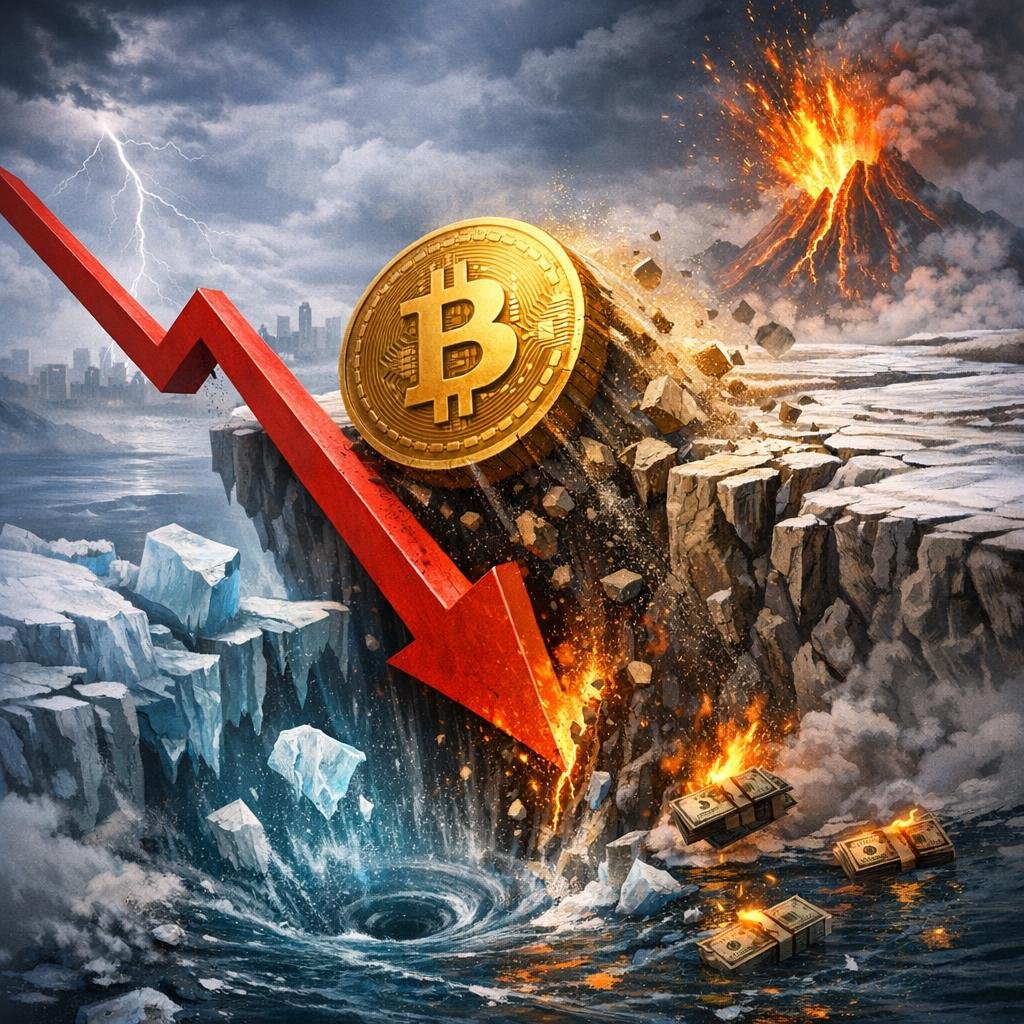
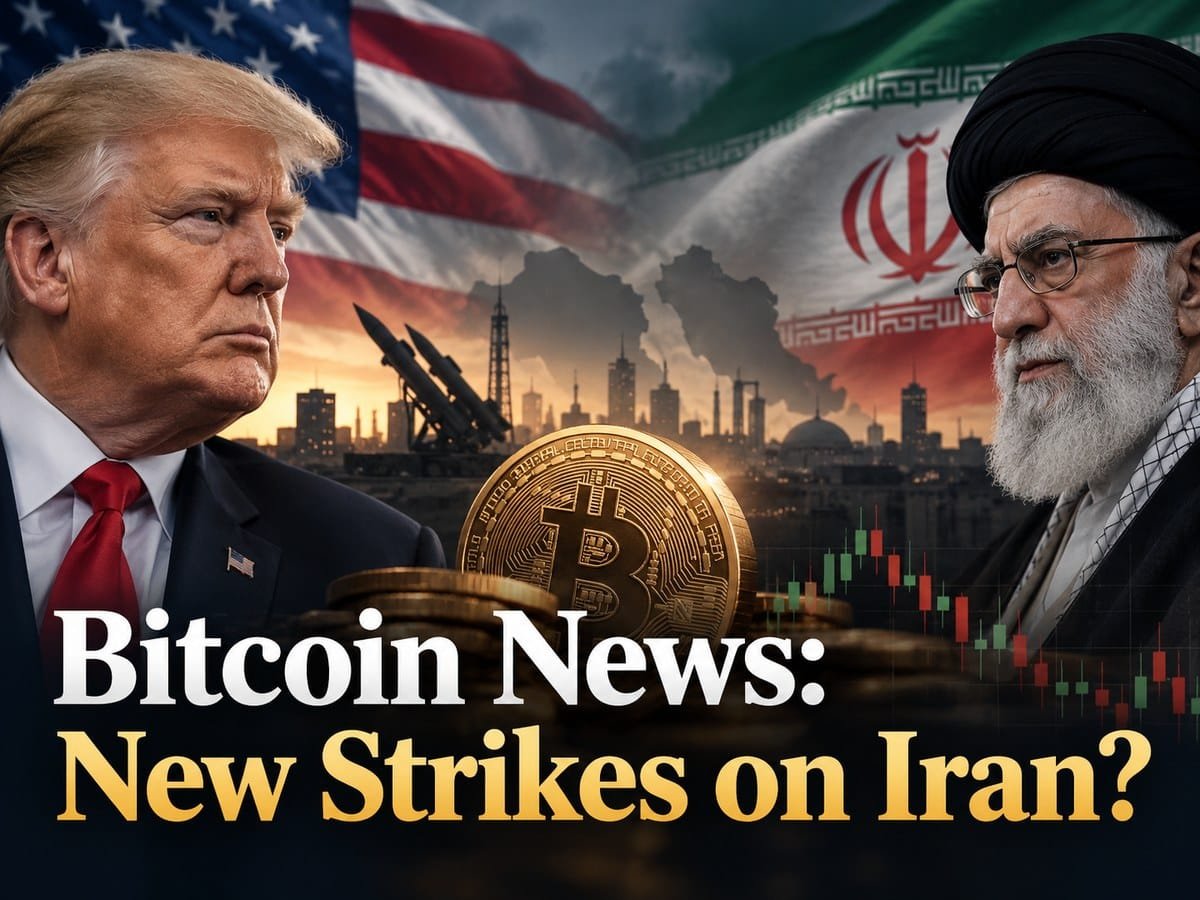
In today’s Bitcoin news, the BTC price is down 2.1% on the day and Brent crude is up 2.7% to $111.73 a barrel. Bitcoin fell from nearly $85,000 to about $82,200 early on Thursday, October 22.
The New York Times reported that the U.S. and Israeli militaries have drawn up plans to resume strikes on Iran after the November 3 midterms, sending oil higher. The report hit just after midnight UTC. The selling started an hour later.
So how close are Washington and Tehran to fighting again, and how low can Bitcoin go?
If Bitcoin does this now and I don’t tweet again. I committed seppuko. Just a heads up. pic.twitter.com/VIYPPajt7P
— VikingXBT (@VikingXBT) October 22, 2026
Bitcoin News: Why Did BTC Drop From $84,800 to $82,190 Today?
Because the Iran trade flipped. On Wednesday, BTC rallied to $84,898 while U.S. spot Bitcoin ETFs took in $524.8 million, Farside data shows. Then the strike report landed at about 00:35 UTC, and BTC lost about $800 in the 01:00 UTC hour alone.
Leverage did the rest. OKX’s public data shows Bitcoin futures open interest, the value of all open bets, fell from $3.47 billion at midnight to $3.27 billion by 07:00 UTC. That’s about $200 million of positions closed or wiped out on one exchange in seven hours.

Liquidation Heatmap Coinglass
DISCOVER: AI Predicts Bitcoin Shrugs Off $110 Oil as Last Year’s Sellers Quietly Disappear
Is the US-Iran Tension Escalating Again?
Yes, on paper. The Times, citing U.S. officials, said the plan is a “short but intensive” campaign against Iran’s nuclear sites, missiles, drones and energy infrastructure. Defense Secretary Pete Hegseth met Benjamin Netanyahu in Israel this week, and the two air forces have rehearsed over Iraq.
No Iran strikes are approved yet. Trump has vetoed a return to major combat several times this year, and the White House said it doesn’t comment on plans “that may or may not exist.” Earlier this month, Trump said the U.S. wouldn’t strike before the midterms, citing “productive discussions.”
Those talks look stuck. The June deal brokered by Pakistan and Qatar has stalled over shipping in the Strait of Hormuz, and Iran said on Wednesday it sees little reason to expect progress.
DISCOVER: Best Meme Coins to Buy in 2026
Bitcoin Price Analysis: Can $80,400 Hold As Oil Price Is Soaring
How do oil prices affect Bitcoin? The mechanism runs through rates: an oil price of $111 sustains high inflation, while the 10-year Treasury yield climbed to 5.15% today. When bonds offer that return, a coin yielding nothing must compete more strongly for investors.
$80,400 is the line to watch. BTC sits about $1,400 above its 50-day exponential moving average (EMA) at $80,874, with the $80,394 swing low just below.

BTCUSDT Chart 1D TradingView
The levels on the daily chart:
- The first ceiling: $82,850, the old swing high BTC just fell back under.
- The real ceiling: $84,100 to $84,900, Wednesday’s close and high.
- The first floor: $80,394 to $80,874, the swing low and the 50-day EMA.
- The deeper floor: $76,182, the 200-day EMA.
If tensions ease, Brent could fall below $110 and BTC could reclaim $84,900. If prices remain volatile, BTC may trade between $80,400 and $84,900 until the Fed meets on October 27–28. However, a strike order or attack on the Strait of Hormuz could push oil higher and send BTC below the 50-day EMA toward $76,182.
The strikes may never happen. But until November 3 passes, every Iran headline is Bitcoin news.
DISCOVER: Meme coin supercycle: Top performers this week
Disclaimer: Coinspeaker is committed to providing unbiased and transparent reporting. This article aims to deliver accurate and timely information but should not be taken as financial or investment advice. Since market conditions can change rapidly, we encourage you to verify information on your own and consult with a professional before making any decisions based on this content.

Daniel Frances is a technical writer and Web3 educator specializing in macroeconomics and DeFi mechanics. A crypto native since 2017, Daniel leverages his background in on-chain analytics to author evidence-based reports and deep-dive guides. He holds certifications from The Blockchain Council, and is dedicated to providing “information gain” that cuts through market hype to find real-world blockchain utility.