The Federal Reserve held interest rates steady on Wednesday, despite no recent progress on getting inflation back down to the central bank’s 2 percent target.
Officials voted 10-2 to keep rates at the previous range of 3.75 percent to 4 percent. That level was reached in September after policymakers decided unanimously to raise borrowing costs for the first time since 2023.
Lisa D. Cook, a Fed governor whom President Trump has tried to fire, issued her first-ever dissent on the Fed’s monetary policy settings, voting in favor of a quarter-point increase. She was joined by Beth M. Hammack, president of the Federal Reserve Bank of Cleveland, who has dissented a number of times this year.
In a statement accompanying the rate decision, the Fed conveyed that it still had more work to do to quell inflation, which it described as “elevated.”
“The accumulation of more information will help the committee determine the policy stance appropriate to ensure a timely return of inflation to the committee’s 2 percent goal,” it said. That message aligned with comments from top policymakers in the lead-up to October’s meeting. Several officials signaled their support for another rate increase later this year, even as they argued that there was no urgency to deliver increases at back-to-back meetings.
The central bank gathered just days before midterm elections that will decide whether Republicans will retain control of Congress and in turn, how much scope President Trump will have to enact his agenda in the second half of his term. Affordability issues are front and center for voters after nearly six years in which inflation has overshot the Fed’s target.
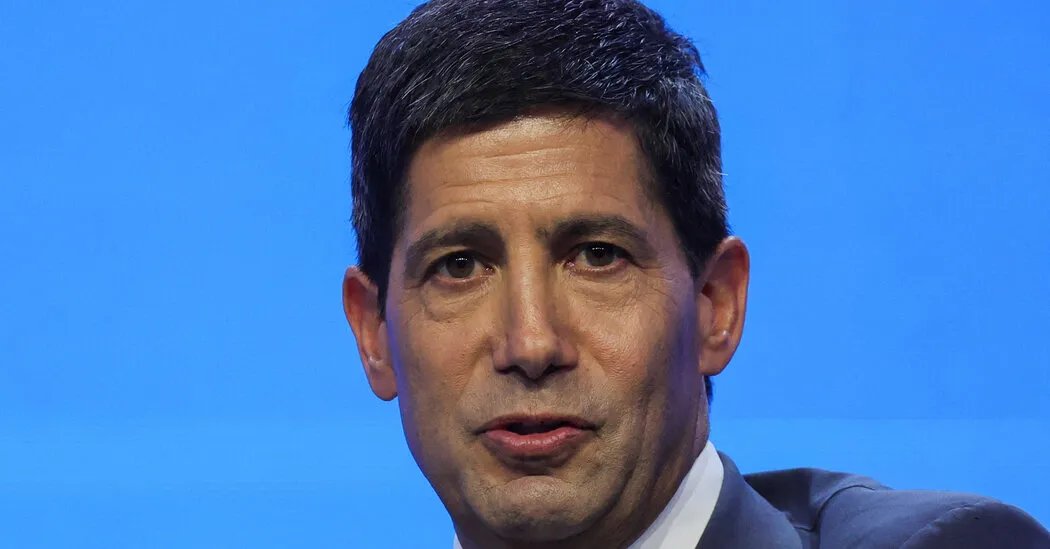
Kevin M. Warsh, who took over as chairman of the central bank in May, told reporters that politics did not factor into the Fed’s decision on Wednesday. Instead, he suggested that the Fed had the flexibility to wait and accumulate more information before its next meeting in December. He pointed to the fact that the public does not appear to be losing confidence in the Fed’s ability to eventually achieve its 2 percent target and that there were not yet signs that the economy was overheating.
“Is the economy running too hot? Is the economy too strong? That isn’t the judgment of most of my colleagues,” said Mr. Warsh.
Mr. Warsh also leaned into the fact that financial conditions, which track the availability of credit across the economy, appear slightly less accommodative than they have in the past.
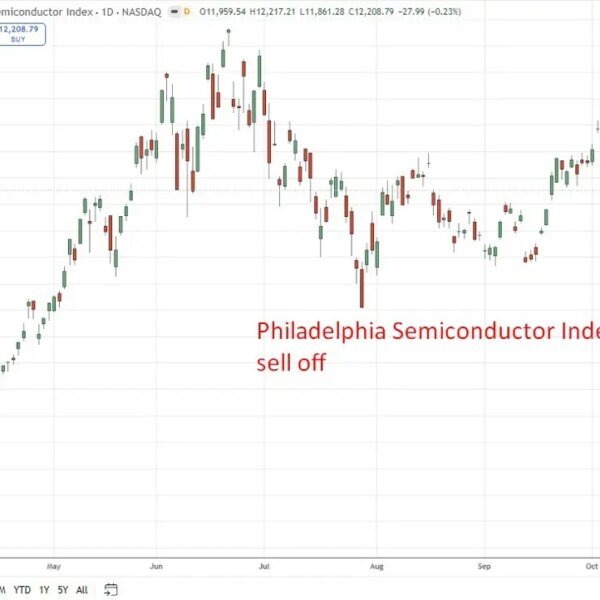
U.S. government borrowing costs have risen sharply in recent months, making not only mortgages and other consumer loans more expensive, but also financing for companies. Certain artificial intelligence companies, which have issued a significant amount of debt to fund expansion plans, appear particularly exposed, sparking a sell-off in technology stocks as recently as last week.
On Wednesday, the short-dated, two-year Treasury yield fell to 4.72 percent while the 10-year Treasury yield rose before settling around 5.02 percent. The move in the 10-year was driven by a rise in the break-even inflation rate, which is a market measure of investors’ inflation expectations.
Mr. Warsh stopped short of describing financial conditions as “tight,” but he noted that “market participants are becoming somewhat more discerning in their capital allocations.”
Later in the news conference, he said this shift wasn’t something that the Fed was “uncomfortable with.”
“It tells me the policy is working, and I think we can do that and make the economy more durable, have it last longer, and still achieve stable prices,” he said.
The chairman was on the defensive on Wednesday because the incoming inflation data since the central bank’s last meeting has been far from reassuring. Price pressures appear to be broadening out after a series of recent shocks caused first by Mr. Trump’s tariffs and later by the U.S.-Israel war with Iran. Energy prices have shot higher across the board, threatening to spill over into other goods and services.
The economy has continued to grow at a solid pace despite these headwinds, fueled in large part by an investment boom stemming from companies scrambling to expand their A.I. capabilities. Prices for computer chips and other crucial components have risen sharply, contributing to higher inflation. Wage gains have failed to keep up with rising prices, however, meaning Americans are earning less for an hour of work.
Asked specifically about A.I., Mr. Warsh pushed back on the idea that the sector is insensitive to higher rates, citing recent market ructions in that space. Investors were “discriminating between the kinds of investments they want to make,” he noted.
Mr. Warsh also stressed the productivity gains that he expects the proliferation of this technology to continue to fuel. “Economic growth is higher, but that doesn’t tell me that economic growth is somehow causing inflation and making our job harder.” he said.
Ms. Cook’s dissent was notable for two reasons. She is the first governor on the Fed’s board to vote against a policy decision since Mr. Warsh took over as chairman. She is also locked in a legal battle with Mr. Trump, who has long sought to pressure the Fed into lowering rates. Ms. Cook became a target in the summer of 2025 when the president seized on unproven allegations that she committed mortgage fraud before joining the central bank.
Mr. Trump has renewed that effort after the Supreme Court ruled against him on the matter earlier this year. The White House has launched its own investigation into Ms. Cook and summoned her in for an in-person hearing. Mr. Warsh on Wednesday said the Fed would not be involved in those proceedings.
The chairman on Wednesday also announced a major change to how often the Fed will vote on interest rates going forward, an idea that The New York Times first reported the chairman raised with colleagues in July. In 2027, the Fed will hold seven policy meetings where rates will be set, and one dedicated to discussing “broad monetary policy strategy.” In 2028, there will be six policy meetings, and two focused on strategy. For decades, the Fed has met eight times a year to set interest rates.