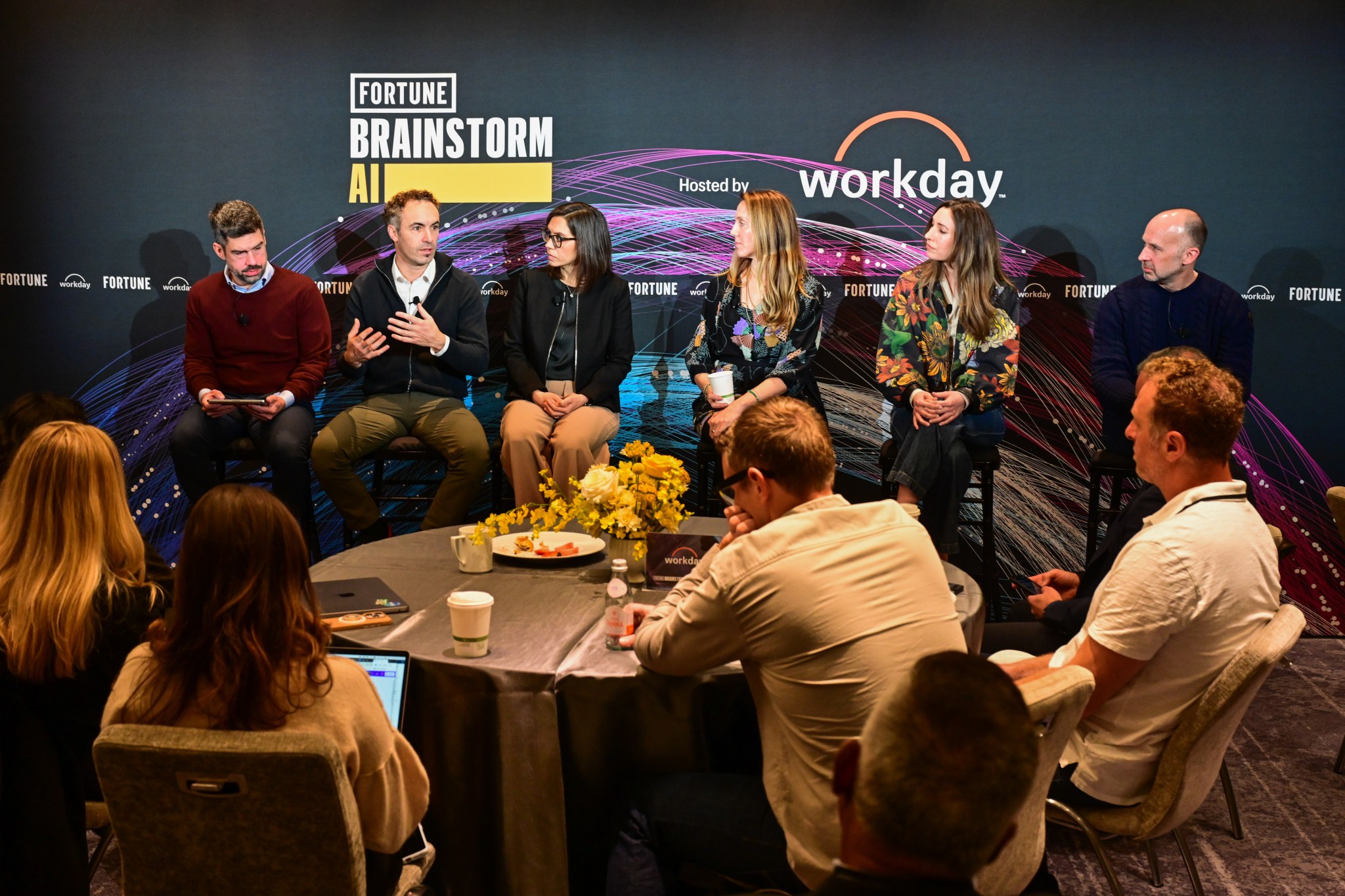
AI isn’t just a new tool for the modern workplace; it’s already quietly reshaping how some companies are organized. Companies including Amazon, Moderna, and McKinsey are already eliminating management layers, working to flatten organizations, and deploying AI agents to automate routine work.
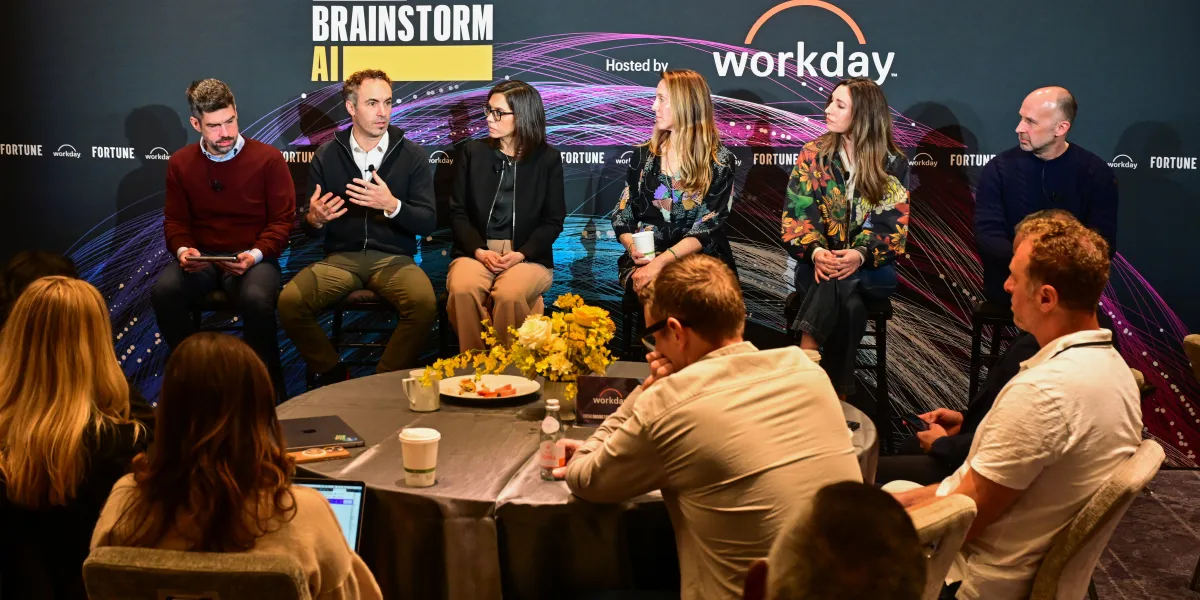
As AI rewrites the corporate org chart, humans can avoid some managerial drudgery, according to industry leaders at Fortune’s Brainstorm AI conference. Managers currently spend a lot of time bogged down with digital tools and administrative tasks, Danielle Perszyk, a Cognitive Scientist at Amazon’s AGI SF Lab, said: “Whether you are a manager or an IC, you are tethered to your computer screen, and all of the productivity apps that we are using are actually undermining our productivity.”
AI agents functioning as “universal teammates” and doing some of these tasks could help managers escape this cycle, Perszyk said, allowing them to focus on strategy. Aashna Kircher, Group General Manager in the Office of the CHRO at Workday, said this could free up managers’ time for other kinds of work. “The role of the manager will very much be as a coach and enabler and a team work director, which theoretically has always been the role,” she said.
Toby Roberts, SVP of Engineering and Technology at Zillow, said that the shift toward AI agents could fundamentally change management structure. Escaping day-to-day minutiae could allow managers to oversee larger teams, he said.
However, as AI automates more of managers’ work, companies may need to reset expectations around what management means in the AI age.
“Historically, we’ve measured management by the output of their teams, not necessarily by the human qualities of being a manager,” Kircher said. Organizations need to build “accountability and incentive structures around rewarding the things that are going to be absolutely critical moving forward for people leaders.”
What AI can’t do
AI can also have negative downstream effects on interpersonal relationships if it is overused or misused. When managers over-rely on AI for collaborative work, organizations risk deteriorating people’s ability to work together effectively, said to Kate Niederhoffer, Chief Scientist and Head of BetterUp Labs.
“Direct reports’ perceptions of managers go down the more they perceive AI and agents to be used in moments of recognition or providing constructive feedback,” Niederhoffer said. “People perceive that humans are better at these empathetic and more essentially human tasks.”
Some managers already struggle with the emotional side of leadership, with many becoming “accidental managers”—employees who were promoted for their professional talents rather than people skills.
But AI’s “synthetic empathy”—even if it’s sometimes more consistent than human interactions—is not the answer, said Stefano Corazza, Head of AI Research at Canva. “The more AI there is, the more authenticity is valued,” he said. “If your manager really shows that he will spend time with you and cares, that goes a long way.”