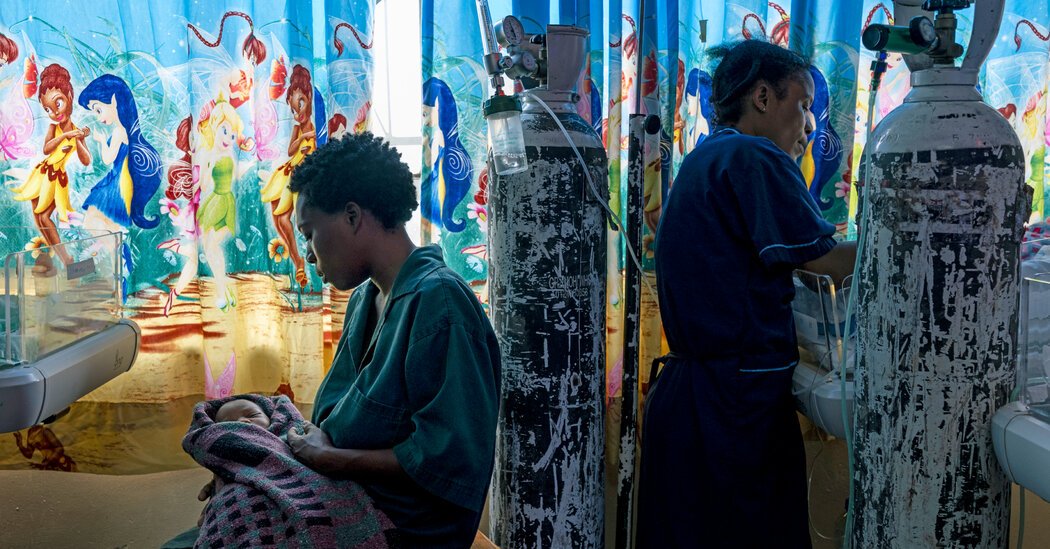
Saulo Kasekela died of AIDS on March 7, in a small town called Mpongwe in the copper belt of northern Zambia. He was a 37-year-old security guard, admitted to the mission hospital two days earlier. After his body was wheeled out of the men’s ward, a nurse set aside his chest X-ray, a clouded smear of lungs devoured by tuberculosis, a hallmark of advanced, untreated H.I.V. infection. A scrawled doctor’s note indicated the X-ray should be saved for medical students.
Of the eight patients in the ward at day, four had AIDS. Lewis Chifuta, 33, was bone thin, feverish and barely able to recognize his siblings when they reached his bedside.
A year ago, in Mpongwe, there was one case like this each month, or maybe two. In January this year, there were 28 new cases; in February, 28 more; in March, seven more.
During President Trump’s first month in office, his administration upended much of the flagship global H.I.V. program that had saved the lives of hundreds of thousands of people in Zambia. The Zambian government went into emergency mode, desperate to ensure that people with the virus could continue to receive lifesaving medications.
But other crucial aspects of the program had to be scrapped — interventions that had helped stop the spread of the virus and protected the most vulnerable people, those like Mr. Kasekela.
Today, a pared-down system is operating on reduced U.S. support, and Zambia may lose that help entirely in the next few days. The Trump administration has set an April 30 deadline for the Zambian government to accept a new health funding agreement that is tied to giving the United States expanded access to the country’s mineral resources.
The administration says the deal would offer Zambia five years of funding and help to build a stronger system that gives the country more control. But if Zambia doesn’t sign, officials warn that Washington could cut off all of its H.I.V. aid, a situation health officials here say would be disastrous.
What is happening in Mpongwe now is a grim echo of a time that most of the nurses and clinicians here are not old enough to remember. Three decades ago, hospitals in Zambia were packed with young men and women dying agonizing deaths, and the H.I.V./AIDS pandemic had overwhelmed the health system. Life expectancy had dropped to 37.
In 2003, President George W. Bush’s administration launched a historic humanitarian response to the pandemic — the President’s Emergency Plan for AIDS Relief, or PEPFAR — and Zambia was a focus country. By then, a lifesaving cocktail of antiretroviral medications had beaten back AIDS in the United States and other high-income countries, but the drugs cost tens of thousands of dollars, and almost no one in Africa could get them.