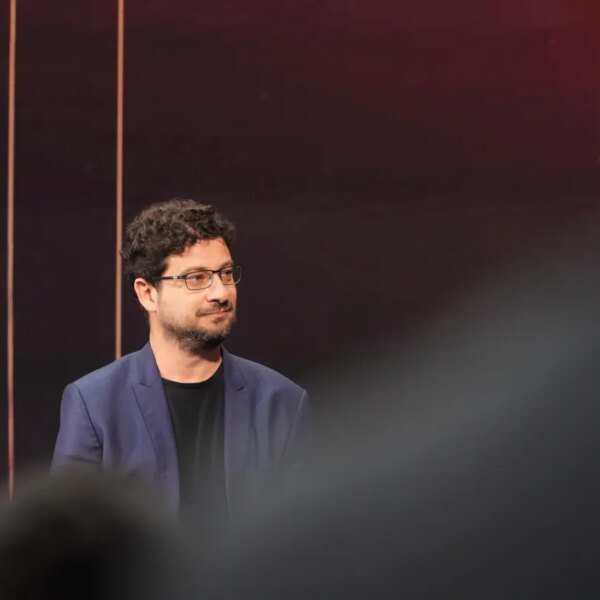
When Paris Saint-Germain beat Arsenal to retain the Champions League title last week, soccer fans were joyous or dejected, depending on their allegiances. I don’t have a dog in the fight, but I used the win as an excuse to revisit the dramatic P.S.G.-inspired anthem “Le Coeur de Paris,” featuring the mezzo-soprano Marina Viotti. I became acquainted with Viotti earlier this year, via a story about her many pursuits and identities beyond opera.
“I think generally people should not do only one thing in their lives,” Viotti told The Times.
Before Viotti ever studied voice — never mind became an opera star — she was a heavy metal singer and received a master’s degree in literature and philosophy. She performed in the opening of the Paris Olympics in 2024, sang at Black Sabbath’s final concert and won a Grammy last year with the band Gojira for best metal performance. Earlier this year, she played the role of Prince Orlofsky in “Die Fledermaus” at the Zurich Opera.
By the time Viotti was 39, she had co-written a book and produced three albums. She “speaks an alarming number of languages fluently,” the Times reporter noted. (And here I was worried that I speak an alarmingly low number of languages fluently.) One would be forgiven for feeling slightly inferior when comparing oneself to such a diversely talented multi-hyphenate.
But I’ve been thinking about that idea of “doing only one thing” in one’s life. Even if we’re not opera stars, we have our areas of expertise and, when we reach a level of accomplishment in one arena, it’s easiest to stop starting new things. There are only so many hours in the day, after all. If we’ve achieved some success in our work, or in baking, or knitting, or martial arts, we are now people who do that thing, who define ourselves as bakers or knitters. When we’re young, we might try many things in search of the one or ones that will stick, but in adulthood, it feels more comfortable to be good at things than to take on new ones.
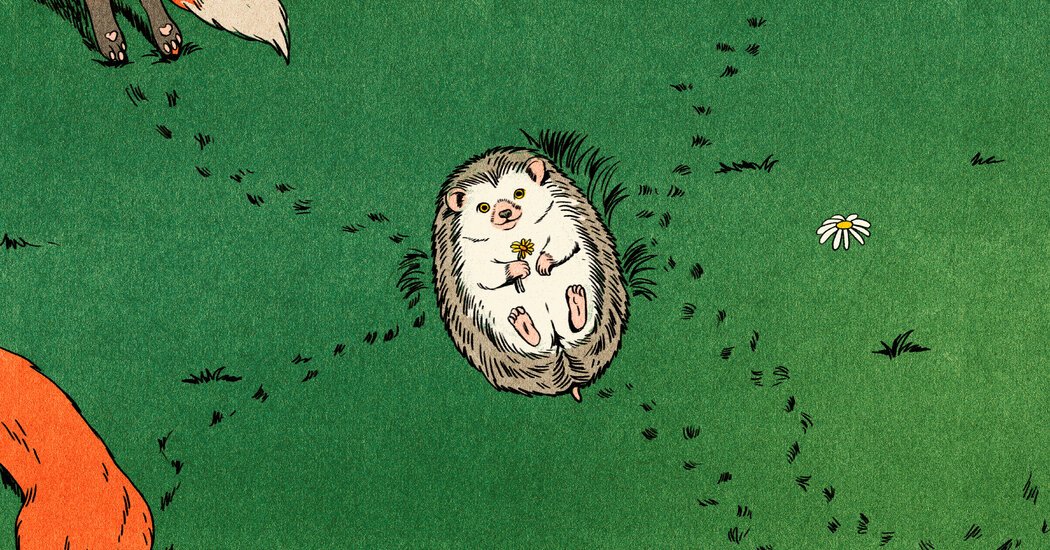
In his 1953 essay “The Hedgehog and the Fox,” the philosopher Isaiah Berlin suggested that people can be divided into two groups: hedgehogs, who know one big thing, and foxes, who know many things. Hedgehogs have a unified vision of the world, one central belief that governs their thinking. Foxes are more scattered, pulling from varied sources, changing their thinking as circumstances change. Berlin didn’t assert that one type was better than the other, but put forth his theory to describe writers and thinkers of his day. (Tolstoy, he wrote, was a fox who deeply wanted to be a hedgehog.) The result is a pretty entertaining low-stakes parlor game.
I read Viotti’s statement as an admonition to do more, to not confine ourselves to our areas of expertise (baking, knitting) but to seek out more and varied interests (why not cross-country skiing? why not painting?). When viewed through Berlin’s lens, Viotti is encouraging us to be more fox than hedgehog. There’s a hedgehogginess in keeping to the stuff we know that we like and that we already do well. If we’re foxier, we’re less inclined to see our identities as fixed, our worlds as established and unchangeable. We’re flexible and curious and seeking out new experiences beyond what we already (think we) know.
I’m still trying to figure out if I’m a hedgehog or a fox. I think we’re all some combination of both — a pure hedgehog risks being single-minded, a pure fox might be a dabbler, and people are much more complicated than these designations could ever articulate. But it’s interesting to look at how the hedgehog and fox impulses play out in your own life. If the classification system “is not an aid to serious criticism, neither should it be rejected as being merely superficial or frivolous,” Berlin wrote. “Like all distinctions which embody any degree of truth, it offers a point of view from which to look and compare, a starting-point for genuine investigation.” Let’s investigate.
THE LATEST NEWS
Elections
Blueberry-Ginger Clafoutis
A purple-spotted take on the classic French dish, Nik Sharma’s blueberry-ginger clafoutis is a lovely dessert to make as berry season arrives. His clever technique of pre-baking some of the batter keeps the berries from sinking and burning, and ensures perfect fruit distribution. Grated ginger adds a touch of warmth without overwhelming the berries. And if the available fresh blueberries aren’t quite up to snuff, this works beautifully with frozen fruit, too.
The Hunt: With about $1.5 million to spend on Manhattan’s Upper West Side, a couple looked for more bedrooms, some office space and an easy commute to school. What did they find? Play our game.
What you get for … $1.3 million in Sweden: A 10-bedroom manor from 1806. A 25-acre farm estate near the Baltic Sea. A five-bedroom modern farmhouse.
For sale, with a dreamy pool: A 1960s compound in the Berkshires, a tropical cottage in Miami, a quintessential Hamptons house, and two California retreats.
Not just networking: Is LinkedIn entering its post-cringe era? Celebrities and influencers are getting more active on the business-focused platform.
A.I. advice: Companies want you to use their chatbots to devise a morning routine — though the advice tends to be things like “drink coffee” and “get dressed.”
Revolutionary journeys: Some of the fiercest battles of the Revolution were fought in South Carolina, but its role is often overlooked. A trip to Charleston revealed history, myths and beauty.
ADVICE FROM WIRECUTTER
How to make sports look better on TV
If you’re planning to watch the World Cup this summer from home (or any other sporting event), try motion smoothing. Though it has a reputation for making movies look wonky, motion smoothing can enhance sports by making fast action look less blurry. If it’s not already turned on by default, try looking for it in the picture settings menu. And if you’re planning to attend one of the matches in person (lucky you!), our style expert found stadium-friendly clear bags that are actually decent looking. You’re welcome. — Rose Maura Lorre
GAME OF THE WEEK
Mirra Andreeva vs. Maja Chwalinska, French Open women’s final: A few weeks ago, The Athletic’s Ava Wallace reported, Maja Chwalinska had two goals: to qualify for the French Open, and to be ranked in the top 100 by the end of the year. Mission accomplished, and then some.
Chwalinska is currently ranked No. 114 in the world, though not for long. She is the lowest-ranked French Open finalist in history. She’s also the first women’s singles player to come through qualifying and reach the final. She has a style “full of slice and spin,” Ava wrote, “that utilizes drop shots and forces baseliners to play without rhythm.”
Mirra Andreeva is just 19 years old — five years Chwalinska’s junior — but ranked No. 8 in the world. Neither woman has won a Grand Slam tournament before.
Today at 9 a.m. Eastern on TNT (streaming on HBO Max)