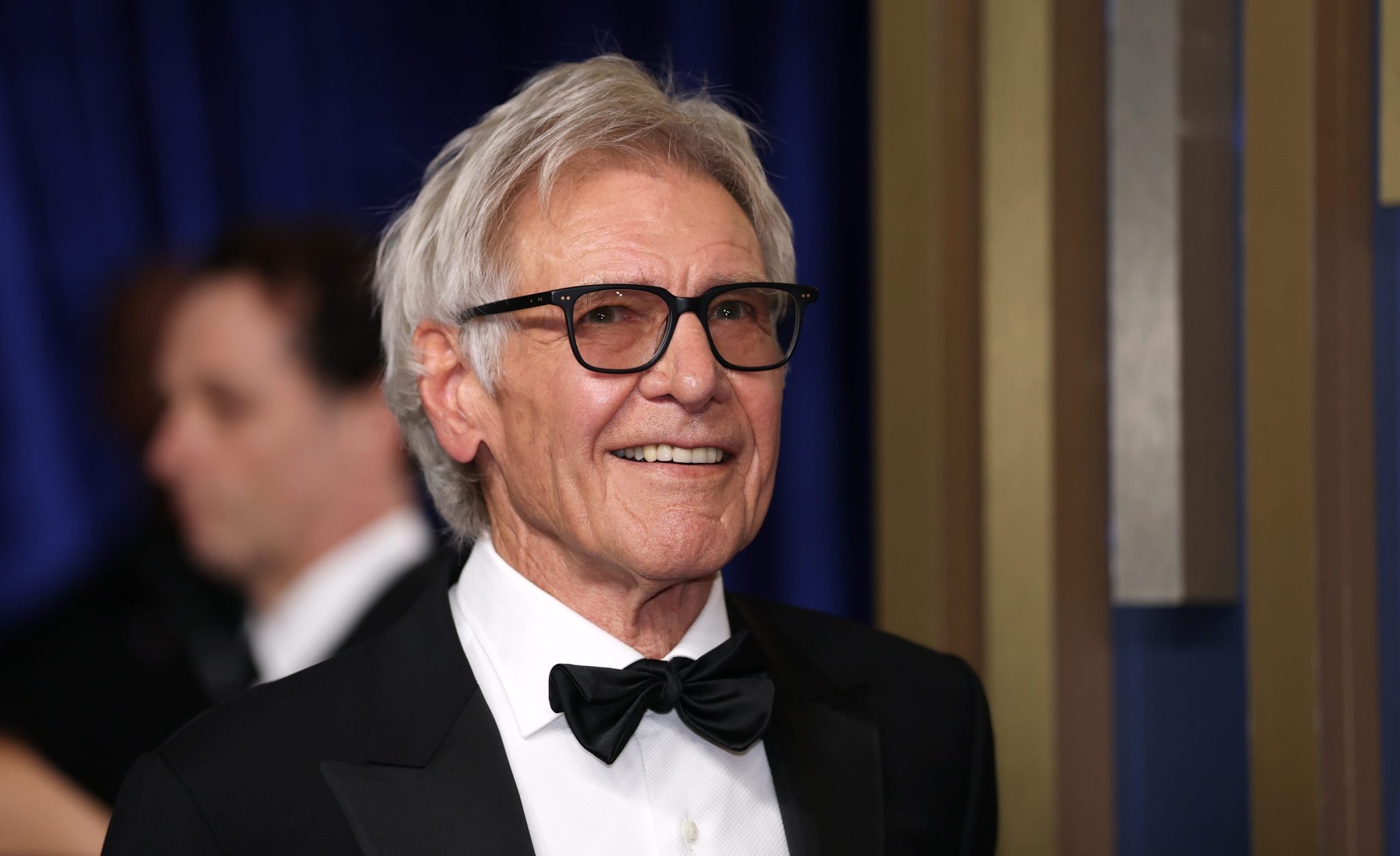
Harrison Ford is known to the world for helping turn characters like Han Solo and Indiana Jones into cultural legends. But before blockbuster Hollywood fame and multimillionaire status, Ford and his growing family were struggling to make ends meet.
“Acting was not yet paying the bills,” he said this week during a commencement address at Arizona State University, reflecting on the 1960s and 1970s when he was landing only minor—or entirely uncredited—roles in film and television.
So, the now-83-year-old actor did something many young people know well: he picked up a side gig.
“I was supporting my growing family with carpentry jobs. Another way to put food on the table,” Ford said. “I loved making things. And I only took acting jobs when the parts challenged me.”
That balancing act lasted roughly 15 years. During that stretch, Ford said he landed only “four or five” acting jobs—but viewed them as ambitious projects worth pursuing.
Everything changed when he caught the attention of George Lucas and was cast in the mid 1970s as Han Solo in Star Wars: A New Hope. Ford told GMA in 2015 he was paid just $1,000 a week for the role, which reportedly amounted to around $10,000 total (a little over $50,000 in today’s dollars). For the more recent sequel film Star Wars: The Force Awakens, Ford was reportedly paid $25 million.
Harrison Ford stumbled into acting while searching for an “easy A”
Ford’s eventual success was far from guaranteed. He was born in Chicago in 1942, and, by his own account, had little direction as a young adult.
“I didn’t give much thought to my future when I was in college,” Ford told ASU graduates. “I did not make good choices. I didn’t have the perspective, the maturity. I served only myself. I was squandering my life in riotous living.”
That lack of direction, however, inadvertently led him toward his future career. During his junior year at Ripon College—a small liberal arts college in Wisconsin—Ford enrolled in a class called “Drama: The Study of Plays” because he believed it would be an easy A.
“My classmates were people I had previously discounted as geeks and misfits,” he said. “But I soon realized I was a geek and a misfit. I had found my fit. These were my people.”
After starring in several college plays, his school years ended abruptly. Just four days before graduation, he was expelled: “They called it plagiarism,” he told CBS in 2023.
Still, the connections he had made in theater helped open doors—even without a formal degree. Thanks to help from the school’s theater department head, Ford eventually landed an interview with Columbia Pictures in California and began landing small gigs.
Now famous worldwide, with an estimated net worth north of $300 million.
Harrison Ford tells Gen Z: find the difference between your passion and purpose
Even as large paychecks started rolling in for Ford, he found that it alone wasn’t his true calling. He warned Gen Z that he learned the hard way that passion and purpose are two different things.
“Passion and purpose are not the same thing,” he said. “Passion brings you joy. Purpose brings you meaning. Passion gets you out of bed in the morning, but purpose allows you to sleep at night. And I hadn’t found purpose higher than my job yet.”
Ford said he found a deeper sense of purpose in environmental activism in his late 40s after connecting with Wyoming conservationists affiliated with Conservation International, a group he continues to work with. That experience helped shape the message he delivered to graduates: to build a life that contributes something meaningful beyond oneself.
“Whatever talent or ambition you have, find some way to put it to work,” he said. “Build something that didn’t exist yesterday. Stand up for someone who can’t stand up for themselves. Bring people together who weren’t talking before. That’s leadership. That’s what moves the needle.”
At a time when college graduates are more pessimistic than ever about their careers—in part thanks to anxiety over AI-driven disruption, Ford closed by urging Gen Z to recognize the influence they already possess.
“When opportunity presents, recognize it. This is your time. Own it. Enjoy every second of it,” he said. “Because what could be worse than getting to the end of your life and realizing that you haven’t fully lived it?”
Fortune wants to hear from the class of 2026—how are you feeling entering the job market? What have you done to prepare? And what are you looking for as you enter the world of work? Email preston.fore@fortune.com.