China’s near‑monopoly over rare earth processing has turned a once‑obscure corner of mining into a frontline of geopolitical competition, forcing the U.S. and its allies into a costly race to catch up.
“Clearly, China is the leader, and the U.S. is far behind,” veteran mining executive Mick McMullen told Fortune on March 10, at the sidelines of the U.S. Capital Access Forum in Singapore, organized by business advisory firm Hall Chadwick. “It’s a bit unbelievable that it’s taken so long for everyone to realize that maybe we should have some of these things in house.”
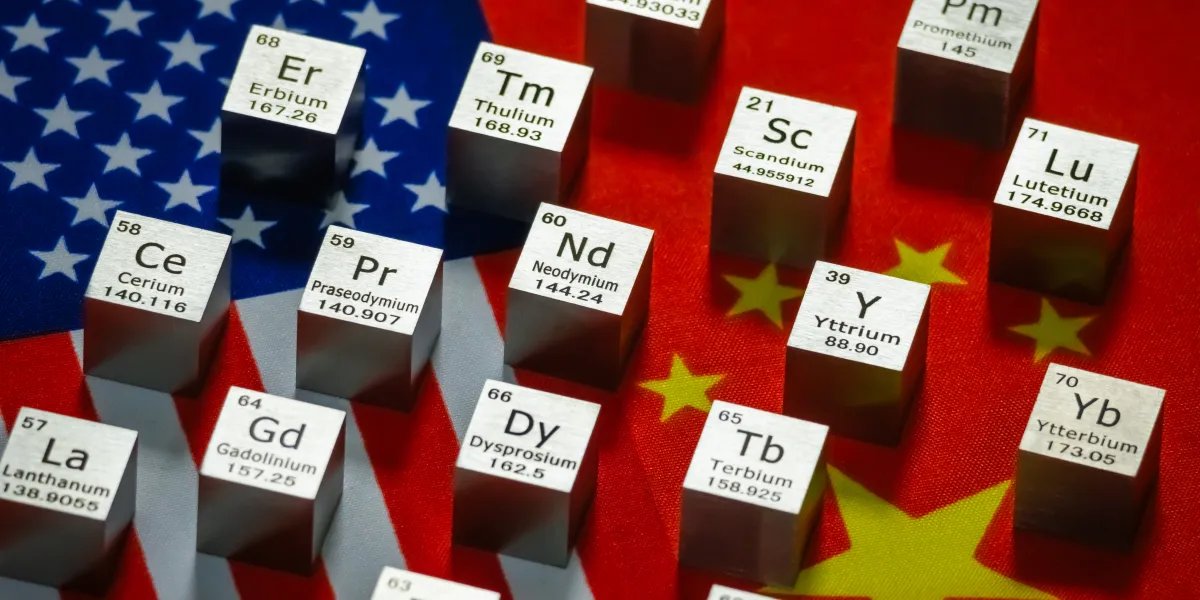
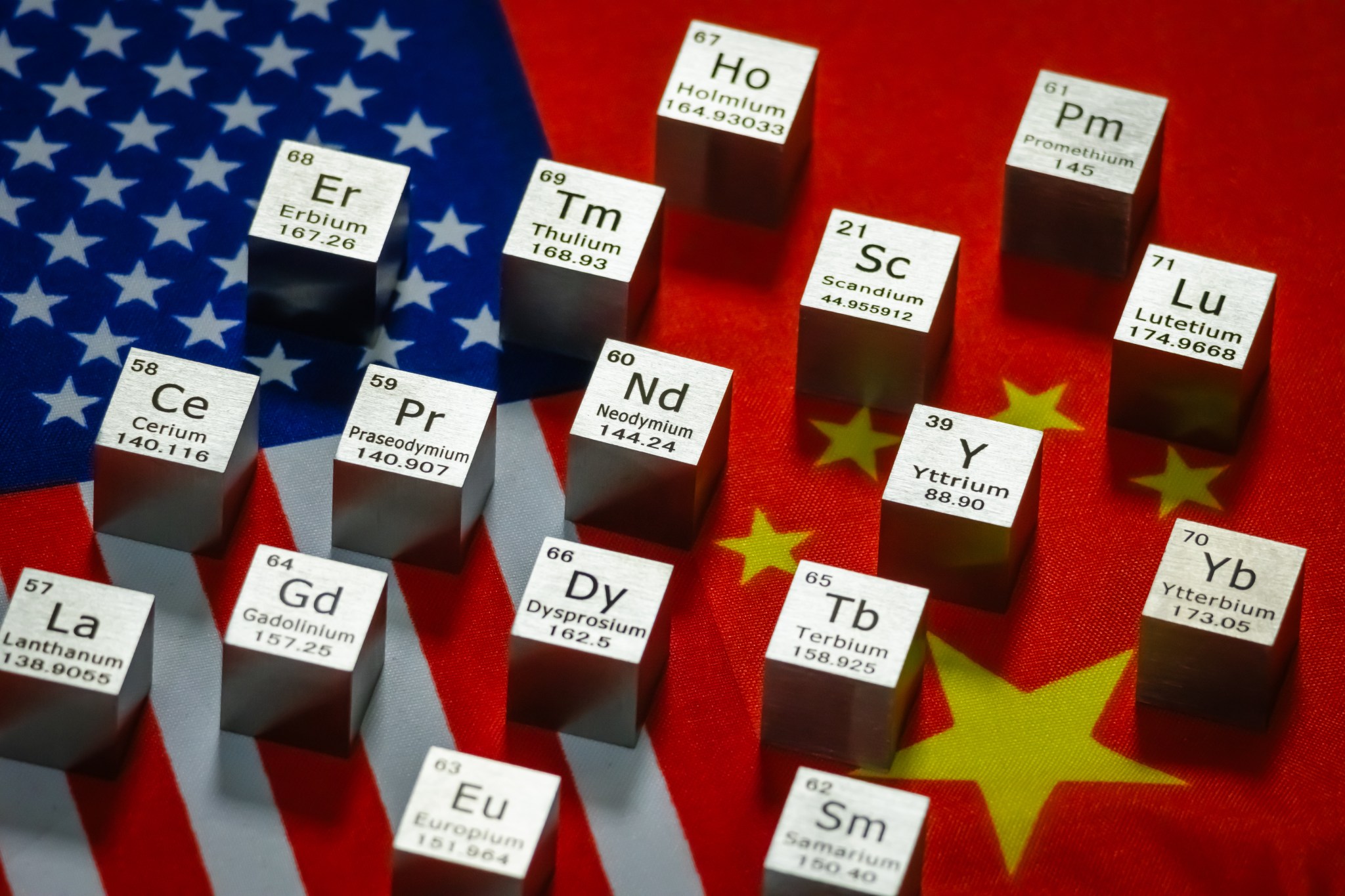
China accounts for roughly 70% of global rare earth production, but it is the country’s dominance in processing that gives Beijing real leverage. With close to 90% of the world’s rare earth refining and processing capacity, China effectively controls the flow of materials used in products ranging from electric vehicles and wind turbines to advanced semiconductors and precision‑guided munitions.
Since the 1980s, China has shelled out billions of dollars in investment and subsidies to secure its dominant position across the supply chain of rare earth metals. “China has been at this for more than 30 years,” McMullen said.
The country’s dominance of rare earth production made headlines last year after Beijing slapped export controls on several key metals in retaliation to U.S. President Donald Trump’s tariffs on China. Beijing imposed restrictions on the sale of elements like samarium, dysprosium and terbium, which are crucial for defense, electric vehicle and semiconductor industries.
Key industries like the auto sector worried that they’d run out of necessary components in a matter of weeks, effectively halting production. China later suspended several of these export controls as part of a tariff truce with Trump last November.
But 2025 wasn’t the first time that China tried to leverage rare earths as part of its diplomacy. “Japan has had multiple occasions where China turned the taps of rare earth off,” McMullen explained.
In 2010, following a maritime diplomatic dispute over disputed islands in the East China Sea, China halted rare earth exports to Japan for two months, choking industries that relied on high-tech manufacturing materials. And earlier this year, China tightened Japan export restrictions on rare earths like gallium, germanium and graphite, following comments on Taiwan by Japanese Prime Minister Sanae Takaichi.
How countries are reacting
Governments were already trying to diversify their sources of rare earths before China’s export controls last year. In 2024, the EU passed the European Critical Raw Materials Act, which set 2030 benchmarks for the bloc to meet 10% of its annual consumption from domestic extraction, 40% from domestic processing and 25% from recycling of critical raw materials, including rare earths.
China’s export controls on rare earths have accelerated a global push to build up alternate sources of rare earths. Countries like Australia, Canada, Japan and France are investing heavily into processing technology and infrastructure.
Last October, the U.S. inked an $8.5 billion rare earth pact with Australia and two deals with the Southeast Asian nations of Malaysia and Thailand, in a bid to help American manufacturers diversify their supply of critical minerals.
Industry leaders, too, recognize the importance of investing into downstream processing.
“Everybody focuses on where the resources are, and how we are going to secure them,” Dulguun Erdenebaatar, the CEO of Singapore-based Boroo Mining Company, told Fortune. “But the processing capabilities are very important to unlock supply chain constraints internationally.”
Yet, experts argue that the world will likely remain reliant on China for critical minerals for the foreseeable future, and it may be years till other nations catch up.
“The processing process requires specialized technology, which China currently controls,” McMullen explains. “There is rare earth processing capacity elsewhere in countries like South Korea—and they have some good technology—but it’s all pretty small-scale for now.”
It could, optimistically, take countries a decade to build their own rare earth industry. “I’m not sure how long it takes to solve it, and whether it can get done in one administration term,” McMullen says. “The rest of Asia probably just has to keep taking it off China for now.”