
Bitcoin rose 2.19% to $83,105 on October 21, after an unconfirmed report that the U.S. and Iran were close to a deal knocked Brent crude down as much as 3.3% on Tuesday, before a diplomat in the talks denied it. That makes ten. Ten Iran headlines since March that moved oil hard and then fell apart, and the Bitcoin news cycle has danced to almost every one.
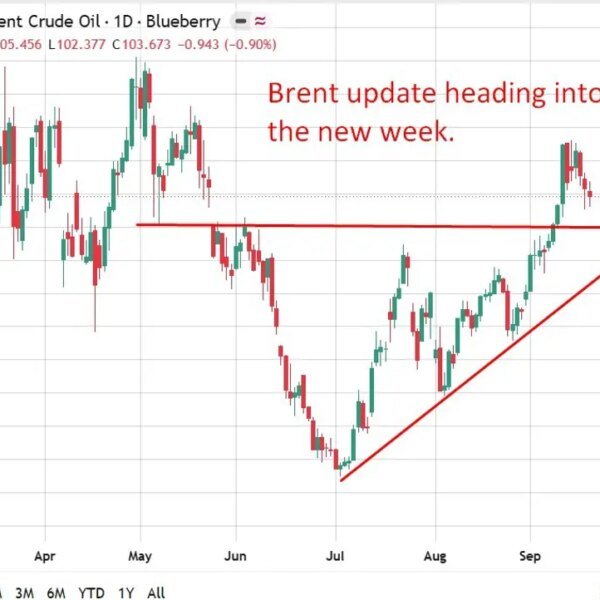
The latest swing was big even by this year’s standards. Saxo’s morning note has Brent hitting a five-month high above $111 a barrel on Tuesday, then reversing to settle at $108.79. It was back near $110.40 this morning.
So is Bitcoin now just an oil trade with a different ticker?
BREAKING: US oil prices rebound on reports stating that other reports claiming the US and Iran have reached a deal are false.
We now have reports on reports that are moving hundreds of billions of dollars in market cap. pic.twitter.com/QDr3q2wkTQ
— The Kobeissi Letter (@KobeissiLetter) October 20, 2026
DISCOVER: Meme coin supercycle: Top performers this week
How Often Have Iran Headlines Moved Oil This Year?
Ten times, with Brent dropping as much as 15% in minutes. Each report was later denied, disputed or never delivered.

Brent Crude Oil CoinBureau
The pattern started early. On March 9, President Trump told CBS the war was “pretty much complete.” Brent fall from a $119.50 session high to below $90 in Asian trading. The war ran for months more. On April 17, Iran’s foreign minister Abbas Araghchi wrote that the Strait of Hormuz was “completely open.” The Revolutionary Guards contradicted him within hours and shut it fully the next day.
It cuts both ways. On June 1, Iranian media said talks were off and Brent jumped 4.5%. Sixteen days later, the two sides signed a memorandum of understanding.
DISCOVER: AI Predicts Bitcoin Shrugs Off $110 Oil as Last Year’s Sellers Quietly Disappear
Bitcoin News: Does BTC Trade Iran Headlines Like Oil?

Brent Crude vs Bitcoin
Yes, but in reverse. On the nine days an Iran deal headline promised peace or an open Hormuz, Bitcoin closed higher eight times, by 1.74% on average. On the one day a headline pointed to escalation, it fell 3.08%.
And when the denial landed, some of it came back. Bitcoin gave up 1.79% the day after Araghchi’s Hormuz post and 1.77% the day after the May 6 report.
The link runs through the Federal Reserve. High oil prices keep inflation hot, and hot inflation keeps the Fed hiking. September’s consumer prices rose 3.7% from a year earlier, with gasoline alone up 9.1% in the month, after the Fed raised rates on September 16. A peace headline reads as cheaper oil, fewer hikes and more room for risk. A denial undoes all three.
Is anyone planting these reports on purpose? The tape can’t prove it. What it shows is that unconfirmed, single-source headlines move two markets at once, and the traders who react first take the other side of everyone who reacts second.
Ten headlines in, the lesson for anyone trading Bitcoin news is simple. Wait for both governments to say it before trading it.
EXPLORE: Claude AI Predicts Bitcoin After Buyers Defended $80,400 Twice in a Week
Disclaimer: Coinspeaker is committed to providing unbiased and transparent reporting. This article aims to deliver accurate and timely information but should not be taken as financial or investment advice. Since market conditions can change rapidly, we encourage you to verify information on your own and consult with a professional before making any decisions based on this content.

Daniel Frances is a technical writer and Web3 educator specializing in macroeconomics and DeFi mechanics. A crypto native since 2017, Daniel leverages his background in on-chain analytics to author evidence-based reports and deep-dive guides. He holds certifications from The Blockchain Council, and is dedicated to providing “information gain” that cuts through market hype to find real-world blockchain utility.