In an interview with Bloomberg former BoJ official says rate hike likely as inflation risks build despite war uncertainty.
Summary:
- Former BoJ official Kaizuka says rate hike likely this month
- Warns BoJ risks falling behind inflation curve
- Middle East conflict seen as reinforcing inflation pressures
- Oil prices easing but expected to remain elevated
- BoJ data shows inflation near 2% target
- Output gap revised to positive since 2022
- No downgrade to regional economic assessment
- Markets watching Ueda for pre-hike signalling
- Geopolitical risks (Trump factor) could derail decision
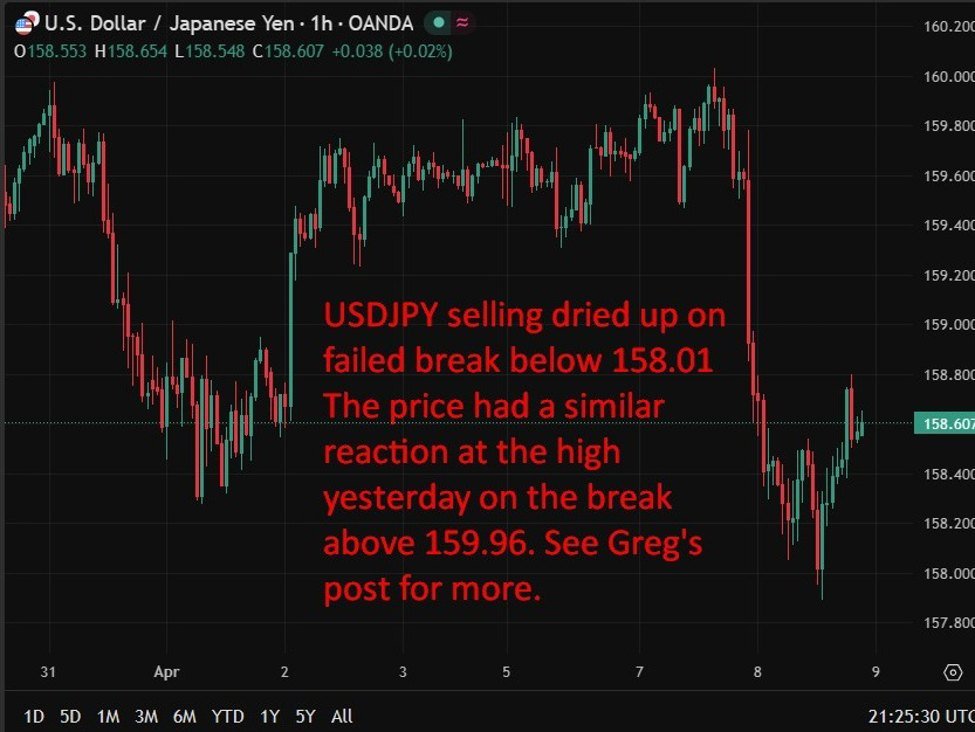
- USDJPY selling dries up on failed break below 158.01
The Bank of Japan is likely to raise interest rates this month to avoid falling behind the curve on inflation, according to former executive director Masaaki Kaizuka, who pointed to a combination of rising price pressures and shifting internal signals from the central bank.
Kaizuka said that if he were still at the BoJ, “it’s about time to act,” warning that the ongoing Middle East conflict is reinforcing an inflationary backdrop. While a temporary ceasefire has helped ease oil prices at the margin, he stressed that crude is still likely to remain elevated, sustaining upward pressure on costs across the economy. That dynamic raises the risk that inflation expectations could begin to accelerate, a scenario that would leave the BoJ lagging if it fails to tighten policy in time.
The comments come ahead of the BoJ’s April 28 policy decision, with market participants closely watching whether Governor Kazuo Ueda delivers a clear pre-meeting signal, as he did in December prior to the last rate hike. Ueda is scheduled to speak publicly in the coming days, offering a potential opportunity to guide expectations.
Kaizuka argued that recent BoJ data releases suggest the groundwork for tightening is already being laid. Price growth is now tracking around the central bank’s 2% target, while a recalculated output gap shows the economy has been operating above potential since 2022. This marks a significant shift from earlier estimates that had pointed to persistent slack, and reinforces the case that underlying inflation dynamics are becoming more sustainable.
Importantly, the BoJ did not downgrade its assessment of regional economies despite heightened geopolitical tensions and rising energy costs, further signalling confidence in the domestic outlook. Taken together, these developments point to a central bank that is increasingly comfortable with the idea of further policy normalisation.
However, uncertainty remains high. Kaizuka highlighted the risk that geopolitical developments, particularly unpredictable policy actions from U.S. President Donald Trump, could abruptly alter the outlook. He suggested that any sharp escalation or policy shock ahead of the meeting could derail a planned rate hike at short notice, even if the BoJ does not explicitly acknowledge such risks in its official forecasts.
April 27 and 28 the next Bank of Japan meeting.