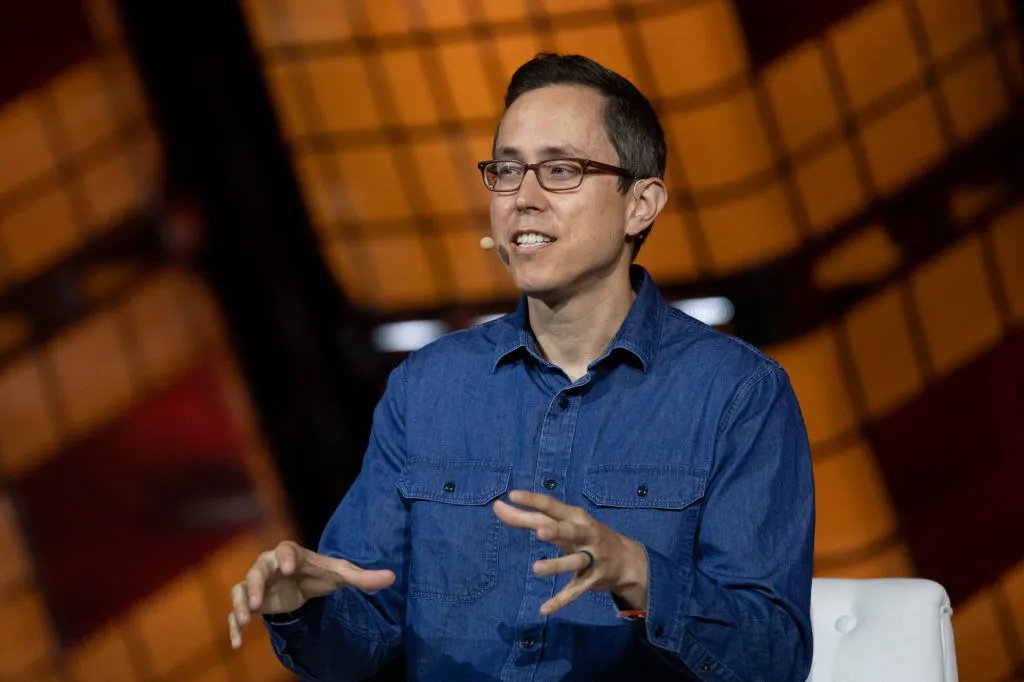

Cardano founder Charles Hoskinson used a Wednesday keynote at Consensus 2026 in Miami to argue that crypto’s next phase will not be won by another isolated chain, token or wallet. The Cardano founder said the industry must make self-custody, identity, privacy and multi-chain access simple enough for mainstream users without handing control back to centralized intermediaries.
Hoskinson framed the problem bluntly: crypto still asks users to manage seed phrases, navigate exchanges, wait for withdrawals, choose between networks, avoid fake apps and understand DeFi risk before they can do anything useful. That, he said, remains the core barrier to bringing “the next few billion people” into the industry.
“The number one problem that people say again and again and again when they think about cryptocurrencies, whether you’re an experienced user and you’ve been in the industry a long time or you’re a completely new person, you’ve heard about the industry is, I’m gonna fuck it up. The safety side,” Hoskinson said. “That is the user experience in 2026. That make any sense to you? Is this like a product you wanna use?”
Cardano Founder Targets Crypto’s UX Problem
His answer was not to abandon crypto’s original principles, but to make them usable. Hoskinson contrasted crypto’s current experience with Web2 products such as Google Wallet, which he said has around 1.5 billion users and trains consumers to expect one-click setup, recovery and seamless mobile access. Crypto, in his view, cannot keep insisting it is “different” if the product experience remains too punishing for ordinary users.
A central theme of the keynote was abstraction. Hoskinson credited Ethereum with advancing account abstraction and chain abstraction standards, arguing that these efforts became necessary as fragmented layer-2 environments created a poor user experience. He also pointed to Near Protocol as an example of embedding those ideas at the protocol level, citing $71 million in transaction fees in a year and billions of dollars traded through Near intents.
But Hoskinson warned that abstraction carries a tradeoff. When users delegate complexity to third parties, those parties often gain visibility into assets, transactions, preferences, identity and business data. For crypto to scale without repeating the surveillance model of Web2, he argued, abstraction must be paired with privacy.
“When you abstract things, you delegate to people. You trust people. You give them something to do that on your behalf somewhere else,” he said. “You don’t worry about the doing, but when they do the doing, they know you. They know what you’re buying. They know where you’re at.”
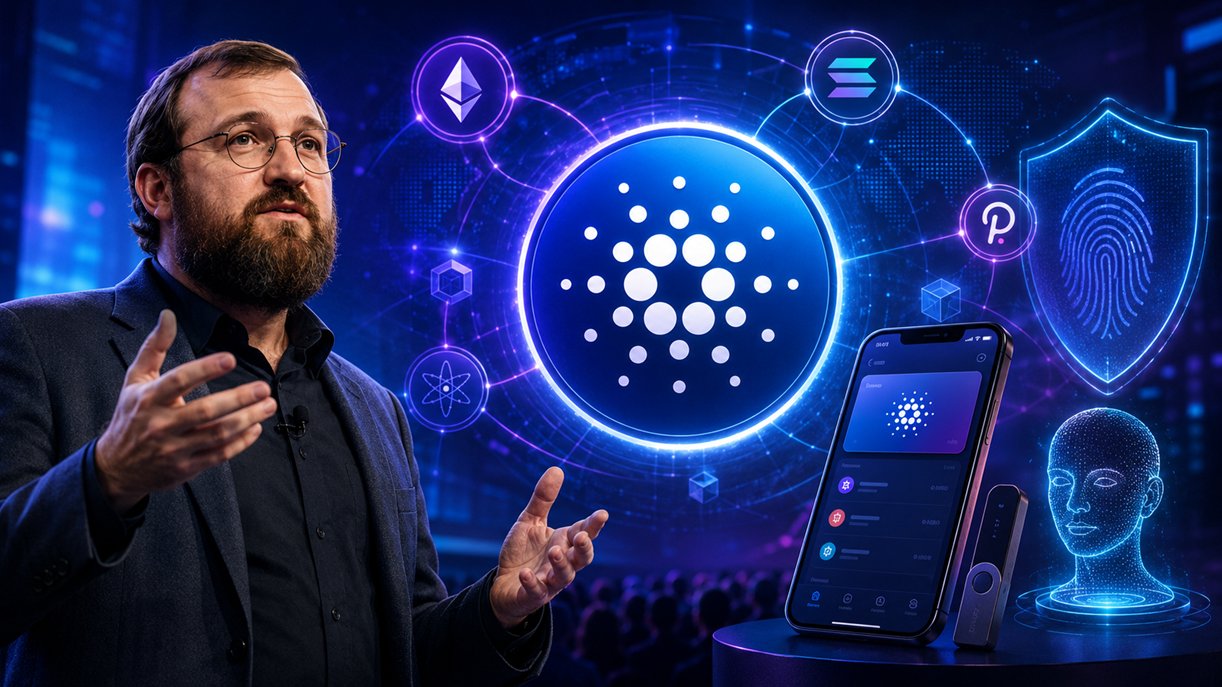
That argument led into Hoskinson’s pitch for Midnight Passport, a framework he described as combining mobile-native key management, recovery, self-sovereign identity, selective disclosure, wallet credentials, name services and multi-chain signatures. The idea, according to Hoskinson, is to let users scan a QR code, rely on trusted execution hardware already built into phones, encrypt off-chain data client-side and create wallets across networks such as Bitcoin, Ethereum, Solana and XRP.
“I don’t care what networks you want to use. I don’t care what assets you want to have,” Hoskinson said. “I want you to have control of those assets. I want you to custody those assets. I want you to be in control of your identity and your data.”
The keynote also expanded into AI agents, which Hoskinson described as an incoming force that could reshape internet commerce and crypto usage. He argued that agents may eventually handle most searches, transactions and online activity, while humans interact with a smaller “human internet.” For crypto, that raises a practical question: if users cannot safely evaluate DeFi protocols, counterparties or risks themselves, AI systems may become the layer that performs diligence and execution.
Why AI agents and blockchains need privacy.
Full @IOHK_Charles keynote.
Come build on Midnight! pic.twitter.com/XRqz4umgQB
— Stake with Pride 🌈 Midnight + Cardano (@StakeWithPride) May 6, 2026
Hoskinson said this makes privacy even more important, because effective agents require deep personal context. Midnight Passport, he said, is being developed not only for people but also for agents, allowing rules to be set around identity, data access and execution.
At press time, Cardano traded at $0.2689.
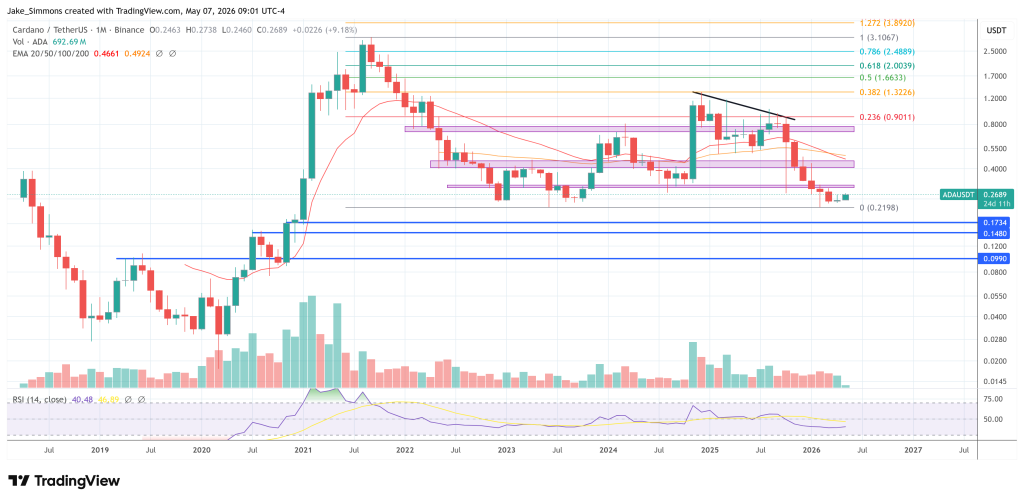
Featured image created with DALL.E, chart from TradingView.com
Editorial Process for bitcoinist is centered on delivering thoroughly researched, accurate, and unbiased content. We uphold strict sourcing standards, and each page undergoes diligent review by our team of top technology experts and seasoned editors. This process ensures the integrity, relevance, and value of our content for our readers.