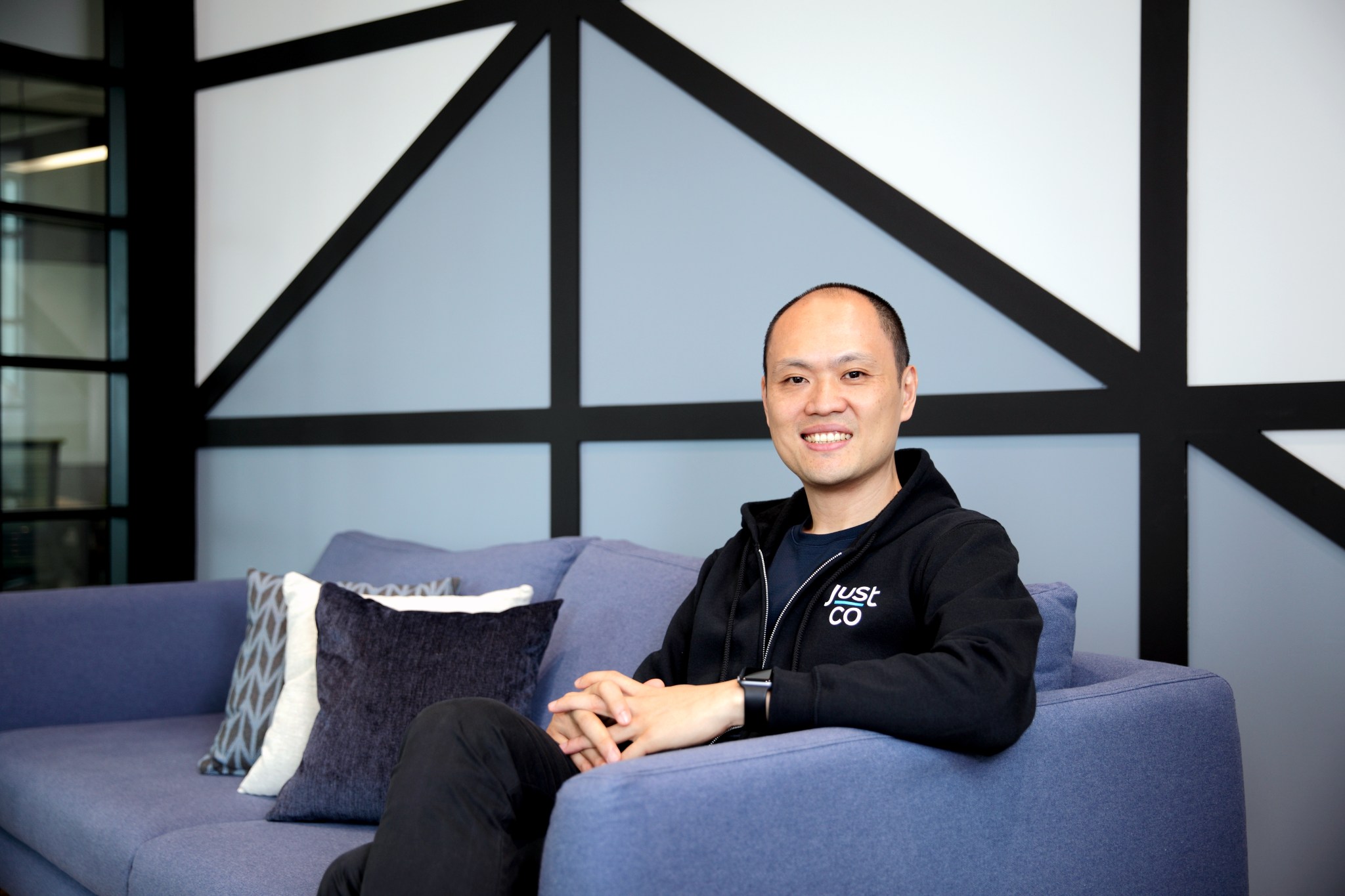
Kong Wan Sin, the founder and CEO of JustCo, one of Asia’s largest co-working space providers, doesn’t quite think of himself as leading an office company. Instead, he sees parallels with a different property business: Hotels.
“It’s a hospitality business. People come to us not just for the network, but also for the hospitality,” he told Fortune. “You need to serve them. You have to take care of their needs, like serving the customers who are coming to look for them in the office.”
Kong and JustCo are expanding their presence in Asia even as employers and employees continue to fight a battle about flexible work and returning to the office. Globally, corporate giants ranging from Amazon to JPMorgan have called workers back to the office full-time. But employees tout the benefits of working from home and hybrid work, forcing employers and office designers to get creative in how they bring people back.
The company is also expanding into new markets regionally, including Malaysia and India. In the longer run, they’re also looking to move into countries in North Asia and the Middle East.
“After entering all these markets, we will be truly covering all the key cities in Asia-Pacific,” says Kong. He’s even considering returning to mainland China, after JustCo exited the market in 2022 due to tight social distancing regulations during the COVID pandemic.
JustCo just entered the Vietnam market with a new office along Ho Chi Minh City’s waterfront. The Vietnamese city is the tenth urban market in Asia for JustCo. It’s also a return of sorts for Kong, who was first exposed to the idea of a flexi-office in Ho Chi Minh City several decades ago.
JustCo’s story
Kong Wan Sing founded JustCo in Singapore in 2011. Following a regional expansion drive in 2015, it now operates 48 offices across Asia-Pacific, including in major cities like Seoul, Bangkok, Taipei, Melbourne, and Sydney. Kong himself hails from a family of entrepreneurs; his parents operate garment factories in nearby Malaysia. “There’s genes inside me to build a business,” he says.
In the early 2000s, Kong was an employee of Singaporean real estate investment company Mapletree, working out of a flexi-office in Vietnam’s Ho Chi Minh City. (A flexi-office is a modern workspace where employees don’t have assigned desks, but instead choose from various work zones including hot desks, quiet pods, and collaborative areas.)
The experience opened his eyes to the value of flexible workspaces, and he saw a business opportunity in Asia, where such spaces were still few and far between.
Kong notes that, just three years ago, just under 4% of all offices in Asia-Pacific were flexi-offices. It’s since risen to over 5%, but that’s still half the level seen in more developed markets in Europe and the U.S. Yet JustCo’s CEO says he’s seeing a “surge” in Asia: “The growth is definitely much faster than European or American countries.”
JustCo also leases small offices for businesses to rent. Sixty percent of JustCo’s clients are multinational corporations looking for space for a regional office, Kong said. Companies like Chinese tech giant Tencent and U.S. vaccine maker Moderna use JustCo for their local offices.
New brands
JustCo has since broadened its offerings to potential renters, launching two new brands: “THE COLLECTIVE” and “the boring office.”
The former is a luxury co-working space, equipped with premium white-glove services like daily breakfasts and aperitif hours, and twice-a-day office cleaning. The first such space was launched in Tokyo in March.
“Japan is a very mature market, and people in Japan—they appreciate luxury stuff,” said Kong, when asked why the country was chosen to debut its premium brand. Kong and his team has since launched THE COLLECTIVE in Bangkok and Taipei; the company will bring the concept to Singapore and India in 2026.
“The boring office” sits on the other end of the spectrum, catering to firms that want a stripped-down solution. “When you go to the boring office, there’s no cleaning [of rooms] every day, only once a week,” Kong says. “And the pantry is a very basic pantry that provides only water—there’s no coffee, nothing.” The first space under that brand was launched in Singapore in July.
These three brands cater to companies’ differing needs, and are priced along a sliding scale.
The firm’s luxury offices are 20 to 30% more costly than the classic JustCo workspace, while the boring office’s spaces are cheaper by roughly the same amount, Kong explains.