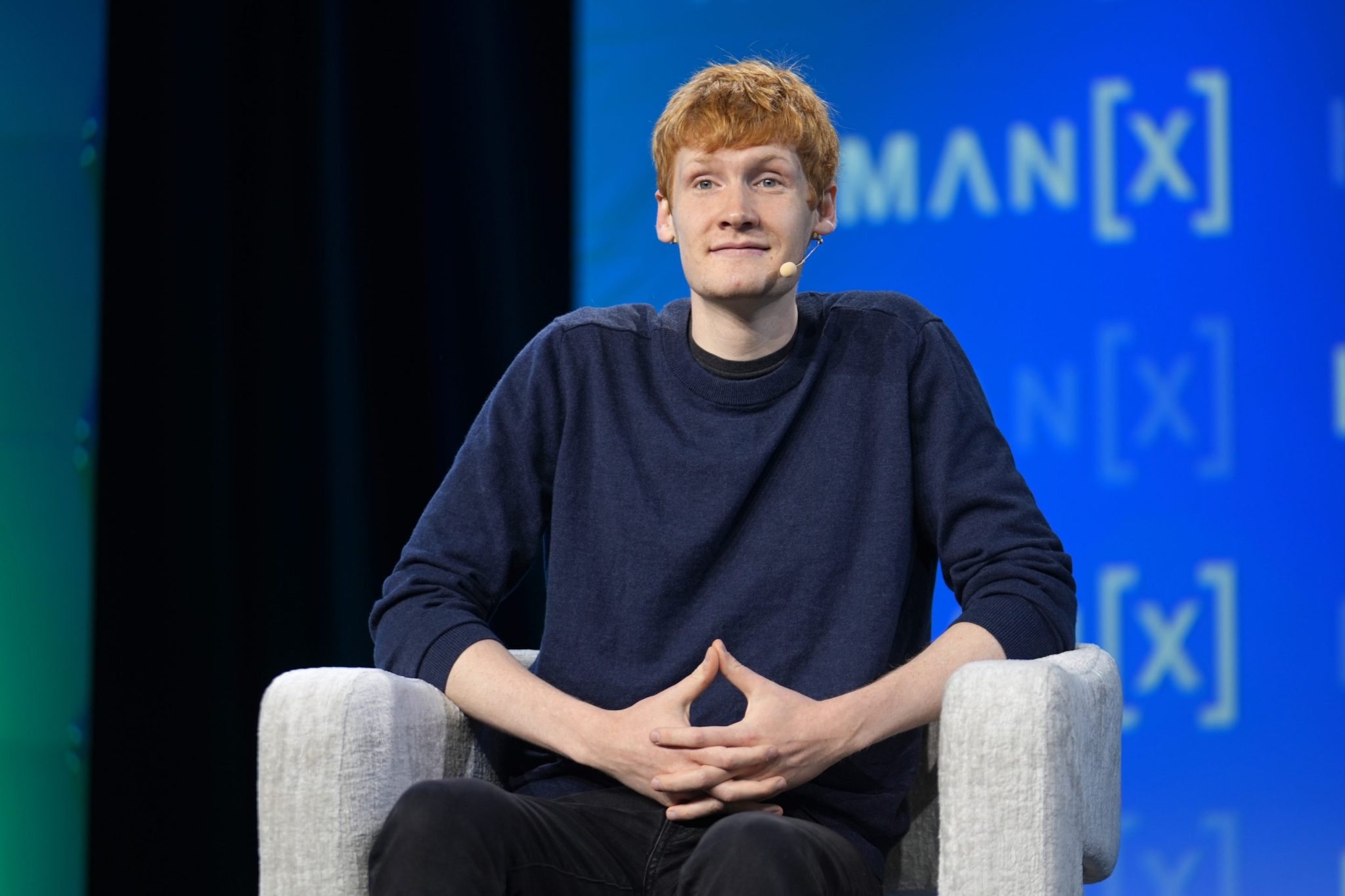
Cursor’s 25-year-old CEO Michael Truell helped take the AI coding company from a college passion project to a potential $60 billion acquisition by Elon Musk’s SpaceX.
On Tuesday, SpaceX announced in a post on X that Cursor gave SpaceX the right to acquire the company later this year for $60 billion. If SpaceX doesn’t buy Cursor, it will pay $10 billion for their work together, the company said.
Either way, it’s a big win for Truell, who just a few years after dropping out of MIT is worth an estimated $1.3 billion, according to Forbes. His and Cursor’s rapid rise is among Silicon Valley’s biggest success stories.
Who is Michael Truell?
Truell grew up in New York City and attended the Horace Mann School, a private prep school in the Bronx. He’d always had an interest in technology, and started coding at age 11 to make his own mobile games, he told Fortune’s Allie Garfinkle.
By age 18, Truell had just wrapped up his first year at MIT and was completing a summer internship at Google. During this time, he worked on “language models for feed ranking,” according to his profile on LinkedIn.
Truell met Ali Partovi, an early investor in Facebook and Airbnb, during his internship, as Partovi was recruiting for his Neo Scholars program, an accelerator for young tech talent. Truell immediately impressed him by completing a written coding test “in record time,” Forbes reported. After he left that meeting, Partovi put a star with a circle next to his name on a list of potential Neo Scholar candidates, meaning “he was so impressed that he’d invest in any project Truell pursued,” according to Forbes.
Truell later became a Neo Scholar, one of only 30 selected each year. When he started Cursor, Partovi became one of the company’s first investors.
How Truell founded Cursor
Truell and his MIT classmates Aman Sanger, Sualeh Asif, and Arvid Lunnemark were interested in AI before OpenAI changed the industry by launching ChatGPT in 2022. A year before that, the Cursor cofounders were thinking about what they should do in AI, Truell said in an interview at Y Combinator’s AI Startup School in San Francisco last June.
“In 2021 we were trying to figure out what we do with that interest,” he said. “Do we go and work on AI in academia? Or, you know, do we go join, you know, a big existing AI effort? Or do we start our own thing?”
By 2022, they had their answer. Truell and his cofounders were obsessed with Microsoft’s GitHub Copilot, which launched for individual developers in 2022. But the program had its limits, they found, and could be improved.
At first, the cofounders focused on what Truell described as a “copilot for mechanical engineers” partly because he said it would be a niche space that was “sleepy and uncompetitive,” he said during the interview with Y Combinator. Two of Truell’s cofounders were also working on a message encryption project at the same time.
It wasn’t until about six months later the team pivoted into AI coding, which Truell said at first they had avoided “because we thought it was too competitive.” But the team was desperate after their first couple of ideas failed to get off the ground, he said.
Plus, “we realized we were really inherently excited about the future of coding,” he said during the Y Combinator interview.
That passion propelled Truell and his cofounders to one of the fastest upward trajectories in the history of Silicon Valley startups. The company’s valuation has skyrocketed almost as fast as AI’s capabilities have improved. Cursor raised an initial $60 million funding round in June 2024. By the end of 2025, it had raised three more funding rounds that brought in $3.3 billion, skyrocketing its valuation from $2.5 billion to $30 billion in a single year.
The company has grown even faster than some big tech names with similar rapid rises. Slack took two-and-a-half years to reach $100 million in annualized revenue, while Dropbox took four years to cross the same mark. Cursor hit the $100 million annualized revenue milestone in January 2025, around one year and eight months after it launched its first product in early 2023. Its annualized revenue crossed $2 billion in February, according to Fortune.
Cursor is a coding assistant with its own Integrated Development Environment, or IDE, where the company’s AI is built-in. At its most basic level, Cursor’s AI capabilities let users code more quickly by constantly working to predict the code a user is likely to write next. With the launch of Cursor 3 earlier this month, the company has improved on its agentic coding, in which AI can write code on its own with broad user guidance—a move to compete with Anthropic’s Claude Code, which launched just over a year ago but already has gained popularity with programmers.
Cursor has more than 300 employees, and 67% of Fortune 500 companies use the company’s technology, Fortune reported. Some well-known companies that use Cursor include Salesforce, Samsung, and Budweiser, according to the company’s website.
Before the SpaceX announcement Tuesday, the company was in talks to raise another round at a $50 billion valuation TechCrunch reported. Now, it may be acquired for $10 billion more than that. For context, the company was in talks to raise funding at nearly a $10 billion valuation a year ago, according to Bloomberg.
Ultimately, what may have made Cursor a success where the founders’ other projects failed was a simple decision: to go all in.
“We had a ton of conviction about that and we had a ton of excitement about that and so at some point we just decided to go for it,” Truell said.