Americans are revolting against AI data centers and the power plants that feed them, but they are critical to national security, according to retired Air Force Lt. Gen. David Deptula, who is now dean of the Mitchell Institute for Aerospace Studies.
In a Washington Post op-ed on Thursday, he argued that data infrastructure will be key to connect the Pentagon’s myriad weapons, such as long-range munitions, advanced combat aircraft, space systems, missile defenses, and drones.
“Data is no longer merely a tool of commerce. It is a strategic asset,” Deptula wrote. “Nearly every function in the military depends on the ability to store, move, process, secure and exploit vast quantities of data at speed and scale.”
Indeed, the war in Iran demonstrated AI’s ability to analyze data from across different sources and rapidly provide targeting information. Helped by AI-powered platforms from Palantir, the U.S. and Israel struck thousands of targets within the opening days of the conflict.
The dispute between the Pentagon and Anthropic over the startup’s terms of use also highlighted to Pentagon leadership how much it relies on AI to process intelligence.
“I’m like, holy s–t, what if this software went down, some guardrail picked up, some refusal happened for the next fight like this one and we left our people at risk?” Emil Michael, the Defense Department’s under secretary for research and engineering, recalled in a March episode of the All-Inpodcast.
Similarly, Deptula pointed to Ukraine’s use of drones that increasingly incorporate autonomous technology as evidence for AI’s future in warfighting.
And the fact that Iran attacked Amazon data centers in the Middle East at the beginning of the war also prove that such infrastructure is an extension of national power, he added.
“A shortfall in data storage and computing capacity could be catastrophic,” Deptula warned. “Success in future warfare will depend on whether a belligerent has the capability to sense, decide and act faster than an adversary. That requires enormous quantities of intelligence and reconnaissance, cyber, logistics, targeting and operational data. It requires computing capacity to train AI on all of it.”
While he insisted data centers are a national security priority, many Americans don’t see it that way. Instead, they are pushing back against plans to build them and have made them a potent political issue.
In addition, rising electricity bills, which voters are blaming on demand from AI data centers, are also fueling the nationwide revolt.
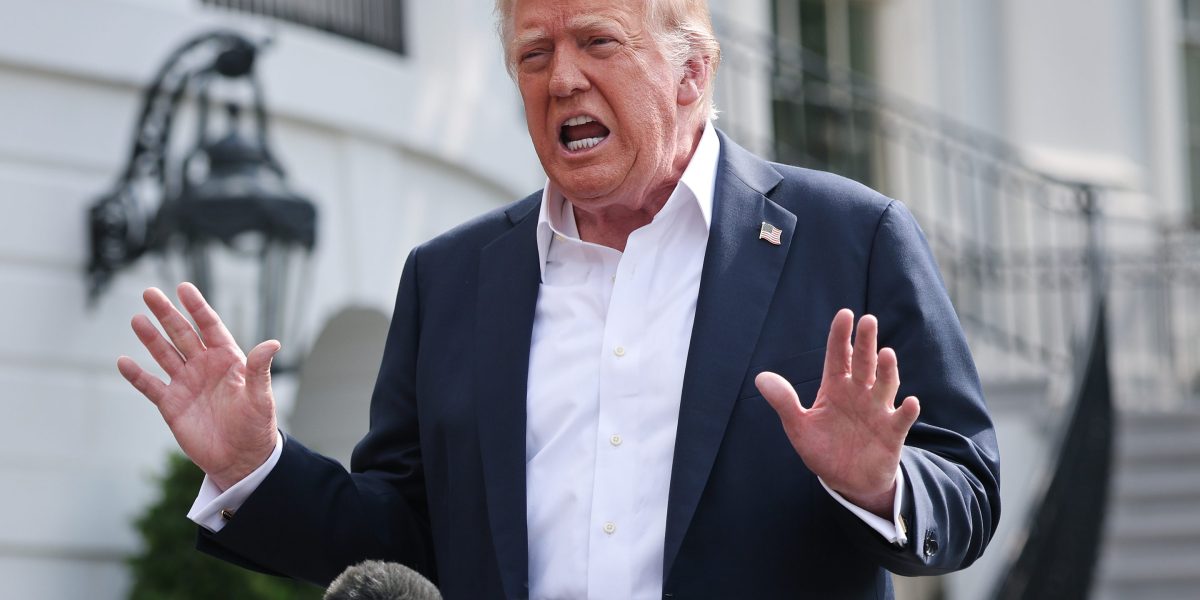
At the same time, Deputla’s plea that data centers are an essential part of the Pentagon’s arsenal could get drowned out by messaging from President Donald Trump, who has described everything from his tariffs to his White House ballroom as crucial to national security.
The U.S. is still the global leader in data centers, for now. But Deputla pointed out that China is quickly catching up and has demonstrated the ability to mobilize its industrial might to build up infrastructure.
“The nation with the best data infrastructure will possess a decisive advantage in the next era of warfare,” he said. “The U.S. cannot afford to lose that position.”