NEWYou can now listen to Fox News articles!
The Department of War on Sunday transported a next-generation nuclear reactor aboard a C-17 from California to Utah, advancing President Donald Trump’s executive order to modernize America’s nuclear energy infrastructure and strengthen U.S. national security.
The reactor was flown from March Air Reserve Base in California to Hill Air Force Base in Utah and is expected to be transported to the Utah San Rafael Energy Lab in Orangeville for testing and evaluation – a key step in assessing how advanced nuclear systems could support military installations and remote defense operations.
The Department of War shared images on X showing the reactor loaded onto the C-17 aircraft.
“We’re advancing President Trump’s executive order on nuclear energy,” the post read. “Moments from now, we will airlift a next-generation nuclear reactor.”
TRUMP ADMIN POURS $1B INTO MASSIVE EFFORT TO RESTART NUCLEAR REACTOR AT HISTORIC MELTDOWN SITE
The Department of War said the successful delivery and installation of the reactor will open new possibilities for energy resilience and strategic independence for the nation’s defense, highlighting what officials described as an agile, innovative and commercial-first approach to addressing critical infrastructure challenges.
“By harnessing the power of advanced nuclear technology, we are not only enhancing our national security but championing a future of American energy dominance,” the agency said in a press release. “This event is a testament to the ingenuity of the American spirit and a critical advancement in securing our nation’s freedom and strength for generations to come.”
Fox News Digital has reached out to the Department of War for additional comment.
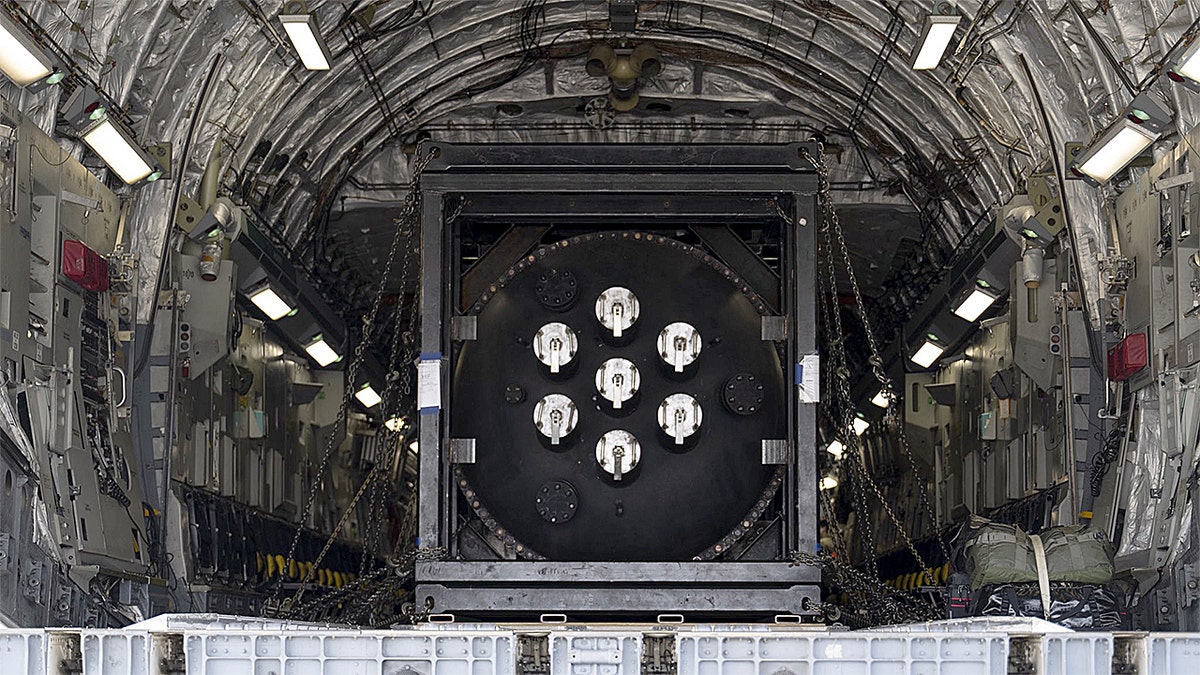
The Department of War airlifted a next-generation nuclear reactor to Utah, advancing President Trump’s push to modernize U.S. energy and strengthen national security. (U.S. Department of War X)
In May, President Donald Trump signed several executive orders aimed at expanding domestic nuclear energy development. At the time, Interior Secretary Doug Burgum said America led the postwar world on “all things nuclear” until it “stagnated” and was “choked with overregulation.”
War Secretary Pete Hegseth added that the U.S. was “going to have the lights on and AI operating when others are not because of our nuclear capabilities.”
One of Trump’s nuclear directives called for reforming Energy Department research and development, accelerating reactor testing at national laboratories and establishing a pilot program for new construction.
ENERGY SECRETARY REVEALS HOW US NUCLEAR TESTS WILL WORK
Nuclear energy, the White House said in the order, “is necessary to power the next generation technologies that secure our global industrial, digital, and economic dominance, achieve energy independence, and protect our national security.”
The nuclear expansion effort is part of a broader administration push to reinforce domestic energy production and grid reliability across multiple sectors.
Days later, Trump signed another executive order directing the Department of War to work directly with coal-fired power plants on new long-term power purchasing agreements, arguing the move would ensure “more reliable power and stronger and more resilient grid power.”
The order, “Strengthening United States National Defense with America’s Beautiful Clean Coal Power Generation Fleet,” states, “The United States must ensure that our electric grid … remains resilient and reliable, and not reliant on intermittent energy sources,” calling the grid “the foundation of our national defense as well as our economic stability.”
CLICK HERE TO DOWNLOAD THE FOX NEWS APP
“It is the policy of the United States that coal is essential to our national and economic security,” the order adds.
Fox News Digital’s Jasmine Baehr and Charles Creitz contributed to this report.