When it comes to a potential future conflict, especially with China, the U.S. may be on its back foot, claim experts at the intersection of AI and defense.
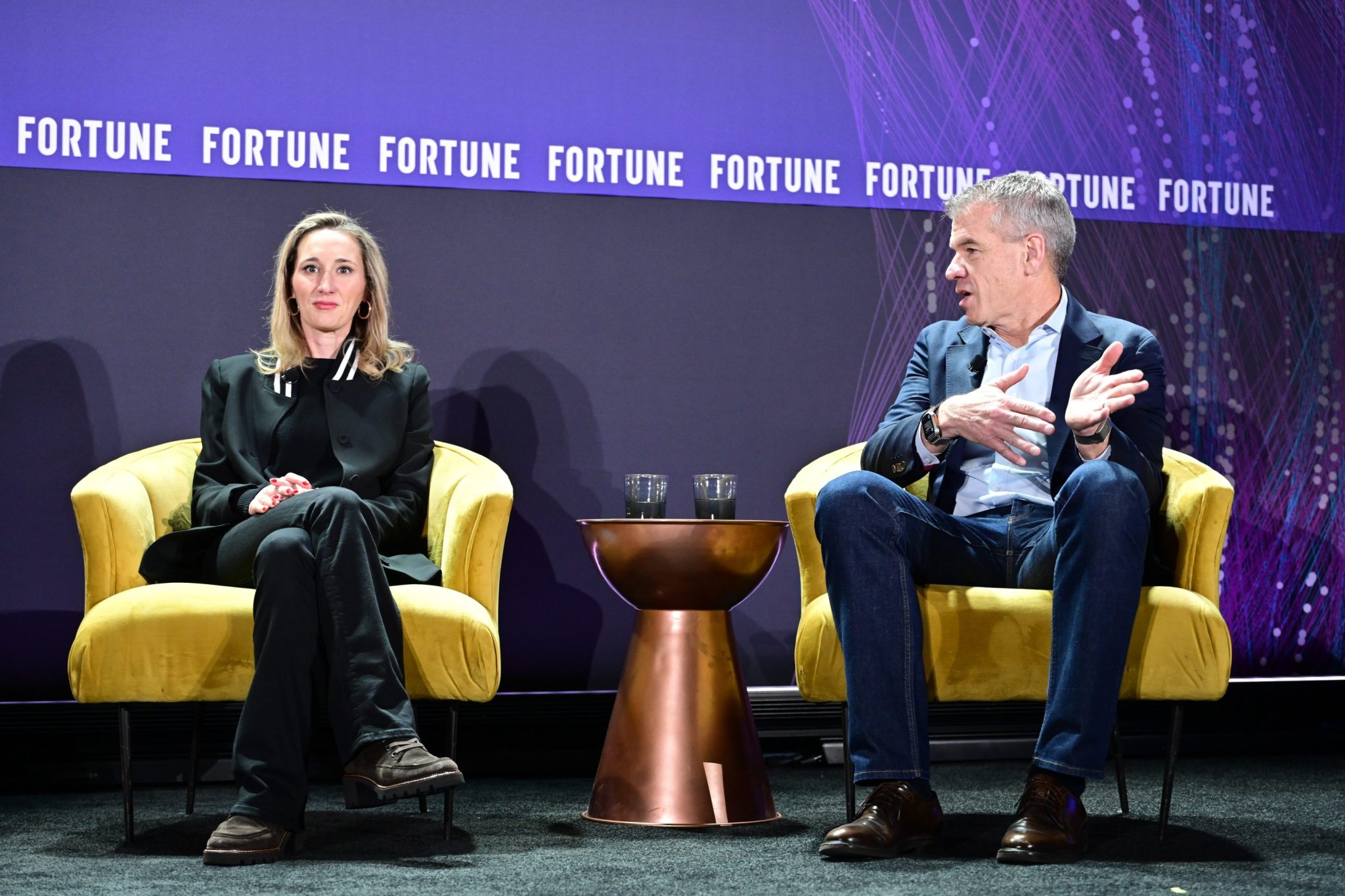
Speaking at the Fortune Brainstorm AI conference in San Francisco last week, Tara Murphy Dougherty, the CEO of defense software company Govini, said that in a conflict with China the U.S. could run out of some munitions in seven days, while China could potentially hold out longer.
“They are planning for a very protracted conflict, and would be happy to draw that fight out to bleed American stockpiles dry, because they aren’t missing the economic piece of this puzzle,” Dougherty said.
This possibility should be troubling to the U.S., and yet there is no easy fix, explained Dougherty. The U.S. stockpile of munitions and other war time resources are held up by various obstacles established over years, she said.
“Unfortunately, those stockpiles are low enough, and the United States has outsourced so much manufacturing capacity at this point, that the amount of time it will take to build the munitions and weapons systems that the United States needs is just much, much too long,” she said.
The U.S. could indeed run out some munitions especially in a conflict with China over the Taiwan strait, according to a study by the Center for Strategic and International Studies. Still, the study only singled out certain types of munitions such as long range and precision-guided munitions in under a week.
At the same time, the U.S. has the second most number of nuclear warheads, just behind Russia, and significantly more than China’s 600, according to the International Campaign to Abolish Nuclear Weapon (ICAN).
The war in Ukraine, which has escalated since Russia’s invasion in 2022, has shown the need for countries to be nimble when it comes to the resources required for war. Yet, in a war time situation it’s unclear how quickly the U.S. would be able to mobilize, Dougherty added.
“Our weapon systems and military platforms have historically low operational availability, which basically means, if we need to go to war, half the fleet is sitting in depot or at dock,” she said.
The Trump administration and Department of War secretary Pete Hegseth have tried to spur a change in the status quo. Earlier this year, Hegseth sent a memo to senior Pentagon leadership asking for the Army to restructure its acquisition systems and close redundant and inefficient programs.
Using AI, though, may be another way to help America’s war readiness, added Gary Steele, the CEO of AI-powered autonomous systems company Shield AI. Steele said AI will completely transform the aerospace and defense industry so much so that in 20 years it will look radically different.
“You’re gonna have lower cost systems, AI-led, software-led, not these super expensive, incredibly elaborate systems that just get shut down,” said Steele. “I think there’s a revolution happening, and we’re at the very beginning of that journey.”