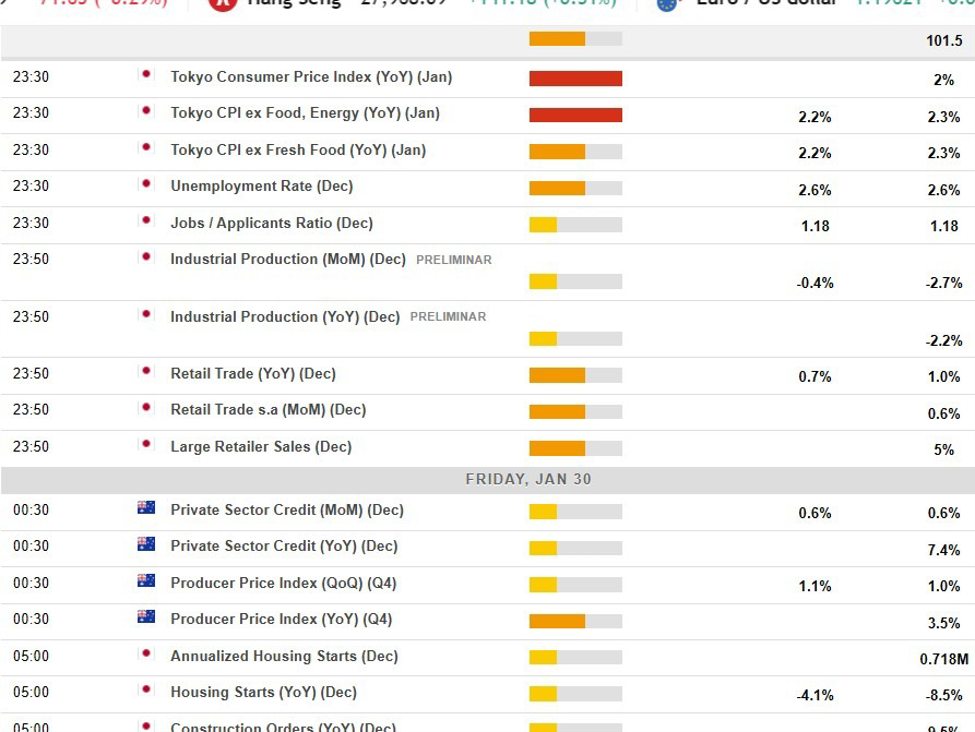
The snapshot above is from the investingLive economic data calendar.
- The times in the left-most column are GMT.
- The numbers in the right-most column are the ‘prior’ (previous month/quarter as the case may be) result. The number in the column next to that, where there is a number, is the consensus median expected.
Of most interest is the inflation data from Japan. Tokyo area inflation data:
- National-level CPI data for this month will follow in about three weeks, it takes longer to gather and collate the national data.
- Tokyo CPI is a sub-index of the national CPI
- It measures the change in prices of goods and services in the Tokyo metropolitan area
- Its considered a leading indicator of national CPI trends because Tokyo is the largest city in Japan and is a major economic hub
- Historically, Tokyo CPI data has been just slightly higher than national Japan CPI data. The cost of living in Tokyo is a touch higher than in most other parts of Japan. Higher rents, for example
Japan’s inflation story has been unusually persistent by historic standards: consumer prices at the national level have remained above the Bank of Japan’s 2 % target for many months (well, years!), driven by wage growth, a weak yen and ongoing cost pass-through, even as headline inflation has cooled from peaks earlier in the cycle.
The BoJ is on a cautious tightening path after ending decades of ultra-easy policy and raising its key rate to 0.75 % in December. Policymakers are assessing the full impact of that hike, mindful that inflation appears to be moderating but still running above target in key underlying measures, and have emphasised a data-dependent approach to future moves.
Today’s Tokyo CPI readings, including the headline, core and core-core gauges, will be closely watched for signs of continued stickiness in prices. Stronger-than-expected prints would reinforce expectations for further BoJ tightening later in 2026, while softer outcomes would support the central bank’s slow and cautious pacing.