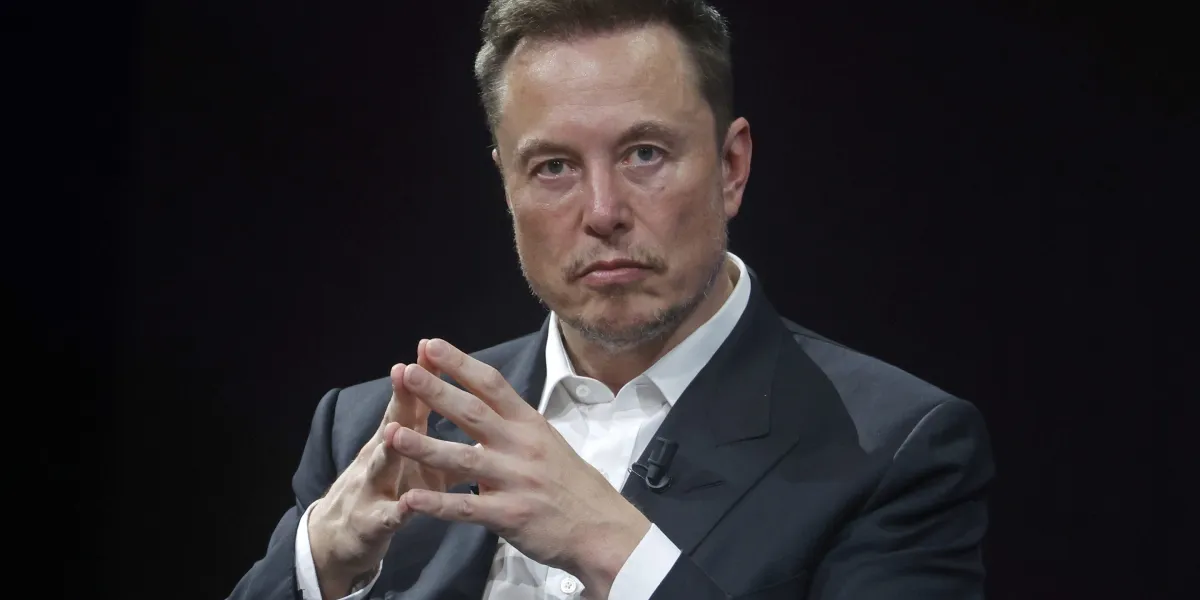

Elon Musk is full of bold predictions, but none may be as controversial as his conclusion that a longer human lifespan is something that can be engineered.
The 54-year-old Tesla boss apparently sees longevity as merely a problem to be overcome—and one with a solution that’s not “particularly hard” at that, he said during an interview on the Moonshots with Peter Diamandis podcast last week.
“You’re pre-programmed to die. And so if you change the program, you will live longer,” he said.
Take, for instance, that every part of the body ages in sync, he argued. Something must be at the root of such synchronization—something that can be identified and potentially altered.
“When you consider the fact that your body is extremely synchronized in its age, the clock must be incredibly obvious,” he said. “Nobody has an old left arm and a young right arm. Why is that? What’s keeping them all in sync?”
In fact, synchronous aging involves a variety of biological factors, including genetics and hormones that help synchronize aging across tissues, according to researchers.
The future of medicine
Musk’s commentary comes at a moment when AI and robotics are set to blur the boundaries between medicine and tech. As part of this revolution, humanoid robots may replace human surgeons, and, in the process, elevate medical care within five years to a much better state than what’s currently available, Musk claimed.
Automation and robotics have already changed healthcare, Musk added, citing LASIK, a procedure that uses a computer-controlled laser to reshape a person’s eyes and improve vision.
“I wouldn’t want the best ophthalmologist with the steadiest hand out there with a hand laser on my eyeball. It’s going to be like that,” Musk said.
While human surgeons take years to gain the experience and skills necessary to operate, humanoid robots like Tesla’s Optimus could potentially do a better job—without the risk of human error.
“Everyone will have access to medical care that is better than what the president receives right now,” he said.
To be sure, Musk’s confidence about increasing longevity runs contrary to his longtime discomfort with the social consequences of an extended lifespan. Unlike some of his billionaire peers who have poured millions into longevity-focused startups, Musk has previously said he’d “prefer to be dead” than live to 100 with dementia or as a burden to society.
“If we live for too long, I think it ossifies society—there’s no changing of the leadership because leadership never dies,” he said.
This story was originally featured on Fortune.com