
The Ethereum Foundation has announced a formal partnership with the crypto security nonprofit Security Alliance (SEAL) to combat the persistent threat of wallet drainers targeting the ecosystem. Under this new initiative, the foundation is sponsoring a dedicated security engineer to work directly with SEAL’s threat intelligence team to track and neutralise social engineering attacks.
The fight against exploits is fundamental. In 2025 alone, over $3.4 billion was stolen, dominated by the $1.5 billion Bybit multi-signature exploit. North Korea’s Lazarus Group conducted record-breaking attacks totaling $2.02 billion.
While DeFi security improved, major losses shifted toward centralized service breaches, private key compromises, and AI-driven phishing scams.
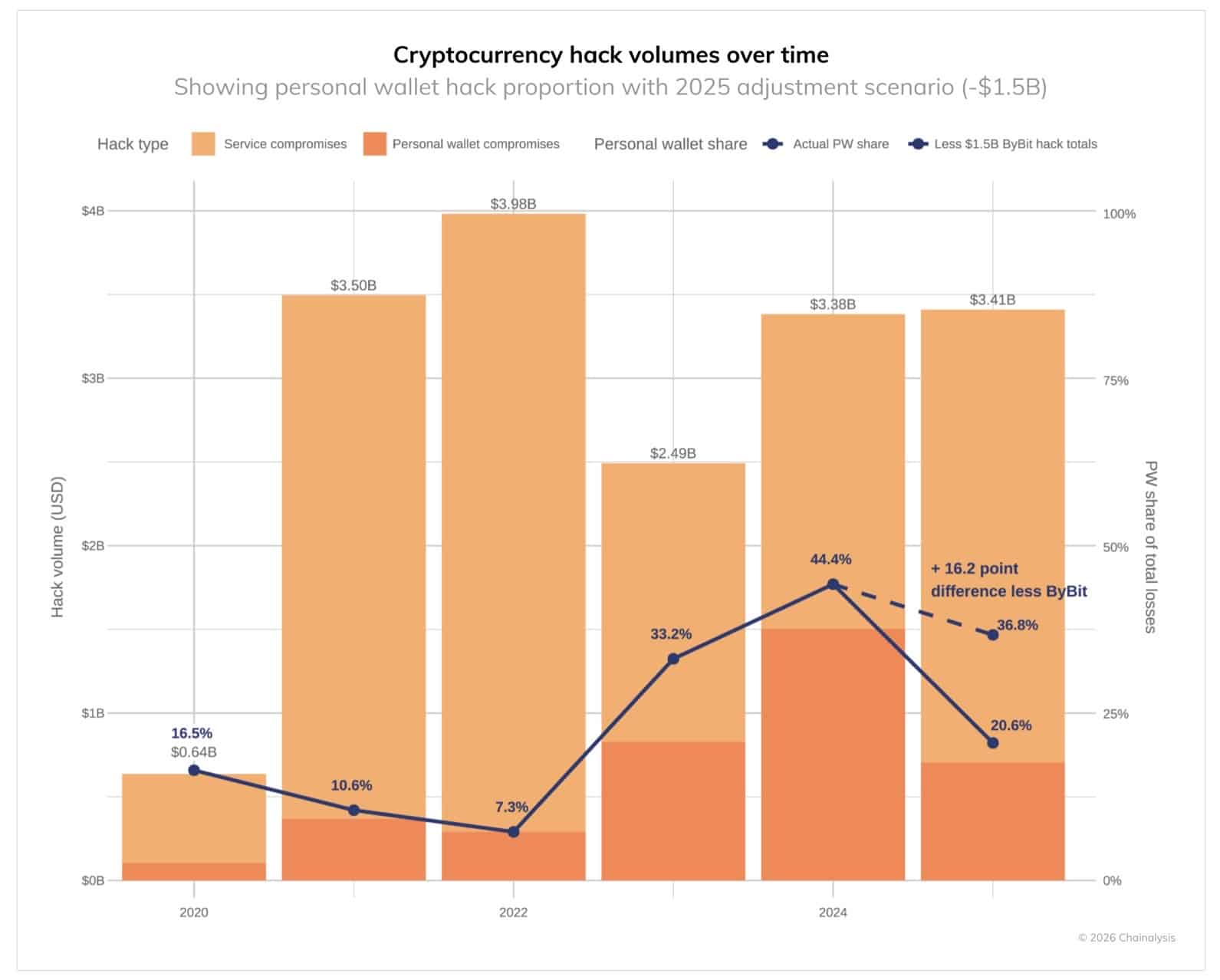
Cryptocurrency hack volumes over time. Source: Chainalysis
DISCOVER: Next Crypto To Explode in 2026
The Fight Against Social Engineering: The Nightmare Of Wallet Drainers
Wallet drainers, sophisticated phishing scripts that trick users into signing malicious transactions, have become a primary vector for crypto theft. These schemes have historically resulted in nearly $1 billion in user losses. The attacks often utilise fake websites and fraudulent emails that impersonate legitimate protocols, exploiting the trust of DeFi and NFT participants.
Huge thanks to the @ethereumfndn for sponsoring a security researcher to work with SEAL Intel and disrupt drainers targeting Ethereum users!https://t.co/qrlBwLI2fj
— Security Alliance (@_SEAL_Org) February 9, 2026
SEAL has been instrumental in mitigating these threats, offering a platform for white-hat hackers to share threat intelligence and coordinate incident responses. The Ethereum Foundation’s support builds on a legacy of security-focused initiatives, similar to Vitalik Buterin’s involvement in security funds, which have long prioritised protecting the network’s user base from systemic risks.
Partnership Targets Wallet Drainers Infrastructure – The “Trillion Dollar Security”
The collaboration was formalised with the launch of the “Trillion Dollar Security” (1Ts) initiative, which aims to provide a comprehensive view of Ethereum’s security health. As part of the agreement, the Ethereum Foundation is funding an engineer whose “sole mission” is to monitor drainer development and prevent wide-scale attacks on the network.
“The Security Alliance has done important work to combat attacks and the ecosystem has benefited tremendously.”
This initiative introduces a new dashboard tracking security across six key dimensions: user experience, smart contracts, infrastructure, consensus protocols, monitoring, and the social layer. The approach moves beyond reactive patching to proactive threat hunting. This evolution is critical, as recent events like the CrossCurve exploit demonstrate that despite improvements, sophisticated thefts continue to disrupt the market.
The partnership also reflects the growing maturity of the crypto security sector. It parallels the rise of intelligence firms like TRM Labs, which provide the infrastructure necessary to trace and analyze blockchain threats on an institutional scale.
DISCOVER: Upcoming Coinbase Listings in 2026
Proactive Security Bolsters Ecosystem, But It Is Still Not Enough
While industry reports suggest that phishing losses dropped to $84 million in 2025 (a significant reduction attributed to efforts by SEAL and other sleuths), the threat landscape remains volatile. By securing the “social layer,” the Ethereum Foundation aims to reduce the efficacy of phishing campaigns that bypass technical smart contract defenses.
This security push complements broader regulatory efforts to clamp down on illicit finance, such as the DOJ’s recent forfeiture in the Helix case, which targeted the laundering tools often used by drug operators.
As the 1Ts dashboard rolls out, stakeholders will gain measurable insights into the ecosystem’s resilience against these evolving predatory tactics.
Ethereum Price Analysis: ETH Fails To Break Resistance
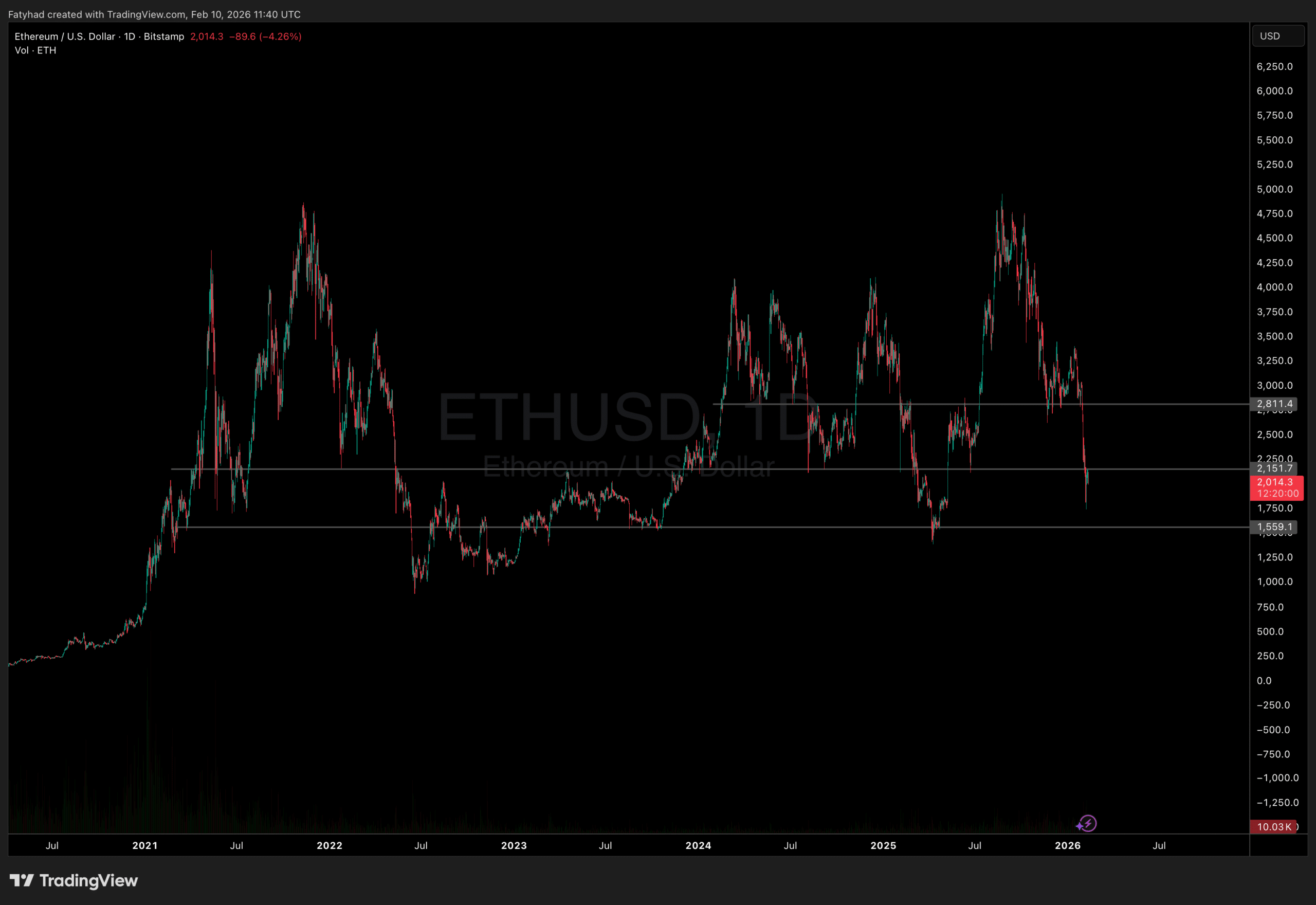
Ethereum Price Analysis Source:TradingView
Ethereum recently tested a key resistance zone around the $2,150 area but failed to hold above it. This suggests sellers are still active near the top, and the breakout attempt lacks strong follow-through. As long as ETH stays below this resistance, the structure looks range-bound, with downside risk toward the mid-range support.
A clean reclaim of the resistance would be needed to confirm a stronger bullish continuation.
EXPLORE: Best Solana Meme Coins
Disclaimer: Coinspeaker is committed to providing unbiased and transparent reporting. This article aims to deliver accurate and timely information but should not be taken as financial or investment advice. Since market conditions can change rapidly, we encourage you to verify information on your own and consult with a professional before making any decisions based on this content.

Neil is a professional cryptocurrency content writer with years of experience. He has written for various cryptocurrency websites to report on breaking news, and been hired by all sorts of cryptocurrency projects, to create content that would increase their exposure and attract more potential investors.