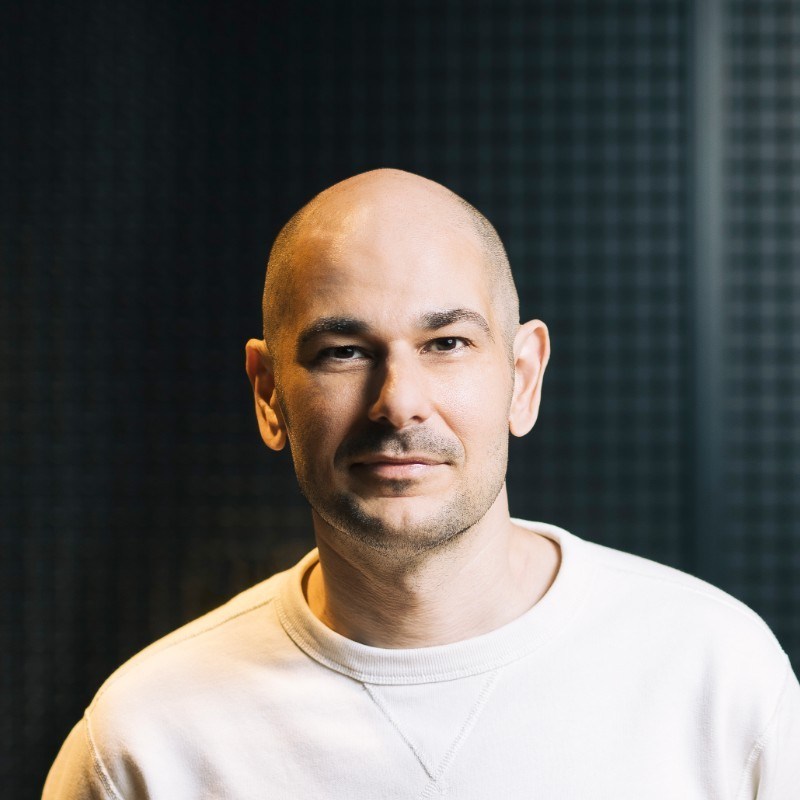
AI agents need somewhere to work—and Ivan Burazin thinks the existing cloud providers aren’t the right answer. Now Burazin, the cofounder and CEO of Daytona, a San Francisco-based startup, has turned the idea of a new kind of cloud just for AI agents into a unicorn business.
Daytona said Tuesday it has raised a $60 million Series B venture capital round at a $1 billion valuation. FirstMark led the round. It was joined by an A-list roster of Silicon Valley founders, including Stripe’s Patrick Collison, Shopify’s Tobi Lütke, Perplexity’s Aravind Srinivas, Quora’s Adam D’Angelo and Zoom’s Eric Yuan, plus strategic investors Qualcomm Ventures, Samsung Next and Okta Ventures.
Burazin told Fortune that about $50 million of the round came from existing investors. The new funding brings the amount Daytona has raised to date to about $91 million.
Why agents need their own computers
An AI agent that writes and runs code, browses the web or operates business software needs to use a computer—either an actual machine, or a virtual one, running in the cloud. For many use cases, having a virtual machine is preferable—it allows the AI agent to operate even if the person running the agent shuts down their laptop, and because virtual machines can be configured with only the software and network access the agent needs to do a particular task and nothing more, it is generally a safer way to run AI agents. A virtual machine, or “sandbox” as they are sometimes called, minimizes the chance that the agent will run amok and take damaging unauthorized actions, or that an outside party could hijack the agent and get it to divulge sensitive data.
Daytona was founded in 2023 by Burazin, Goran Draganić and Vedran Jukić to automate software development environments for large enterprises. When the founders saw that agents would need computers too, Burazin said, they “basically gave our competitors all our customers, rebuilt everything, had like three months left of revenue in the bank, and then relaunched this thing.”
Daytona currently provides these sandboxes to many of the leading AI companies, which use the virtual machines to allow their models to practice tasks over and over inside sandboxes during training and testing. Daytona says AI data company Snorkel, which also helps customers test and benchmark AI models, has provisioned more than one million sandboxes on its platform. It also counts Anthropic, OpenAI, Nvidia, Cursor, Cognition, Meta and Cohere among its customers.
Burazin said that Daytona’s revenue run rate grew 25-fold between January and September. “We’ve been growing on average every single month 50.9%,” Burazin said.
Existing cloud providers, such as Amazon’s AWS, Microsoft’s Azure, or Google’s Google Cloud Platform, allow customers to spin up virtual machines. But doing so takes between 30 seconds and many minutes, depending on the complexity of the configuration. This, Burazin said, is far too long for the future of agentic work, when companies may be deploying thousands or even tens of thousands of AI agents, each of which may need access to different software tools depending on the task they are being asked to complete.
Daytona can configure a new sandbox for an AI agent in 60 milliseconds, according to Burazin. That is roughly half the time it takes to blink. The trick, he said, is to pre-distribute snapshots of configured machines onto the physical drives of servers. When an agent needs a machine, Daytona attaches processing power and memory and resumes the snapshot. Agents can also clone a running computer to try different approaches in parallel. “You can literally replicate the computer into two and try both outcomes, and then replicate again and again and again until it gets the desired outcome,” Burazin said.
When he pitched investors, Burazin said, many asked “why the hell do we need this? You know, AWS can do this thing.” His answer is that hyperscalers built nearly everything on a few core services optimized for maximum utilization. To match Daytona’s performance, he argued, they would need to create a whole new company inside their existing cloud services. He conceded the hyperscalers could do this, but said it would not be easy for them to rebuild their infrastructure to serve AI agents instead of human users.
The scale involved is easy to underestimate. Burazin pointed to Muse, the personal agent Meta launched in September. He said it has “a computer underneath for every single chat.” By his back-of-the-envelope math, Muse would need $2.8 billion worth of sandboxes to serve 100 million users.
“We believe the next infrastructure shift is from human-centric cloud primitives to agent-native ones,” Matt Turck, a partner at FirstMark, said in a statement.
AI models run on GPUs. But to do work, they need CPUs.
Burazin also distinguishes what Daytona is building from the “neocloud” providers such as CoreWeave and Nebius. Those neoclouds are designed to train and run AI models. The data centers they are standing up are stuff full of graphics processing units, or GPUs, the computer chips optimized to run AI models. But to run virtual machines, a data center needs lots of traditional central processing units, or CPUs, that can run all kinds of different software. “The inference clouds is where the agent thinks, and our cloud is where the agent works,” Burazin said.
“We internally sort of believe that the number of dollars spent on CPUs will probably be higher than the dollars spent on GPUs in the foreseeable future,” he said, “which seems sort of counterintuitive today.”
The demand is so great that he forecasts a coming CPU shortage. “I strongly believe that there will be a CPU crunch,” he said. “The amount of CPU machines that we will need if we want to keep growing at this trajectory actually doesn’t exist right now.”
Chipmakers are seeing the same trend. On AMD’s first-quarter earnings call in May, CEO Lisa Su said agentic AI was increasing the need for server CPUs. AMD raised its forecast for server CPU market growth from about 18% a year to more than 35%, reaching over $120 billion by 2030. Chip designer Arm has estimated that agentic AI data centers could need 120 million CPU cores per gigawatt, four times what traditional data centers require. Intel told some Chinese customers earlier this year that lead times for certain server CPUs had stretched to six months, Quartz reported.
Burazin said Daytona plans to spend most of the new funds it has raised on hiring go-to-market sales staff, plus some engineers.