

In July 2025, Wesley LePatner kept bringing up the same worry with her husband. She was already stretched thin by many measures. She ran a Blackstone real estate fund, chaired the firm’s Women’s Initiative, served on boards from the Metropolitan Museum of Art to UJA-Federation of New York, and was raising two children. Still, she kept telling Evan LePatner it wasn’t enough.
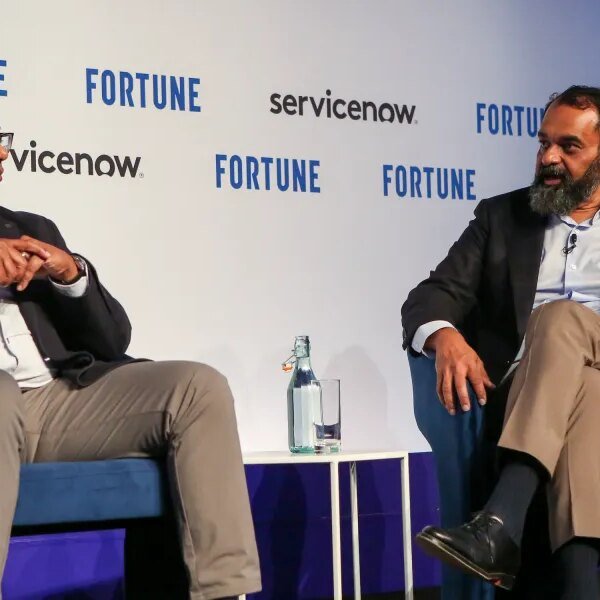
“We kept having this conversation over and over again. And she said, ‘I’m not doing enough. I need to do more,’” Evan LePatner told Ellie Austin, editorial director of Most Powerful Women, onstage at Fortune’s Most Powerful Women Summit in Santa Barbara, Calif., on Tuesday.
Later that month, on July 28, a gunman opened fire inside the Midtown Manhattan office building where Wesley worked. She was 43 and one of four people killed.
“And it hit me like a freight train after she died that I couldn’t let this flame, this fire of a person, just fall to the ground,” Evan said.
On the first anniversary of her death, he launched the Wesley Mittman LePatner Foundation. Its goal is to develop 1,000 leaders who will put their private-sector skills to work for nonprofits and civic institutions.
Wesley spent more than a decade at Goldman Sachs before joining Blackstone in 2014. There she rose to global head of Core+ real estate and CEO of the Blackstone Real Estate Income Trust (BREIT). Kathleen McCarthy Baldwin, Blackstone’s former global co-head of real estate, worked alongside her at both firms. She called bringing Wesley to Blackstone one of the best decisions of her career, and said Wesley’s business grew to more than $100 billion “from zero a decade earlier.”
Both Evan and Baldwin said what set Wesley apart was that her ambition never stopped at the office. Evan described a woman focused on her own excellence “but also pulling people up all at once.”
“This effort of doing both at the same time, and that involves a deep investment in the world around you,” he added. “She was always looking to do things to support her communities, her institutions, things that mattered to her.”
That idea anchors the foundation’s flagship program, Wesley Leaders. It is a two-year accelerator for high-performing private-sector professionals, built around what Evan called “the triangle”: professional excellence, civic engagement, and philanthropic impact. Each fellow gets a primary mentor plus a wider circle of mentors from business, philanthropy, and civic life.
“The idea is we’re going to deepen a person who’s already exceptional and succeeding, but allow them to do more, take on more,” he said. “Because we need our best leaders to do more now.” The goal, he added, is for fellows to go beyond just sitting on a board to be “in the room advising heads of organizations.
The foundation named its first class of eight fellows last week. Evan said next year’s class will double to 16, nominations will begin, and the program will start in New York before expanding across the country.
The foundation named its first class of eight fellows last Friday, and Evan said next year’s class will double to 16: They’re going to “take it as big and fast as we possibly can handle it.”