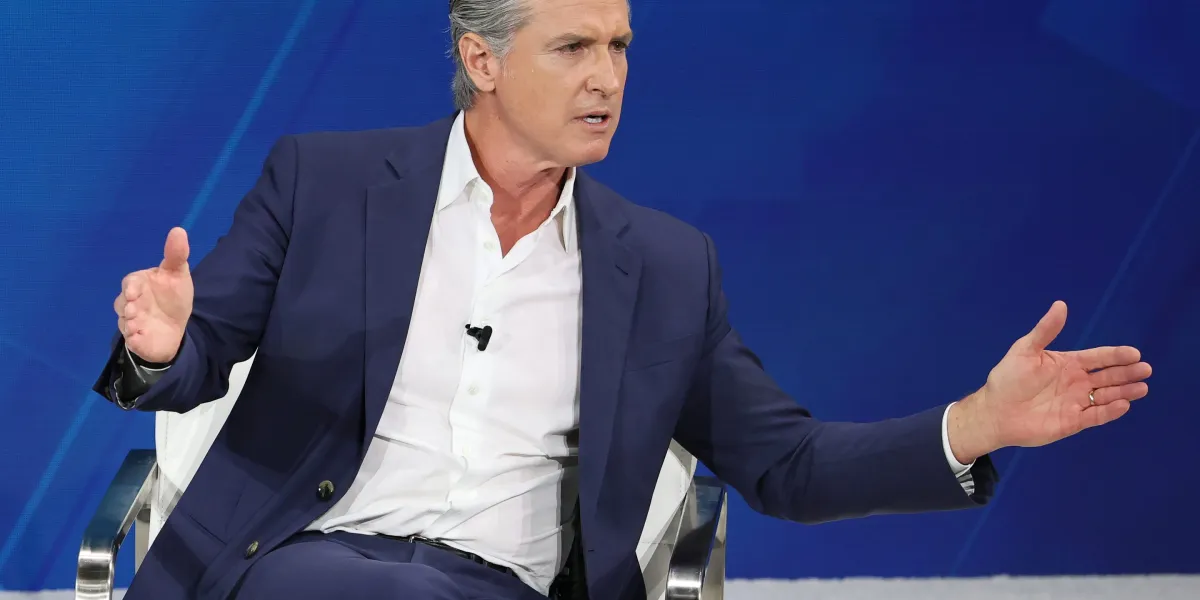
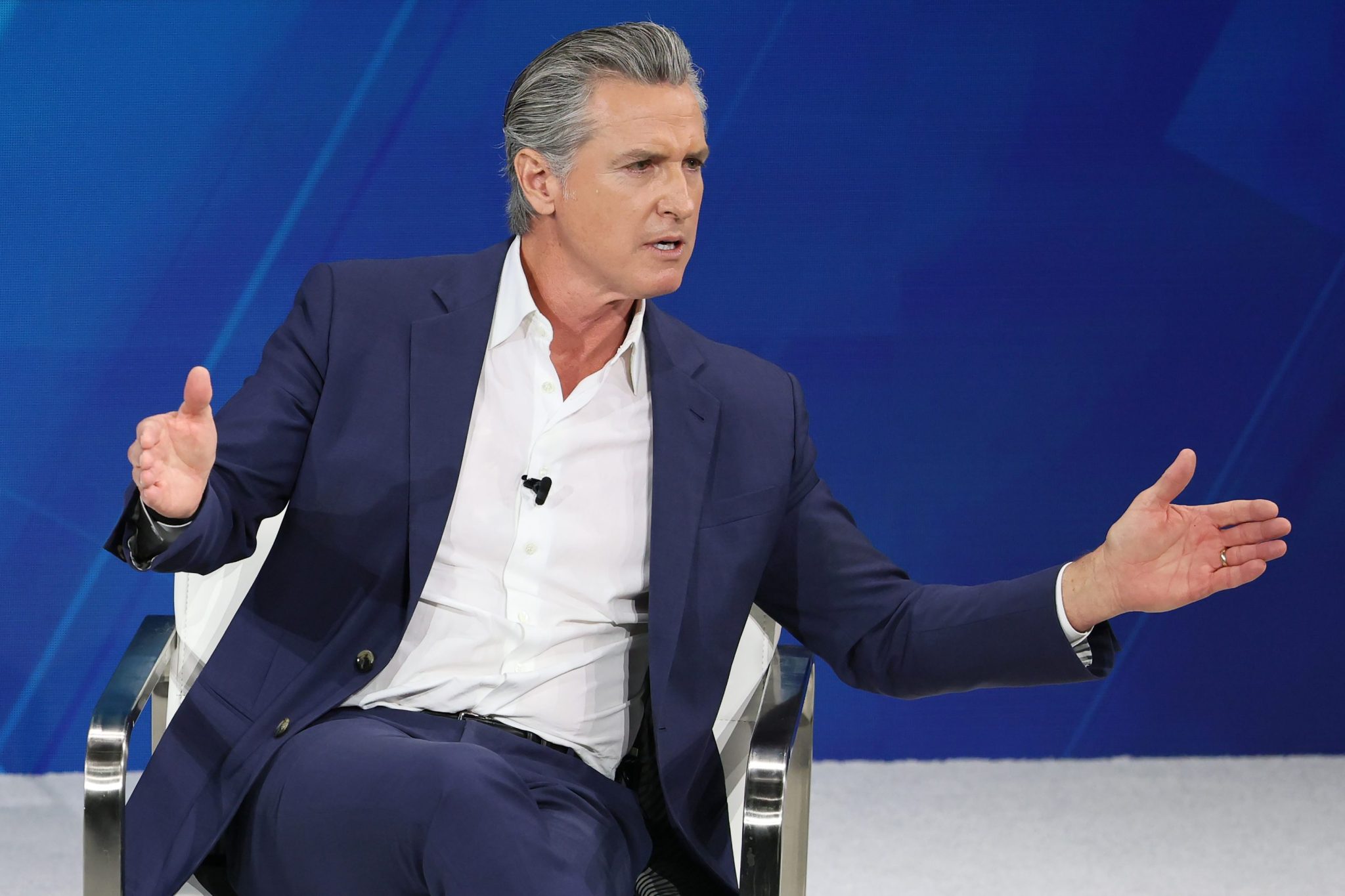
Gavin Newsom’s stance against California’s proposed “Billionaire Tax Act” has exposed a rift in the Democratic Party, with the erstwhile progressive governor taking a stance on the side of wealth and implicitly against the wing of his party that has claimed billionaires shouldn’t even exist. Where New York City Mayor Zohran Mamdani has built a national profile off an unabashed “tax the rich” message, Newsom is staking out an explicitly anti-wealth-tax position, an important moment with Newsom a presumed frontrunner of the 2028 presidential nomination.
The fight centers on the 2026 Billionaire Tax Act, a ballot initiative that would impose a one-time 5% levy on the assets of anyone in California worth more than $1 billion, affecting roughly 200 ultrawealthy residents. Unlike an income tax, the measure would require billionaires to tally up their total wealth and cut a big check to Sacramento if voters approve it in November.
Labor unions and health advocates backing the measure promise tens of billions of dollars for schools, food assistance, and health programs in a state with some of the country’s starkest inequality. Supporters frame it as a one-time recalibration of the social contract, not an annual raid on the rich, and argue that the political energy behind it could serve as a template for other blue states wrestling with similar divides between wealthy coastal enclaves and working-class communities.
Newsom’s break with the left
Newsom has responded with unusual bluntness, calling the wealth tax “bad economics” and warning that it is already driving a billionaire exodus from California even before voters weigh in. He has publicly vowed the initiative “will be defeated,” signaling he is prepared to campaign against it if it qualifies for the ballot.
That stance places him in direct conflict with powerful players in his own party, including unions that were central to his 2021 recall survival and national progressives like Sen. Bernie Sanders, who have endorsed the tax as a model for tackling concentrated wealth. Strategists say the clash could define Newsom’s final year as governor and shape his likely 2028 presidential run, forcing him to balance his ties to tech donors with a base that increasingly sees taxing billionaires as a litmus test for serious inequality politics.
Silicon Valley’s anxiety and escape hatch
In Silicon Valley, the proposal has triggered a full-blown panic among founders and investors who fear it will accelerate an already visible migration of capital and talent out of California. High-profile figures, including Google co-founders Larry Page and Sergey Brin, have moved to reduce their ties or residency in the state ahead of a January 1, 2026 cutoff that could make them retroactively subject to the tax if it passes.
Business groups, boosted by millions in contributions from tech billionaires such as Peter Thiel, are pouring money into committees fighting the measure and amplifying warnings that the tax would hollow out the state’s innovation hub and shrink long-term income tax revenues. Their argument has given Newsom political cover to cast his opposition as fiscal prudence rather than donor protection, even as critics say he risks cementing California as a sanctuary for the ultrawealthy at the expense of public investment.
The ‘anti‑Zohran’ contrast
The political contrast with Zohran Mamdani, New York City’s ascendant left-wing mayor, could not be starker. Mamdani has openly declared that “I don’t think we should have billionaires” and made higher taxes on the rich a centerpiece of his platform, pressing for new levies on millionaires and the most profitable corporations as a core “affordability agenda.”
Although Mamdani hasn’t backed a billionaires tax like the one proposed in California, or publicly commented on this particular ballot initiative, he campaigned on a 2% city income tax surcharge on incomes over $1 million, targeting roughly 34,000 high‑income New Yorkers. New York Gov. Kathy Hochul, an increasingly close Mamdani ally, has ruled out broad tax hikes.
To be sure, Mamdani has shown signs that his politics will be less radical in practice than they seemed on the campaign. Famously, his November White House visit with President Donald Trump shocked left and right alike, as the two seemingly opposed figures largely got along and have reportedly been texting each other since.
A party split down the middle
The California fight encapsulates a broader argument roiling Democrats over whether confronting inequality requires directly taxing accumulated wealth or prioritizing growth and investment incentives. On one side stand unions, Sanders-style progressives, and officials in the Mamdani mold who view billionaire wealth as both a moral scandal and an untapped revenue source; on the other are pro‑business Democrats like Newsom who worry that aggressive wealth taxes will backfire economically and politically.
As signatures are gathered and money pours in from both sides, the Billionaire Tax Act is becoming more than a state-level skirmish; it is evolving into a proxy fight over the future of Democratic economic policy in the post‑Biden era. For Newsom, the gamble is clear: staking his national ambitions on the bet that a Democratic Party skeptical of billionaires will still accept a nominee who killed a billionaire tax in his own state.
The importance of affluent donors
Over the past few decades, wealth and political power have concentrated sharply at the top, with the political giving of the 100 richest Americans surging more than 100-fold since 2000 and far outpacing the rising cost of campaigns. Court decisions such as the 2010 Citizens United ruling and the growth of super PACs have enabled billionaires to spend hundreds of millions of dollars per cycle, often shaping primaries, underwriting issue campaigns, and increasingly backing Donald Trump’s GOP in 2024 and beyond.
Newsom has long been a favorite of affluent donors, drawing support from a set of elite San Francisco families — including branches of the Getty, Pritzker, and Fisher fortunes — who have collectively steered tens of millions of dollars to his campaigns over more than two decades. During the 2021 recall fight, Newsom also attracted high-profile billionaire support from Netflix co-founder Reed Hastings, and agribusiness magnates Stewart and Lynda Resnick.
If Newsom were to mount a presidential bid, many of these billionaires — especially Hastings and members of the Getty and Pritzker families — would be natural early financiers, given their long record of underwriting his rise and their alignment with his pro-business, socially liberal brand of Democratic politics. More broadly, Newsom’s ties to California’s tech and donor class, including figures like former Google CEO Erik Schmidt, who has backed him in state races, position him to tap into the same West Coast mega-donor network that has increasingly defined the Democratic Party’s financial backbone in national contests.
For this story, Fortune journalists used generative AI as a research tool. An editor verified the accuracy of the information before publishing.