Skin in the Game
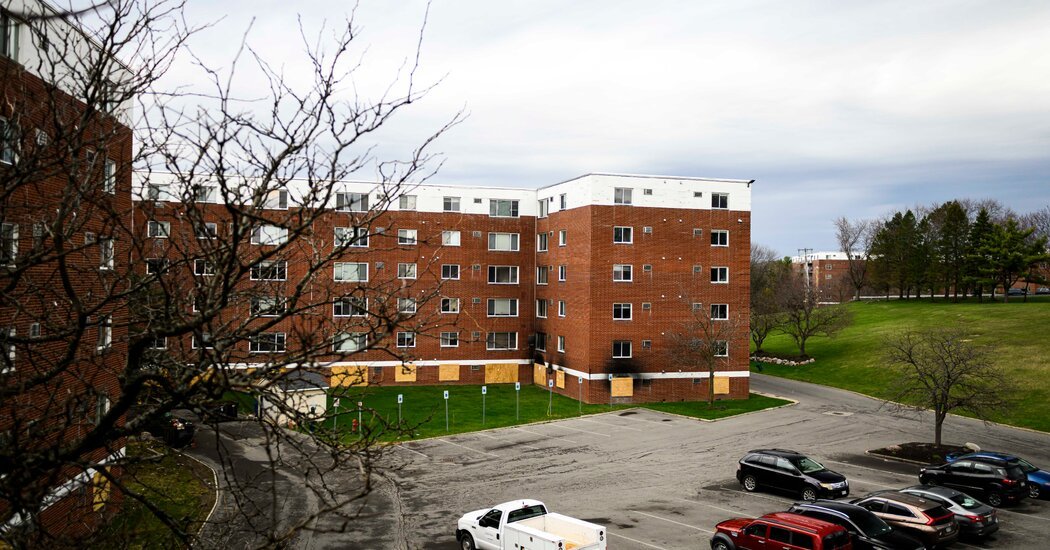
Nob Hill was completed in the early 1970s. By 2018, the longtime owners were looking to sell. Nicholas Sinatra, a real estate developer based in Buffalo, learned of the opportunity through a local real estate company, he said. An investment broker introduced him to Mr. Nesbitt, a hard-charging real estate developer whose company, Windsor Capital Group, owned shopping centers, hotels, apartments and office buildings around the country. He lived on a 43,000-square-foot estate in Montecito, Calif., with stables for 17 horses and a regulation polo field.
After hearing Mr. Sinatra’s pitch about Nob Hill, Mr. Nesbitt recruited two of his friends to invest. Teodoro Calle, whose family owns an Ecuadorean construction company, came to own 13 percent. Fred Fellows, an investor in West Palm Beach, Fla., bought 8 percent. Mr. Sinatra also became a minority investor, taking a 4 percent stake. His firm, Sinatra & Co., assumed the role of overseeing the property.
The purchase of Nob Hill was part of a flood of similar deals in 2018 in which private equity firms bought apartment complexes across the country, said Jim Baker, executive director of the Private Equity Stakeholder Project, a Chicago-based nonprofit that tracks private equity apartment deals.
Nob Hill’s sale price of $58.5 million made it one of the most expensive sales in Syracuse history. But because 90 percent of the money came from a $51 million loan backed by Fannie Mae, the government-controlled mortgage finance company, Mr. Nesbitt and his fellow investors faced little financial risk if the investment failed.
“Why this is emblematic of private equity ownership of housing is that, from the beginning, the ownership group had limited skin in the game,” Mr. Baker said. “They never had much to lose. Most of the risk falls on residents and the broader public.”