If you could interview Tucker Carlson, what would you ask?
That’s no simple question. A successful interview is revealing, engaging, memorable. Mr. Carlson, one of America’s best-known conservative commentators, has answered a gazillion questions over the decades, and he’s skilled at not being pinned down when he doesn’t want to be. So how do you draw out illuminating and unexpected answers from a very public figure?
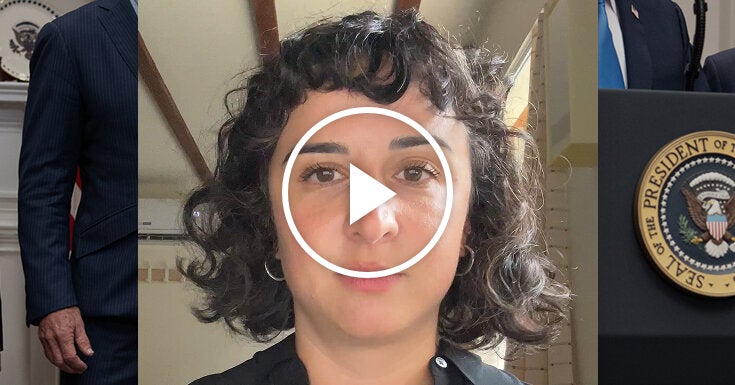
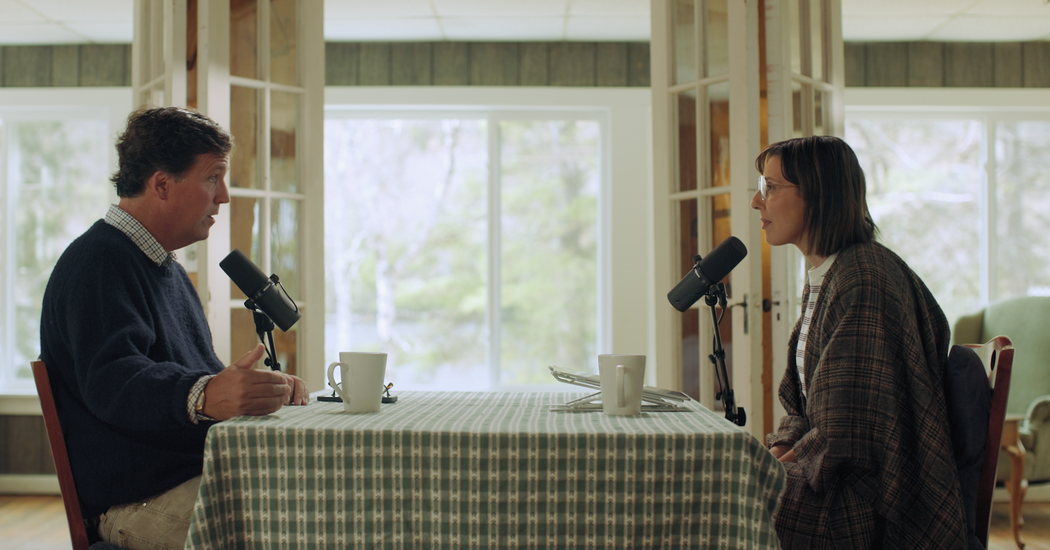
Lulu Garcia-Navarro just had two conversations with Mr. Carlson for “The Interview,” a New York Times show. I spoke with her about preparation, the framing of her questions and some of the decisions she had to make in real time, when things turned adversarial. This conversation has been edited and condensed.
Tucker Carlson has his own platform and he’s been interviewed a lot lately. Why did you want to talk with him now? What did you want to find out?
I’ve been following Carlson since his Fox News show debuted in 2016. I became host of a news show around that time and I’d watch his program every night because — and this is no overstatement — he was hugely influential on President Trump and the conservative movement. After he left Fox in 2023, his evolution into a MAGA podcaster who campaigned for Trump followed changes I was noticing in the conservative ecosystem, which was moving toward outside voices having even more influence. Now, he’s come out against the Iran war and is one of the most vocal opponents of President Trump.
I wanted to explore what made him move away from the president he had so ardently supported, and what might that mean for MAGA writ large. Tucker Carlson has remained relevant for a reason — he often knows where the right is headed.
How did you prepare for the interview?
I immersed myself in Tucker world, as did our team, including the producer Wyatt Orme. Carlson’s a deft orator. He told me he never scripts his lengthy editorial segments. I can attest that he has an astonishing memory for detail and is very agile when he argues. I was told, and I can confirm: You cannot come into an interview with Tucker Carlson unprepared. In advance of our conversations, I also spoke to many people on the left and the right who know him personally or have dealt with him professionally.
For my interview, I ended up focusing on two interviews he previously did that received a lot of attention: His interview with Mike Huckabee, the U.S. ambassador to Israel, and his interview with the white nationalist Nick Fuentes. I think they exemplified some of his rhetorical methods and were good jumping-off points to delve into his worldview.
On his podcast, Carlson holds forth on his perspectives, including conspiratorial views. During your two conversations, how did you decide when to interject, or push back, as opposed to letting him run on?
We made it clear to Carlson — as we do with all our guests — that we fact-check and edit all of our interviews. But it’s important to let people talk, because the purpose of an interview like this is to understand their worldview. And I challenge those views as respectfully as possible where it makes sense. Some of the most interesting exchanges come when you are digging deeper through a back-and-forth. I speak to people on all sides of the political spectrum and I approach all these interviews in the same way: with curiosity and a healthy dose of skepticism.
There are moments in the interview that sound like conspiratorial dog whistles about Israel and Jews. Like his comment, “my strong impression was that Trump was more a hostage than a sovereign decision maker” on Iran. You then came back at him and asked, What are you getting at with a comment like that? How do you balance being respectful and aggressive?
It comes back to asking the questions the audience wants answered. Carlson has been accused of antisemitism. Those are charges he denies. My job as a journalist and interviewer is not to sanitize or demonize his beliefs — it is to try and get him to articulate them clearly. My standard for interviews always involves the audience. What do people need to know about this person and their beliefs, because they have a huge influence on our politics and ultimately our lives. Tucker Carlson meets that bar and then some.
What are some questions you thought about asking but decided not to?
I’ve been interested in his comments and views on women. He has interviewed the Tate brothers, who are accused of rape and trafficking of women, and he is publishing a book by Russell Brand, the actor and comedian, who is about to face trial in the United Kingdom for rape. Carlson is someone who is constantly invoking the Epstein files and the Epstein crimes, and that seems to be a contradiction.
In the end though, we have limited time and I wanted to have a cohesive conversation about subjects that have national and global ramifications, namely the war in Iran and the future of President Trump’s party. Jumping around often produces shallow answers.
I was struck by how some of Carlson’s critiques — on Israel, the Iran war, the economy, capitalism, big banks, establishment parties — overlapped with views of some progressives. Some of those moments may make people wonder if this is a performance or if this is really him.
If you dig into the Carlson oeuvre, you’ll find he’s been pretty consistent on many things since 2016, namely, immigration, his opposition to overseas wars (after initially being a supporter of the Iraq War) and some of his critiques of capitalism. I think progressives and others are listening to him now because he’s come out against the president. And I wouldn’t be surprised if he is interested in seizing that moment. That said, many of his views are probably antithetical to most progressives’ values. In the end, the question that so many people have about Carlson is what he really believes. As he might say, that’s between him and God.
That sort of gets to a big question that you were circling during the interview and then dug into at the end: What happened to Tucker Carlson? I’m curious what your takeaway was to his answer.
It comes back to the reason I wanted to interview him. The question of what happened to Tucker Carlson implies that he is somehow different than the rest of us. I came away thinking that Carlson is a mirror of what we have been experiencing both culturally and politically for the past decade. He talks about the things people care about — jobs and A.I., the values of our country, who and what we should be in the world, what our governing class is doing. You may not agree with his conclusions or prescriptions, but you ignore him at your peril.