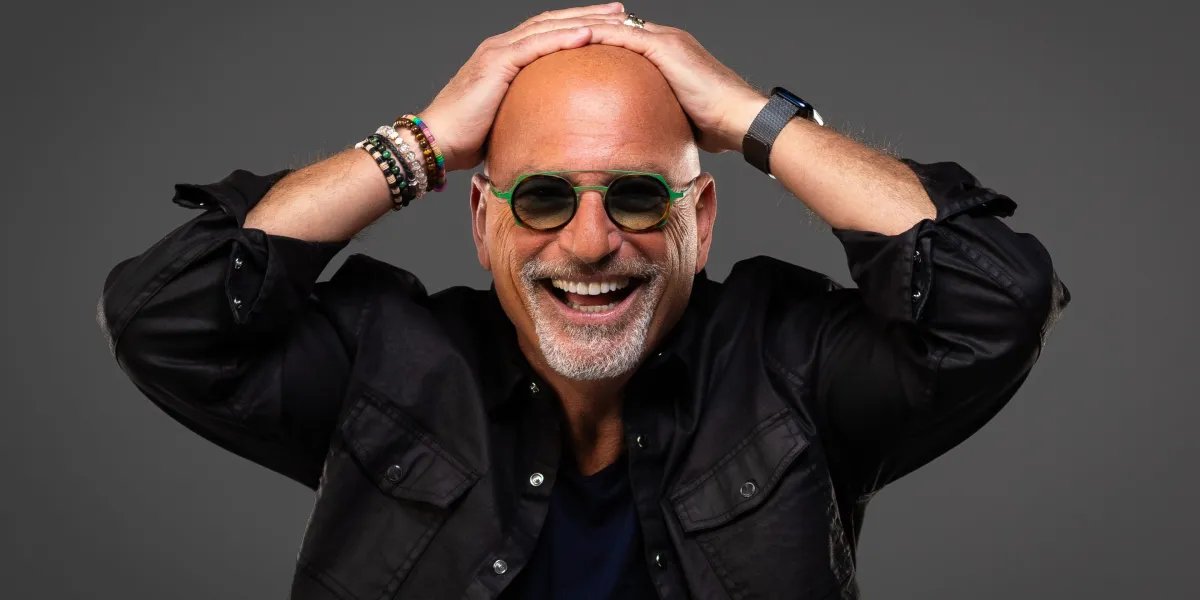
The first time Howie Mandel told the world he had OCD, he didn’t mean to.
He was on The Howard Stern Show, spiraling into a panic attack because he didn’t want to open the door. He just couldn’t get past touching the doorknob and leaving the studio, and what he didn’t realize is he no longer was thinking that: the words came out before he could stop them. It was aired on Stern’s show, Mandel left the studio, and found himself contemplating his career and life on the busy New York City street. His thoughts and anxiety getting the best of him, the train of thought broke finally when a stranger walked up and said: “I just heard you on Stern. Me too.”
Brian Smith.
“It was the first time I connected with somebody else,” Mandel told Fortune in a lengthy interview. “It was the first comfort I got, which I didn’t have for 40-some odd years—it was to articulate, explain, and understand what was going on in here,” he said while tapping on his noggin while sitting before a wall display of perfectly aligned fedoras.
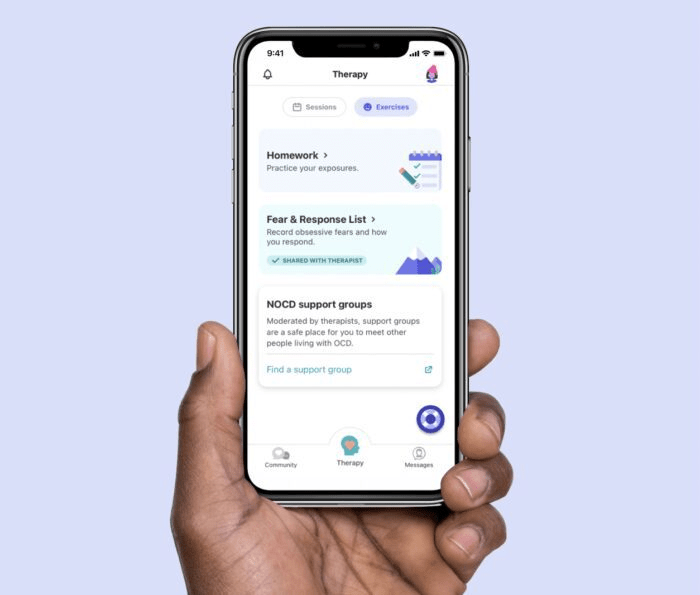
That accidental confession, followed by the encounter with the stranger on the sidewalk, set in motion a two-decade arc that now finds Mandel as the public face of NOCD, a virtual therapy company that has grown into the largest telehealth provider specializing in OCD treatment. NOCD, last valued at nearly $270 million in 2024, currently provides at least a million therapy sessions annually, with more than 140 million people able to access it through their insurance. This past January, the company announced its acquisition of Rebound Health, a PTSD-focused platform, launching a parent brand called Noto, named after the AI-powered software that has fueled its growth.
Mandel, born in 1955, says he has no recollection of living without OCD. The rituals, the compulsions, the germ fears, none of it had a name until his mid-40s, when his wife of 20 years gave him an ultimatum: you either go figure out how to do this differently, or we can’t live in this world. He was making her sanitize and accommodate. “I didn’t know I had OCD,” he said. “I just knew life was hell.”
NOCD
He’s precise about what the disorder actually is, and what it isn’t. When people approach him and say they’re “a little OCD” because they like things in order, he doesn’t let it slide. “It’s like saying I just got a touch of that cancer,” he said. “You don’t have a touch of OCD.” What it actually looks like, he explained, is washing your hands until the top layer of skin is gone—going in because the handshake felt clammy, washing, turning off the water, turning it back on, washing again, scalding, again, again—until two hours have passed and you’ve missed the appointment. “You can’t fucking stop it. And it just becomes this f—ing nightmare.”
Billy Bob Thornton knows that nightmare too, and he didn’t have a name for it either. Growing up, the actor said he had no idea what OCD was, and instead, thought he invented it. As a kid, he would count to a 100 five times in his head before his father’s car pulled into the driveway—a ritual of control in a home that didn’t offer much of it. Decades later, he bonded with Warren Zevon over the disorder after the legendary singer-songwriter watched Thornton open and close a mailbox three times and simply said, “You have it too, huh?”
The two men were born in the mid-’50s and were shaped by a generation that had no vocabulary for what was happening to them. They eventually found each other through an ad. Thornton saw Mandel’s NOCD campaign and called Mandel, who assumed it was about an acting role. “He’s gonna give me a part in Landman,” Mandel remembered thinking, referring to the hit Paramount+ show with Thornton playing a lead role.
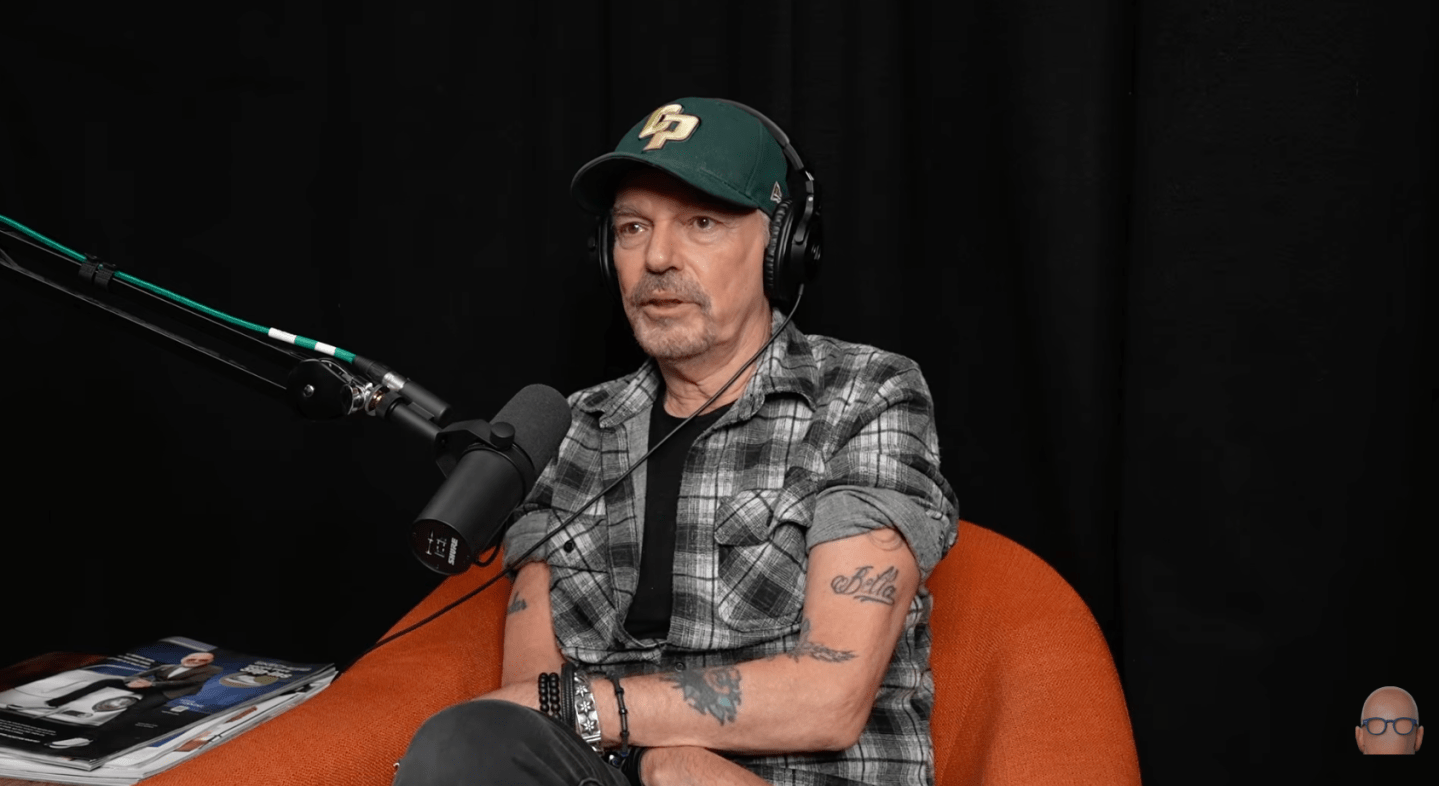
“He said, ‘I saw your ad. I saw the NOCD. And I haven’t really talked about this with anybody personally,’” Mandel recalled. They talked for an hour on the phone, and later Thornton came on Mandel’s podcast, Howie Mandel Does Stuff to compare notes on a disorder that had quietly shaped everything. “Billy talked about how tiring it is,” Mandel said, “just to go through your day and not be pulled into the obsessions and the compulsions that this horrible issue creates.”
Mandel says well-known musicians, athletes, and actors have reached out privately after seeing the ads, all people who recognized it themselves and wanted to talk, without necessarily wanting to go public. “I don’t feel comfortable talking about everybody else,” he said. “Celebrities galore,” he said. “Saying me too. The real me too.”
Howie Mandel
NOCD founder Stephen Smith started the company 11 years ago wanting to build something for people like himself—one of the 8.2 million Americans with OCD. His path mirrored both Mandel’s and Thornton’s: misdiagnosed, without access to the right care, eventually building what he wished had existed. “Steven lived a f—ing nightmare,” Mandel said, “and he created this and got this together because of what was missing.”
Smith knows the nightmare firsthand. A college football player at a small school in South Texas, he had a severe OCD onset the summer after his sophomore year. “I went from the starting quarterback to housebound in six months,” he told Fortune. He was misdiagnosed six times before finally finding a specialist—one who charged $400 an hour, cash only, with a seven-month waitlist. “That was the only chance to get better.” He got through it, eventually transferred to Pomona College, finished his degree, and started building NOCD while still going to class and playing football. The problem he was solving was simple: “I was misdiagnosed six different times — and unfortunately that’s the standard for people with OCD.”
General therapy isn’t enough. “If you have OCD, you need to talk to somebody who doesn’t just know about it, but is an expert in it,” Mandel said. “It’s like if you hurt your back, you don’t go to your family doctor. You go to a spinal expert.” NOCD has trained about 1,000 therapists specializing in exposure and response prevention therapy, the gold-standard treatment for OCD, and recently added prolonged exposure therapy for the significant subset of users dealing with both OCD and PTSD.
Thornton has said these conversations shifted how he sees his own struggles—arguing that what the public treats as detriments are actually strengths, especially in the arts. Mandel is less romantic about it, but no less certain that talking is the point. “I think when people that have a platform talk about their issues and their foibles and just their humanity,” he said, “it opens up a door for other people to go: okay, so I’m not the only one.”
He paused. “And look, I’m not the only one struggling.”