“Hybrid creep” is emerging as the newest way employers are nudging remote workers back to their desks, one extra office day and perk at a time rather than through blunt mandates. Framed as flexibility and culture-building, the quiet shift is reshaping what “hybrid” really means in 2026.
The phrase, which appears to have been coined by the Boston-based videoconferencing software maker Owl Labs in its 2025 state of hybrid work report, describes a slow, often unspoken expansion of in‑office expectations, where a nominal two- or three-day schedule gradually tilts toward a de facto full-time presence. With formal policy changes largely failing to bring workers back by stick, the carrot that companies are turning to is more like a combination of social pressure, subtle incentives, and performance signals to pull workers back in. The Wall Street Journal‘s Callum Borchers, who reported on the phenomenon, argued it’s a particularly passive aggressive form of workforce management, designed to raise office attendance without issuing a direct order.
The tactics bosses are using
Hybrid creep often starts with adding more “anchor days,” as noted by Stylist, or days when teams are expected in the office for meetings, collaboration sessions, or client visits. Over time, those anchors spread across the week, making it harder for employees to keep meaningful work-from-home days.
Promotions and plum assignments increasingly flow to the people who show up the most, sending a clear signal visibility matters as much as—or more than—output. At the same time, companies roll out social perks—free lunches, events, guest speakers—to make the office feel like the center of professional life again.
Many managers complain they still struggle to measure productivity and mentor staff they rarely see, especially younger workers learning on the job. Hybrid creep offers a way to restore in‑person oversight and informal coaching while avoiding the public relations hit of a strict mandate.
This new species of hybrid creeper comes after several varieties of pandemic-era fauna flourished in the jungle of remote and hybrid work. The “coffee badger,” the millennial-tilted hybrid worker who swiped their badge in just long enough to have the proverbial cup of java before heading for the hills of the home office, may regard the hybrid creeper as their natural predator. The “job hugger,” on the other hand, the worker who discovered a new sense of loyalty to their employer after the “Great Resignation” curdled into the “Great Stay” and now the “no-hire economy,” will surely be amenable to the onset of hybrid creep.
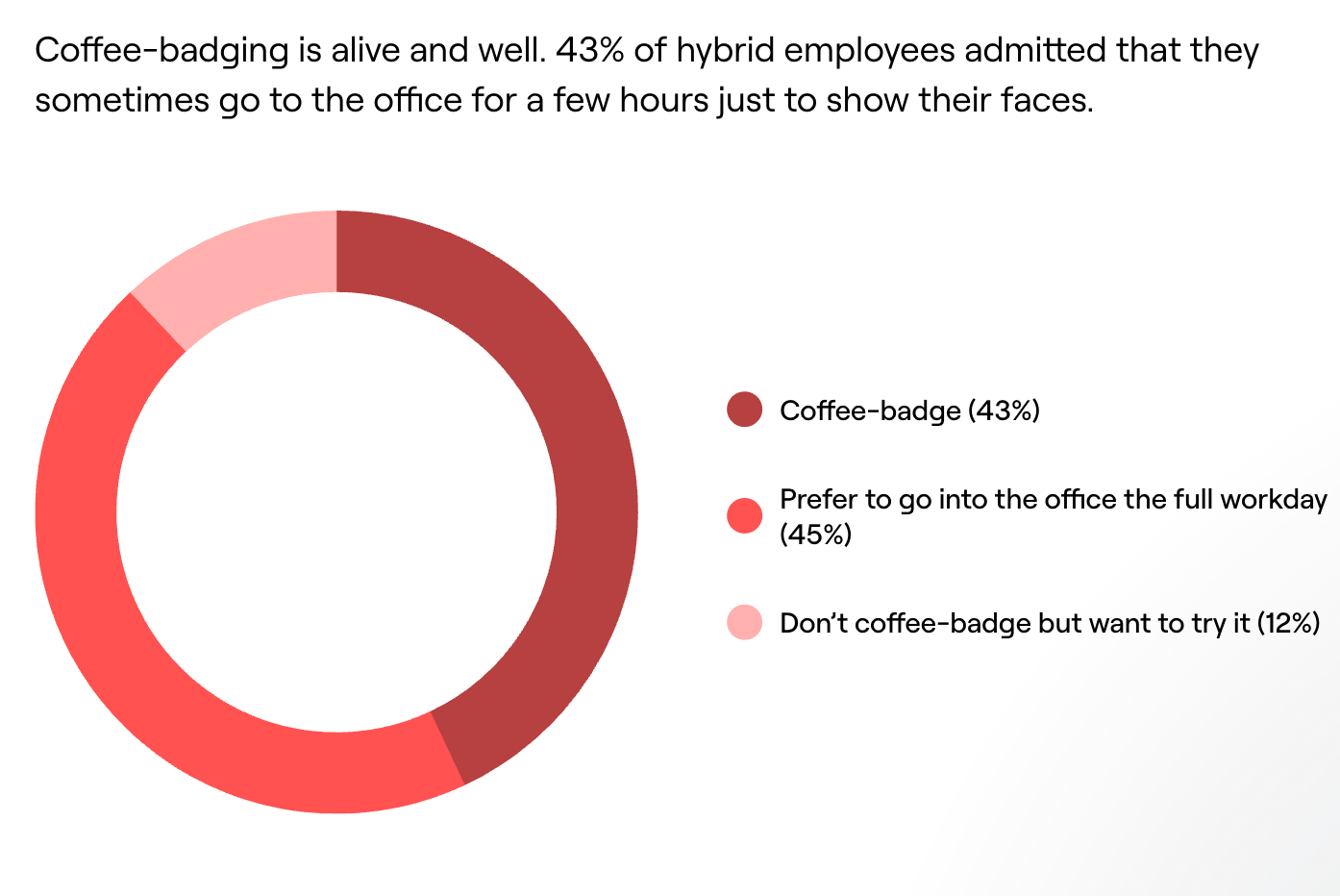
Owl Labs found the coffee badger is thriving, at 43% of the workforce, but so is the silent creature of “hushed hybrid,” with 17% of hybrid workers having remote arrangements they don’t openly discuss. These findings align with what commercial real estate giant Jones Lang LaSalle termed the “non-complier” who is “empowered” to make their own schedule, out of some kind of value provided to the company.
Some employees welcome clearer routines and in‑person contact after years of scattered hybrid arrangements. For others, hybrid creep feels like a broken promise, eroding the flexibility that led them to accept or stay in a job in the first place.
Critics warn tying advancement to badge swipes can punish caregivers, disabled workers, and those with long commutes, even when their performance is strong. Employee advocates also argue opaque expectations breed resentment, fueling quiet quitting or renewed job searches as workers realize the ground rules have changed.
Career coaches advise workers to document results and press managers for explicit expectations—how many days in office, which days, and how that links to performance reviews. Clarity, they argue, is the best defense against a creeping requirement that never appears in writing but strongly shapes careers.
For employers, the risk is over-reliance on hybrid creep will damage trust if workers feel manipulated rather than consulted. As the fight over where work happens enters another phase, the future of hybrid work may hinge less on policy documents and more on these quiet, incremental pushes back to the office. The Journal‘s Borchers noted hybrid creep is nearing a tipping point, as the badge-swipe company Kastle Systems’ back-to-work barometer has posted year-over-year gains in each of the past six months, and over 50% attendance is the norm as of early 2026, a new high over 2025’s attendance.