NEWYou can now listen to Fox News articles!
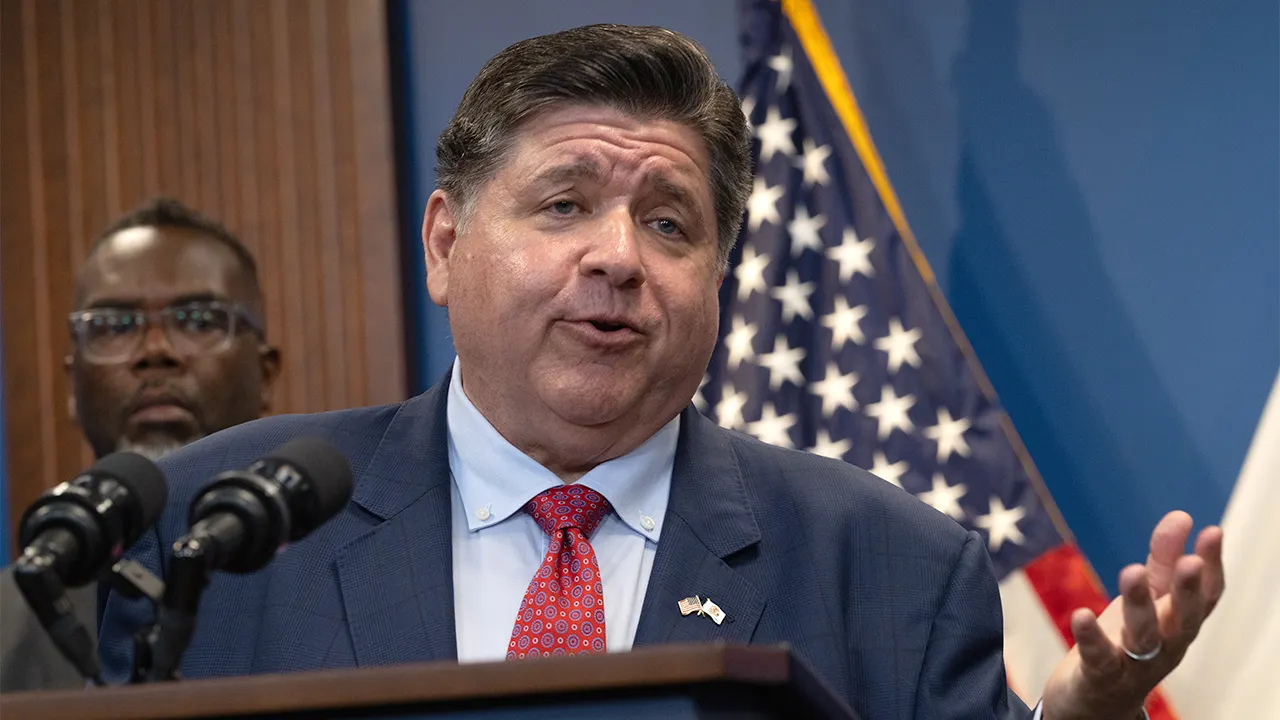
Illinois Gov. JB Pritzker on Friday signed legislation that will allow eligible terminally ill adult patients to obtain life-ending medication in consultation with their doctors, making Illinois the latest state to authorize physician-assisted suicide for people with a prognosis of six months or less.
The law, known as the Medical Aid in Dying bill or “Deb’s Law,” will take effect in September 2026 to allow participating healthcare providers and the Illinois Department of Public Health (IDPH) time to implement stringent processes and protections.
Deb Robertson, a lifelong Illinois resident with a rare terminal illness who the bill was named after, said in a statement she “know[s] the end for me could be near. But I’m pleased to have been able to play some role in ensuring that terminally ill Illinoisans have access to medical aid in dying.”
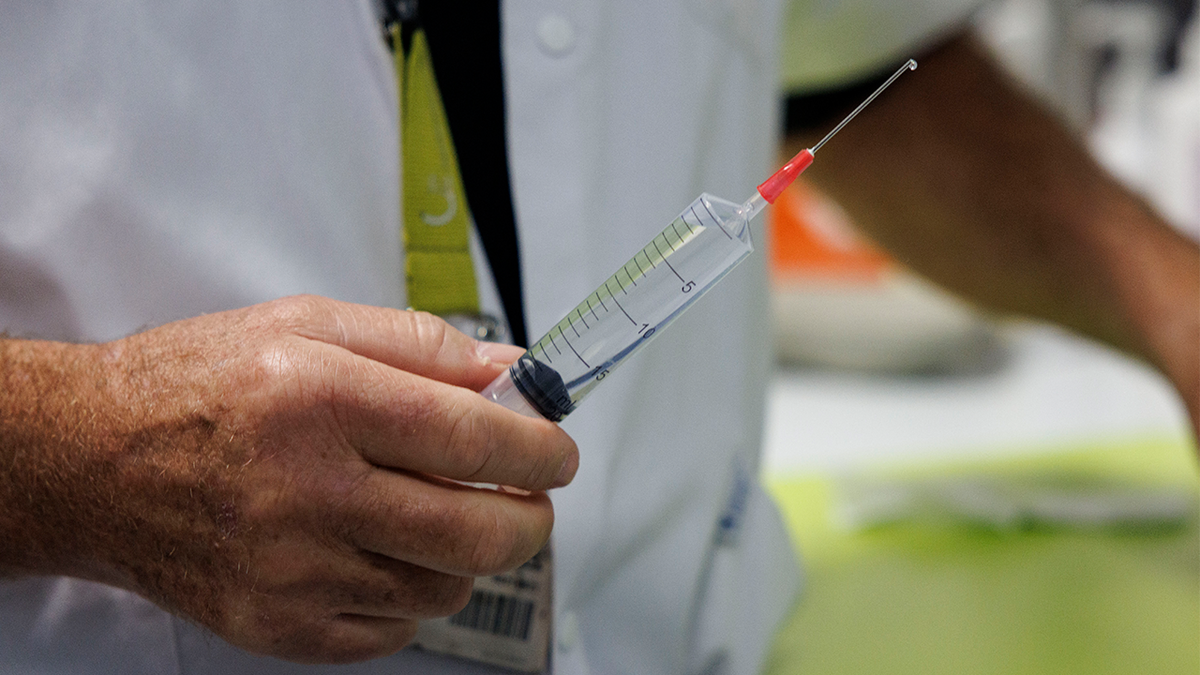
A doctor prepares a syringe with “Thiopental” a barbiturate that is used in the practice of euthanasia. (Getty Images)
Pritzker, a Democrat, wrote in a news release the legislation will help terminal patients “avoid unnecessary pain and suffering at the end of their lives,” and will be “thoughtfully implemented so that physicians can consult patients on making deeply personal decisions with authority, autonomy and empathy.”
The ACLU of Illinois applauded the new measure, saying terminally ill patients living in Illinois will “no longer have to agonize about spending their remaining days fearful of a painful death.”
While Pritzker’s office included a quote from Chicago Episcopalian minister Rev. Judith Doran supporting the law, other groups, including the Catholic Conference of Illinois, released statements opposing any legislation that would legalize assisted suicide.
“Proponents argue that this legislation will end suffering at the end-of-life,” the Catholic Bishops of Illinois wrote in a September statement. “Assisted suicide is not the compassionate solution for those who are suffering. Through palliative care, expanded access to mental health care, and stronger family and community support, providers and families are finding better ways to accompany these people compassionately that truly confer the love for, and dignity of, each human life.”
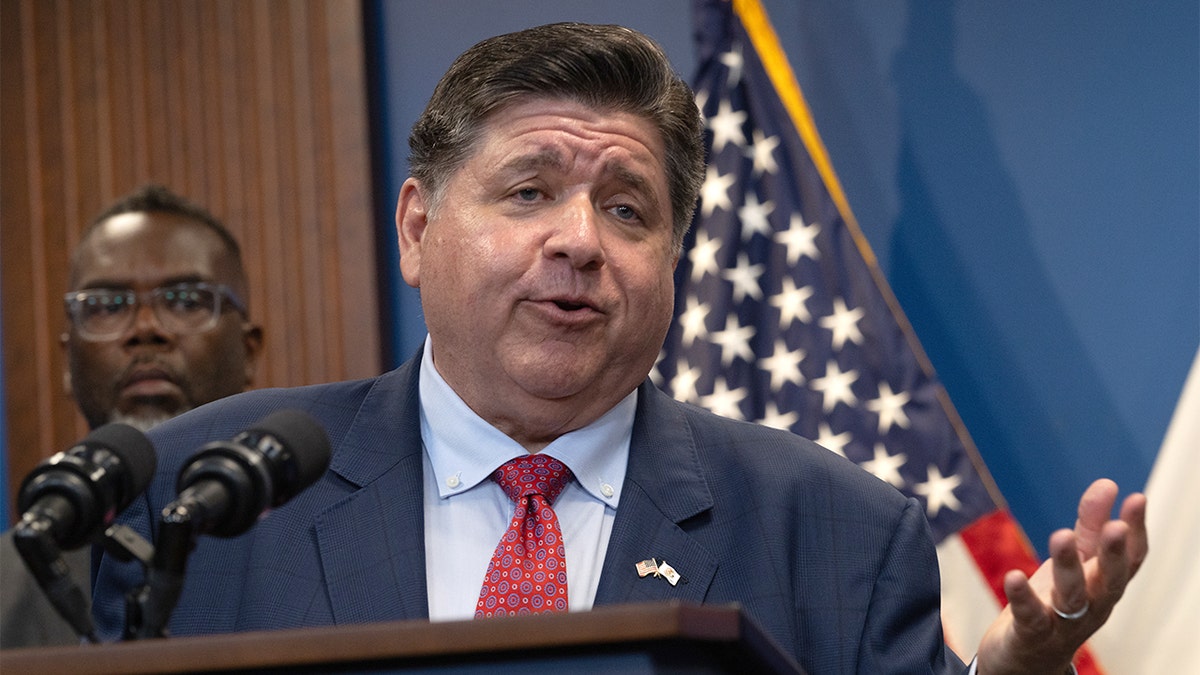
Democratic Illinois Gov. JB Pritzker signed a bill legalizing physician-assisted suicide. (Scott Olson/Getty Images)
‘UNTOLD DAMAGE’: GLOBAL ASSISTED SUICIDE MOVEMENT TARGETS CHILDREN
They added “unintended consequences” of legalized assisted suicide include documented cases of people being denied life-saving medical treatment by insurance companies in lieu of the much cheaper option of life-ending drugs.
“The poor and those with disabilities are particularly in jeopardy as they are the most vulnerable to such abuses,” the Catholic Conference of Illinois wrote. “In response, every major national organization that represents people with disabilities is opposed to assisted suicide.”
Patients must self-administer the medication, with the legislation making it a felony to coerce anyone to request the medication or forge a request.
Patients who qualify and receive medication have the right to withdraw their request at any time or choose not to ingest it, according to the release.
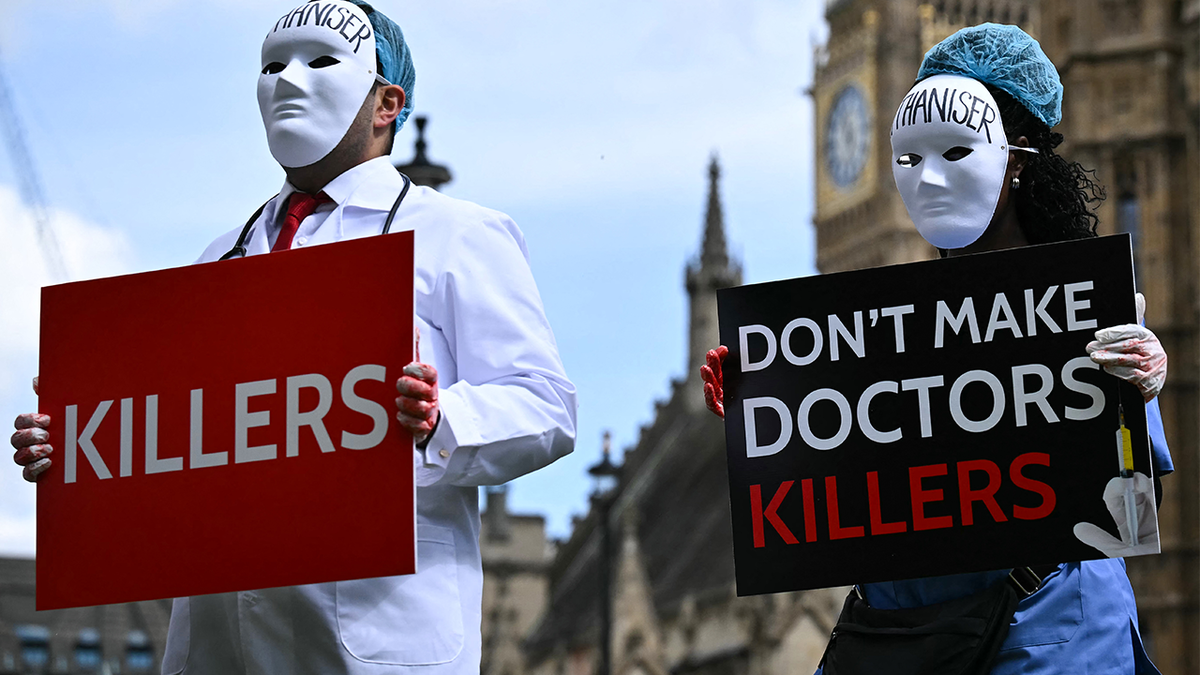
Disability campaigners from “Distant Voices and Not Dead” hold a demonstration outside Westminster Hall in central London, on April 29, 2024, protesting against proposals to legalize assisted suicide in the UK. (Getty Images)
The death certificates of those who commit physician-assisted suicide under the bill will list their cause of death as an underlying terminal disease.
The Thomas More Society, a national public interest law firm, claimed in a statement Friday that Illinois has “crossed a moral and legal red line.”
“This is a dark and sorrowful day for Illinois. When the state signals that some lives are no longer worth living, the most vulnerable pay the price,” Thomas More Society executive vice president Thomas Olp wrote in a statement. “Instead of offering true compassion, support, and care, this law offers a fatal prescription. That is not mercy. It is abandonment.”
In addition to its “grave social and moral implications,” the law firm noted the law threatens the conscience rights of physicians opposed to facilitating assisted suicide, as well as the freedom of association of religious medical institutions.
While physicians, health care providers and pharmacists are not required to participate, the bill requires physicians who object to assisted suicide on moral or religious grounds to refer patients to providers who will participate in ending their lives.
CLICK HERE TO DOWNLOAD THE FOX NEWS APP
“The State is forcing doctors to become active participants and cooperators in a patient’s suicide—no matter if their faith, ethics, or Hippocratic Oath forbid it,” Olp wote. “This is unconscionable coercion, plain and simple. No doctor should be ordered by the government to participate, directly or indirectly, in a process that deliberately ends a human life.”
Beyond the law’s compelled-referral mandate, the law also forces religious hospitals and clinics to retain staff who promote assisted deaths on-site, as long as those staff provide lethal drugs off-site.
“This is a Trojan horse designed to violate and undermine the missions of religious healthcare institutions,” Olp wrote. “Gov. Pritzker’s assisted suicide law threatens the integrity of Catholic and Christian medical institutions statewide. … State law should never endorse the idea that suffering or sickness makes a life disposable.”
If you or someone you know is having thoughts of suicide, contact the Suicide & Crisis Lifeline at 988 or 1-800-273-TALK (8255).