- Goldman Sachs expect Bank of England on hold for the rest of 2026
- Powell to speak Saturday after Fed held rates. This is not a policy related speech.
- Tesla plans major solar expansion with Chinese equipment suppliers, eyes $2.9B deal
- Morgan Stanley delays Fed rate cut outlook to September, December (from June, September)
- PBOC sets USD/ CNY mid-point today at 6.8898 (vs. estimate at 6.8773)
- Saudi see oil hitting $180 if Iran conflict keep supply disrupted, risk demand destruction
- HSBC favours U.S. and Asia equities despite Middle East risks
- Goldman Sachs warns oil could exceed 2008 all time high peak on supply disruptions
- Reports that the U.S. deploys more Marines and ships to Middle East due to Iran tensions
- WTO cuts global trade outlook, says Middle East conflict lifts energy risks
- JPMorgan cut S&P500 target to 7200 (from 7500), warn oil price surge raises recession risk
- EU calls for halt to energy strikes amid Middle East supply risks
- RBNZ to expand communication, adding briefings after every policy decision.
- New Zealand February trade deficit narrows, exports and imports both beat expectations
- Qatar LNG exports cut 17% after Iranian strikes on key gas facilities. Years to repair.
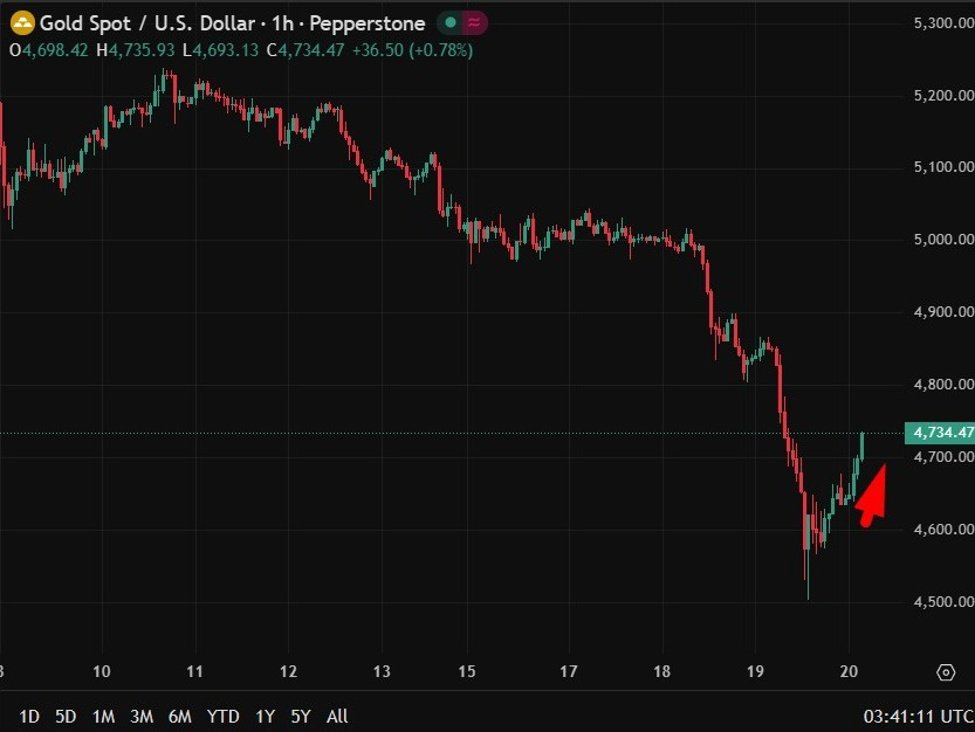
- Gold falls on rising yields; tentative rebound seen toward $4,800
- investingLive Americas market news wrap: Big market moves in oil, gold and FX
In summary:
-
Middle East tensions persist with missile and drone exchanges across the region
-
Saudi, Kuwait and Bahrain air defences activated against Iranian attacks
-
“Boots on the ground” timeline seen at least three weeks away
-
Oil prices eased despite ongoing conflict and supply risks
-
Saudi officials warn oil could surge toward $180 if disruptions persist
-
Gold rebounds above $4,730 amid geopolitical uncertainty
-
PBOC leaves Loan Prime Rates unchanged for tenth straight month
-
USD/JPY rises toward 158.30 despite quiet session and Japan holiday
-
Major FX pairs soften, with EUR/USD and GBP/USD lower
-
Tesla in talks for $2.9B solar equipment deal with Chinese suppliers
Geopolitical tensions in the Middle East remained elevated, with Iran launching a fresh barrage of missiles toward Israel, while Israeli forces reportedly targeted Iranian regime infrastructure in Tehran. Regional spillover risks were evident, with Saudi Arabia confirming its air defences intercepted multiple drones in the Eastern Province, while Kuwait and Bahrain also activated systems in response to incoming threats.
Speculation around potential ground operations continued to circulate, with timelines suggesting any “boots on the ground” scenario remains at least several weeks away, and, once initiated, unlikely to be reversed.
Despite the escalation, oil prices eased during the session, before recovering. The down move followed remarks from Israeli officials indicating that strikes on Iran’s South Pars gas field are unlikely to be repeated, alongside comments from Prime Minister Netanyahu suggesting the conflict may conclude sooner than expected. That said, underlying risks remain elevated. Separate reporting indicated Saudi officials see a scenario where oil prices could surge toward $180 per barrel if disruptions to supply persist into late April.
Gold prices moved higher, reclaiming levels above $4,730.
In China, the People’s Bank of China left its Loan Prime Rates unchanged for a tenth consecutive month, with the one-year rate at 3.0% and the five-year at 3.5%. The central bank continues to guide policy primarily through its 7-day reverse repo rate, currently at 1.4%, which serves as the key benchmark for liquidity conditions and broader lending rates.
Japanese markets were closed for a public holiday, removing a key source of liquidity from the region and limiting activity in physical U.S. Treasuries. In FX, USD/JPY advanced toward 158.30 in a relatively quiet session, while EUR/USD and GBP/USD edged lower.
In corporate developments, Tesla is reportedly in talks to purchase around $2.9 billion worth of solar manufacturing equipment from Chinese suppliers, including Suzhou Maxwell Technologies, as part of plans to significantly expand U.S.-based solar capacity.
—
Oil: