Oil pushes higher toward USD 115/bbl as Trump deadline looms
• Middle East escalation intensifies with strikes across Iran, Saudi, Israel
• Missile activity hits key Saudi industrial hub at Jubail
• US signals limited appetite for further deadline extensions
• Iran response seen as “tough” but still a negotiating tactic
• Pentagon briefing cancelled, adding to uncertainty
• USD firms modestly; FX ranges relatively contained
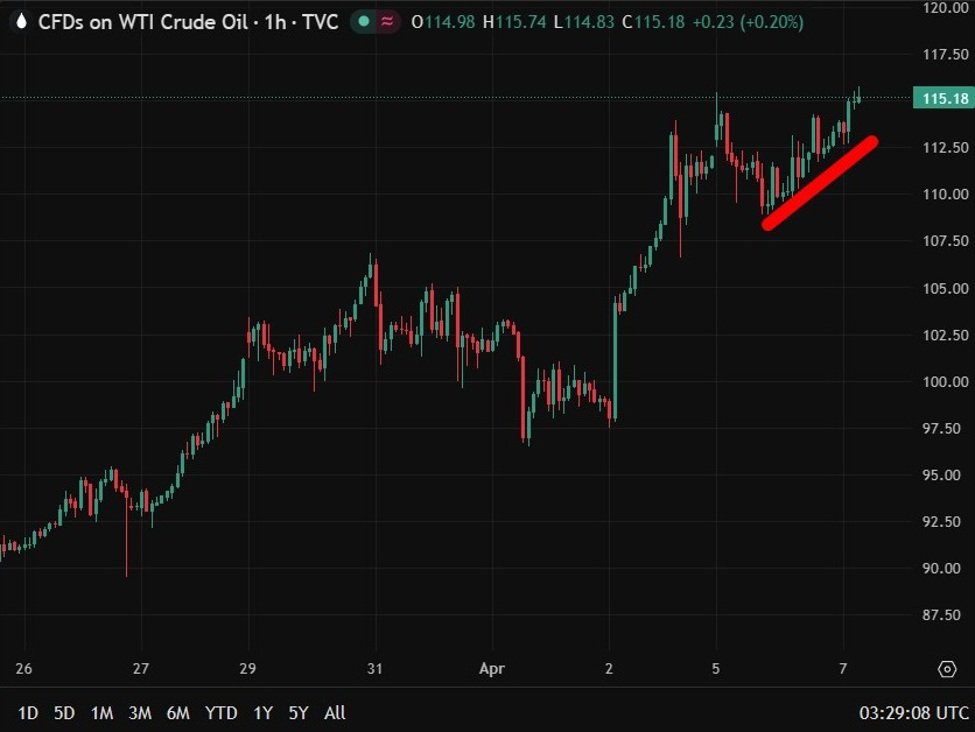
Oil extended its gains, with WTI crude futures pushing above USD 115/bbl as markets moved closer to President Trump’s Tuesday evening deadline on Iran, while geopolitical tensions continued to escalate across the region.
Overnight developments pointed to a broadening conflict footprint. Explosions were reported in Bahrain, while sirens sounded in Saudi Arabia’s eastern province. Iranian sources flagged renewed attacks on infrastructure, including an airport in Kashan, while Israel reportedly approved an updated list of Iranian energy and infrastructure targets as contingency planning should diplomacy fail.
The most significant development appeared to be strikes on Saudi Arabia’s Jubail industrial hub, a critical centre for petrochemicals and energy production that accounts for roughly 7% of the Kingdom’s GDP. While Saudi authorities said they intercepted seven ballistic missiles targeting the eastern region, debris reportedly fell near energy facilities and damage assessments remain ongoing. Videos suggest it was more than debris, with strikes visible. The strike underscores a notable escalation, given the relative scarcity of successful attacks on core Saudi infrastructure compared with other Gulf states.
Elsewhere, regional spillover risks continued to build. Reports indicated US-linked targets were struck in Kuwait and Iraq, including a drone strike on a US base in Baghdad, while Israel activated air raid sirens across multiple southern locations following warnings of further Iranian missile launches.
On the policy front, the cancellation of a scheduled Pentagon briefing featuring Defense Secretary Pete Hegseth and Joint Chiefs Chairman Dan Caine added to the sense of uncertainty around next steps. Meanwhile, Axios reported that US officials are increasingly doubtful about extending the current deadline again, suggesting patience within the administration is fading. However, Axios continued, the US continues to interpret Iran’s “tough” response as a negotiating tactic rather than a rejection, indicating that backchannel discussions remain active. Importantly, Washington retains flexibility, with the potential to delay military action if a credible path to a deal emerges.
Away from geopolitics, Japan’s household spending data disappointed on an annual basis, while China’s yuan strengthened to its firmest level in nearly three years.
Broader FX moves were relatively contained, with the USD edging higher against major peers. Asia-Pacific equites edged slightly positive (Nikkei down, KOSPI up, China up).
Overall, markets remain tightly anchored to geopolitical developments, with oil leading the price action as the deadline approaches.
History is on the side of the TACO. Will this time be different?