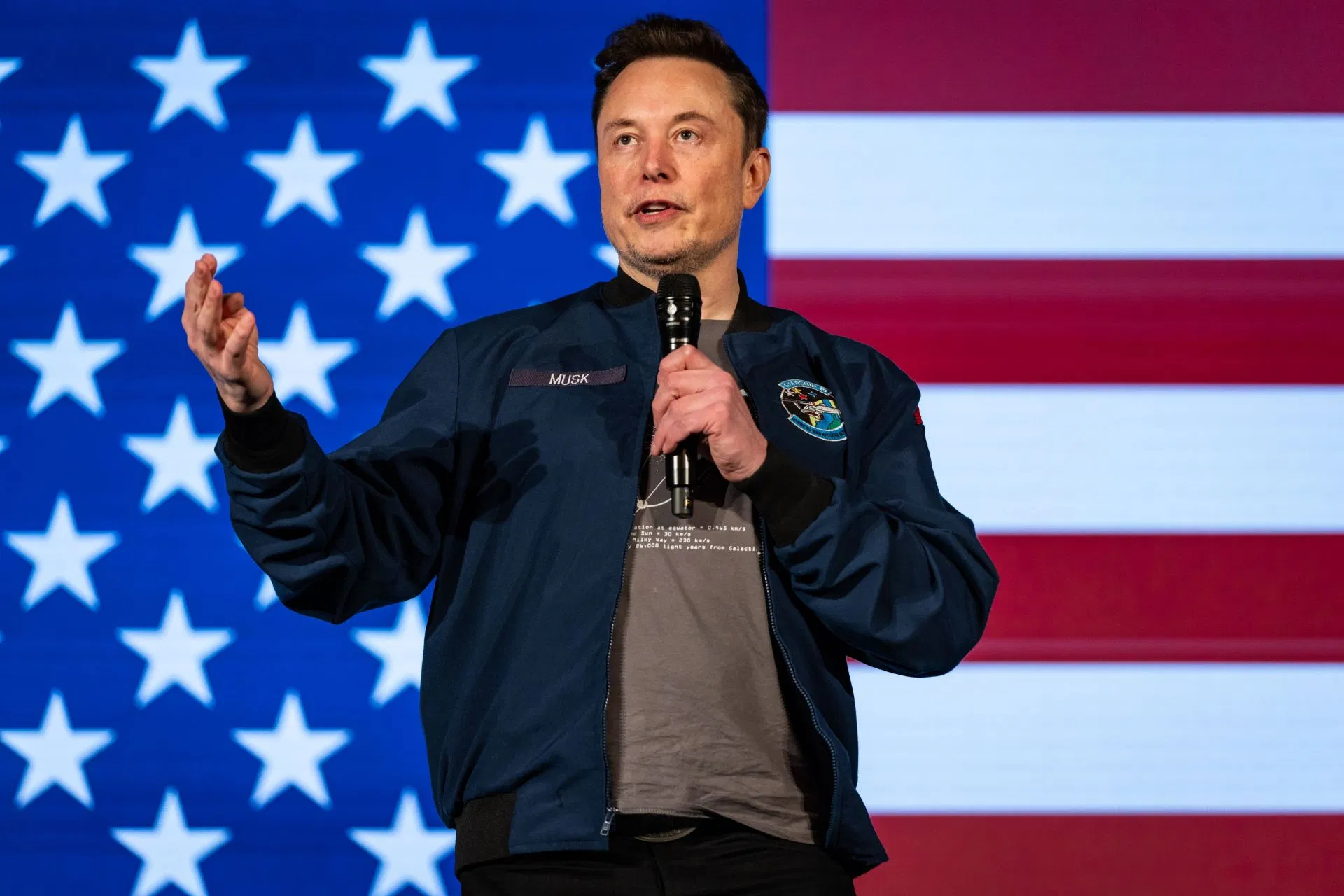

Tech Billionaire Elon Musk recently announced his plans to shift his focus from Mars to building a “self-sustaining city” on the Moon. Musk, who previously detailed his plans to settle Mars one day, explained that SpaceX, his Texas-based aerospace and artificial intelligence company, had “already shifted focus to building a self-growing city on the Moon.”
In an X post on February 8, 2026, he added that the timeline for the Moon project was less than 10 years, whereas Mars is estimated to take more than 20 years. Musk further wrote that SpaceX’s mission remained the same, which was to “extend consciousness and life as we know it to the stars.” However, he added that the journey to the Moon was much faster when compared to that of Mars, writing:
“It is only possible to travel to Mars when the planets align every 26 months (six month trip time), whereas we can launch to the Moon every 10 days (2 day trip time). This means we can iterate much faster to complete a Moon city than a Mars city.”
Musk added:
“That said, SpaceX will also strive to build a Mars city and begin doing so in about 5 to 7 years, but the overriding priority is securing the future of civilization and the Moon is faster.”
Elon Musk’s recent update regarding SpaceX’s mission to the Moon was met with varied responses from netizens on X, with one user questioning:
“Is there no space on earth anymore or something??”
Several netizens shared similar comments, wondering whether a space mission was important given the current climate crisis on Earth.
Others seemed skeptical that Musk has decided to focus on the Moon instead of Mars, wondering what brought on the change.
However, some users seemed to think the Moon mission was a good idea, saying it was a “great jumping off point to go to Mars.”
Elon Musk’s recent announcement came after SpaceX acquired xAI
On February 2, 2026, Elon Musk announced a merger between his aerospace company, SpaceX, and his artificial intelligence company, xAI, and the acquisition is believed to be worth $1.25 trillion. In an internal memo, Elon Musk said the merger will help in “making space-based data centers a reality,” which will “fund and enable self-growing bases on the Moon.”
“The capabilities we unlock by making space-based data centers a reality will fund and enable self-growing bases on the Moon, an entire civilization on Mars and ultimately expansion to the Universe,” he said.
The Wall Street Journal first reported on SpaceX‘s decision to hold off on the long-awaited mission to Mars to focus on travel to the Moon in a report dated February 6, 2026. The publication reported that the space company has estimated a Moon landing without humans on board by March 2027.
Elon Musk’s decision to focus on the Moon came as a surprise, given the tech billionaire’s ambition to settle Mars. In one X post dated January 2, 2025, Musk called the Moon a “distraction” and said his company was aiming straight for Mars, writing:
“No, we’re going straight to Mars. The Moon is a distraction. Mass to orbit is the key metric, thereafter mass to Mars surface. The former needs to be in the megaton to orbit per year range to build a self-sustaining colony on Mars.”
Elon Musk‘s SpaceX will not be the only aerospace company looking to travel to the Moon. NASA is reportedly hoping to send astronauts on a Moon-bound mission called Artemis-II in early 2026.
Edited by Juhi Marzia