Not all of the lessons in the Walker Deibel playbook fit between its covers. One of the first bolt-on acquisitions Lucas Philips tried to close was a tiny shop in rural Oregon — a guy who had spent decades fabricating custom interiors for Porsches. Philips flew to Portland, grabbed a brand-new convertible Mustang on a free upgrade from his shiny new Hertz President’s Circle card, and spent three-and-a-half hours driving south through “the most beautiful” Oregon landscape toward the seller’s property. The owner had originally quoted $40,000 for the operation. Two days later, after watching Philips pull up in a gleaming convertible and spend time on site, he decided the price should be more like $320,000.
“I regret that so much to this day,” Philips said. “I should have just taken the Camry.”
Lucas Philips grew up watching his father do something increasingly rare among his generation: own a small business outright and still make it home in time for school drop-offs and hockey practice. At 26, he decided to do the same — acquiring a niche manufacturer of custom automotive interiors in Newark, N.J. Now 29, Philips told Fortune that he’s glad he did it, but “it’s really not for the faint of heart.”
Since acquiring Newark Auto, Philips has pushed annual revenue from “a little over a million” at purchase to more than $3 million this year, in roughly five years of operating time. He’s done it with bolt-on acquisitions, long commutes, and a roster of hourly workers who have never seen the perks of startup life — Philips jokes about the proverbial ping-pong table in the office — but he’s also learned that in the world of small business, the smallest details can derail a deal.
Like: don’t rent a convertible when you’re making a business trip to try to acquire a new subsidiary.
From dorm-room startup to “buy then build”
Philips traces his entrepreneurial drive to something older than Northwestern. His family immigrated to New York in the Ellis Island era a little over 100 years ago and, frankly, nobody wanted to hire them. He’s from several generations of Jewish small business owners, so it was only natural for him to think this way, he said.
The list of businesses is somewhat endless. One grandfather sold paper goods — boxes, plastic wrap — to the Jewish bakeries of New York. His father sold sunglasses imported from China before anyone was importing anything from China, then hair accessories, then bought a high-end custom furniture business that now has a showroom in the B&B building on Madison Avenue and a factory in Christiansburg, Virginia.
As an undergraduate at Northwestern, Philips launched a coffee concept and raised “millions of dollars in outside capital” before graduating, only to find that the reality of reporting to investors and fighting with an MBA cofounder was not the life he wanted. He described leaving that venture disillusioned with the equity-funded startup model and looking for a path that would give him more control, even if it meant more personal risk.
A friend from Kellogg introduced him to the idea of entrepreneurship through acquisition (ETA) and pointed him toward Walker Deibel’s book Buy Then Build. Philips said reading it “clicked” in a way that academic guides failed to, making clear that he could “buy a business with debt” instead of raising another equity round or bootstrapping from zero. At age 23 in 2021, he joined the Acquisition Lab, which works to provide exits for small business owners and entries for ETA aspirants like Philips. Within 10 weeks of completing the lab, he had a letter of intent to buy Newark Auto, and closed another two months later.
A personal guarantee and “burning the boats”
What distinguishes Philips’s path from the MBA search-fund world is both the capital stack and the incentive structure. The search fund model — popularized at Stanford and Harvard — lets MBAs eventually own 20%–25% of a business, with institutional equity and no personal guarantee on the debt. They can be fired. The SBA model Philips used is different: 10% down, a personally guaranteed note on the remaining 90%, and 100% ownership. He frames the difference in terms borrowed from Noam Wasserman’s The Founder’s Dilemmas: the “king outcome” versus the “rich outcome.” He wanted to be king.
“Once you buy the business, it is your business and no matter what skeletons are buried in the closet, you’re stuck with the thing,” he said, joking that it’s not like you can go to some “customer service counter” and return it if you don’t like what you find post-closing. That’s not the way venture capital works, he clarified, where investors expect a high failure rate and simply write off the capital if an idea doesn’t work. He described the SBA loan approach as something like “burning the boats” in warfare, or “taking out a mortgage on your own career.” You are on the hook for whatever happens next.
Philips insisted that no one should make that kind of bet without formal training. He tells younger would-be acquirers to read Buy Then Build, sit through the lab’s modules on search and diligence, and then reconsider whether they still want to proceed. “Getting training on how to do that right is so important,” he says.
Waking up at 4:30 a.m. to run a blue-collar business
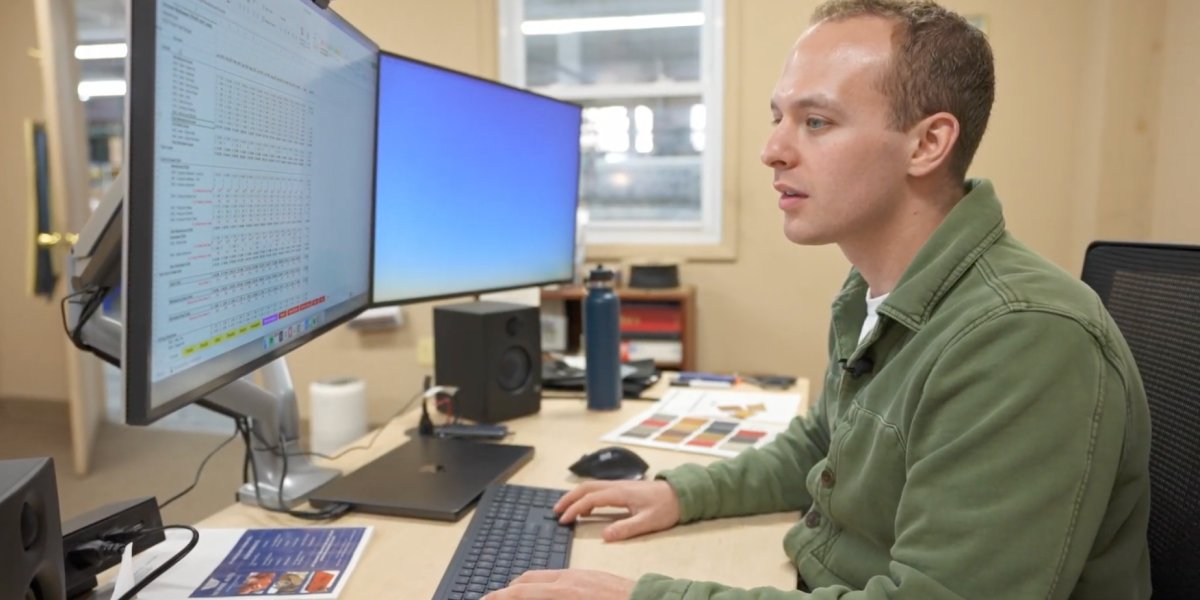
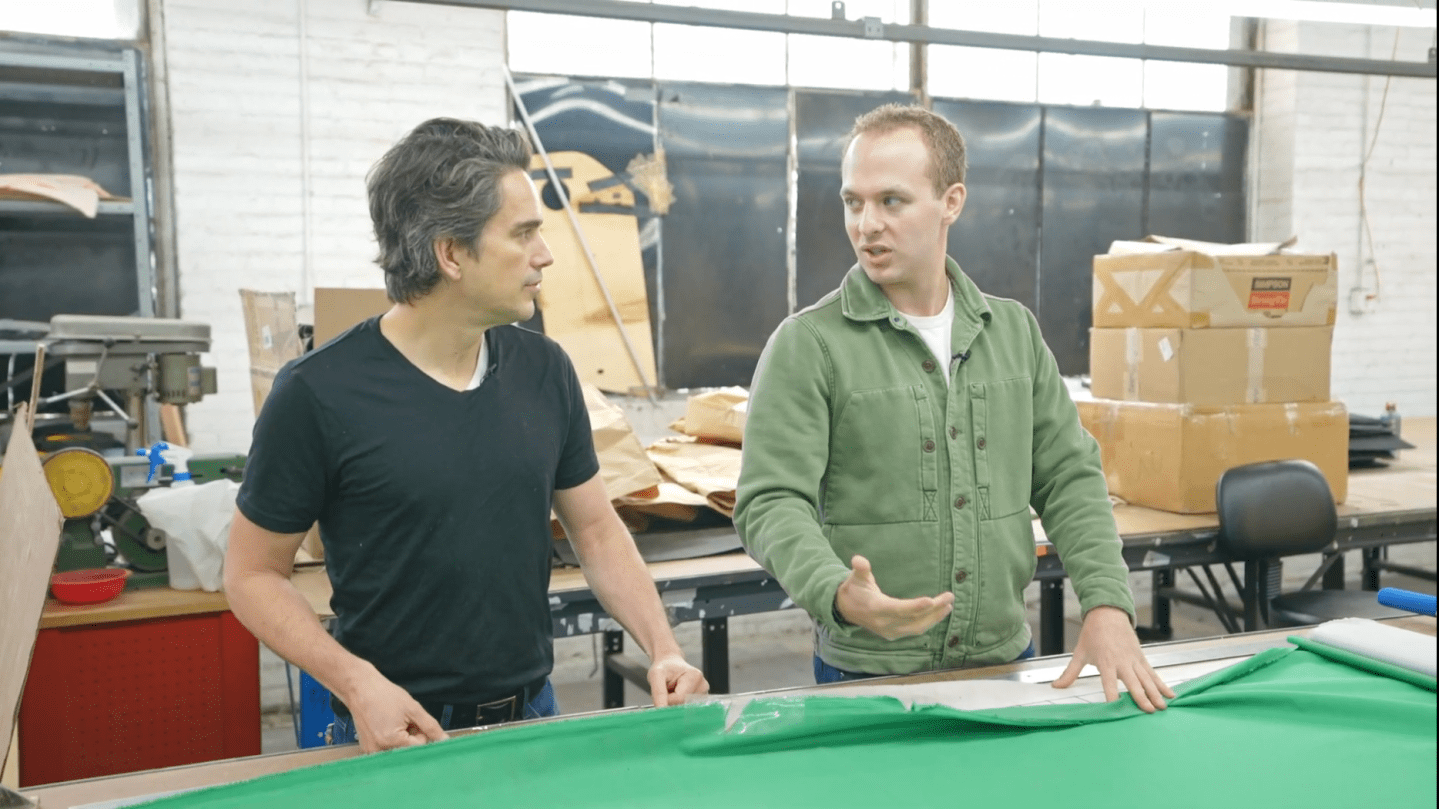
If his startup years were defined by pitch decks and investor updates, Philips’ life now is defined by alarms and factory floors. He lives on the Upper West Side of Manhattan — on the same block where he grew up — commuting daily to Newark to oversee a manufacturing operation whose workers are on the line at 7:30 a.m.
“I wake up between 4:30 and 5:30, and I’m in the office by 7, 7:30 every morning,” he said, adding that manufacturing “generally doesn’t work 9 to 5” and often runs 7:30 to 4 or multiple shifts.
Philips contrasted his environment with the perk-laden offices that many of his Northwestern peers inhabit. “The people who work for me do not have a background working at companies that provide foosball tables and free lunch every day.” Instead, he’s managing hourly workers who have spent their careers in plants and warehouses, and who care more about predictable schedules, overtime opportunities, and respectful supervisors than about kombucha on tap.
He got a dog — a mini Bernedoodle he named Mabel — about a year into running the business. After all, running a small manufacturing company “can be quite lonely at the top.” All his friends from Northwestern are in tech, finance, or consulting; the ones he relates to most are in real estate, people who “eat what they kill.” His father always had a dog at the office, too, he said.
One of his biggest surprises has been how much he enjoys “shaping a workplace for those people that is just better than what they’ve experienced in the past” and building a team dynamic in a context where benefits and culture look very different from a tech unicorn’s.
Multiplying revenue — and delaying the 401(k)
Philips said he’s been able to grow revenue by folding in four additional, smaller businesses, integrating their operations into his factory, and reinvesting heavily in systems rather than pulling cash out for himself.
Unlike older buyers in their 40s and 50s who rely on cash flow to fund mortgages and college tuition, Philips has treated the business more like a compounding asset than a personal ATM. He said he has “had to invest in the business and not invest in my 401(k)” over the past few years, and at times his family has stepped in with capital to support integration work. “The business that I have now has the potential to grow far greater than the one that I bought five years ago, but I need to grow into that, and I’m 29, and that’s fine,” he added.
Philips is quick to push back on the idea that his story is a plug-and-play template for frustrated twenty-somethings who can’t land a corporate job. Some of the hardest parts of his job — like firing someone 30 years older than you who has been with the company longer than he has been alive — require emotional maturity and a tolerance for conflict that most early-career workers don’t yet have. People who disrespected him for being young, he said, didn’t last: “Once that person was no longer in the business, no one felt that way anymore.”
He’s talked to 22-year-olds who say they want to follow his path and said that makes him queasy. “I don’t know if I would recommend that they buy a business as their first thing,” he said. When strangers reach out, he routes them first to books and courses, then warns them about the personal guarantee and the possibility of bankruptcy if cash flows falter. He wants to make sure they are truly willing to burn the boats.
His caution tracks with a broader reality: per the Bureau of Labor Statistics, roughly 20% of new businesses fail within their first year and about 40% within three years, making entrepreneurship a high-risk endeavor even without a personal guarantee. Layer SBA debt and a blue-collar workforce on top of that, and Philips argues that ETA becomes a niche path for a specific kind of operator — optimistic enough to push through, but sober enough to understand the stakes.
AI in the back office, people on the shop floor
Philips is part of a micro-generation of founders as comfortable in an AI-enabled productivity suite as they are walking a factory floor. He said he spends much of his day in Claude Code building tools that help his team see their priorities, manage work orders, and reduce administrative friction. He also keeps a 1982 Porsche 911 for attending car shows — a professional necessity in his business, and a symbol of the lesson he learned in Oregon.
But he’s adamant that AI won’t soon replace his stitchers and cutters. “I’m never going to have AI robots running my sewing machines,” he said. Newark Auto’s work is bespoke and varied: one day the shop is redoing seats for a vintage Porsche, the next for a newer model, the next for a BMW or Mercedes. To automate that, he’d have to convert an enormous library of product files into instructions for AI-driven machinery, a process he says would demand “tremendous resources” that neither he nor his competitors have. “AI is an enabler for us, but it’s not a substitute for any of my blue-collar workers.”