
When it comes to national debt, the main lesson hawks want to impress on policymakers is the cost of inaction: How much the public will ultimately have to pay if officials don’t address deficits.
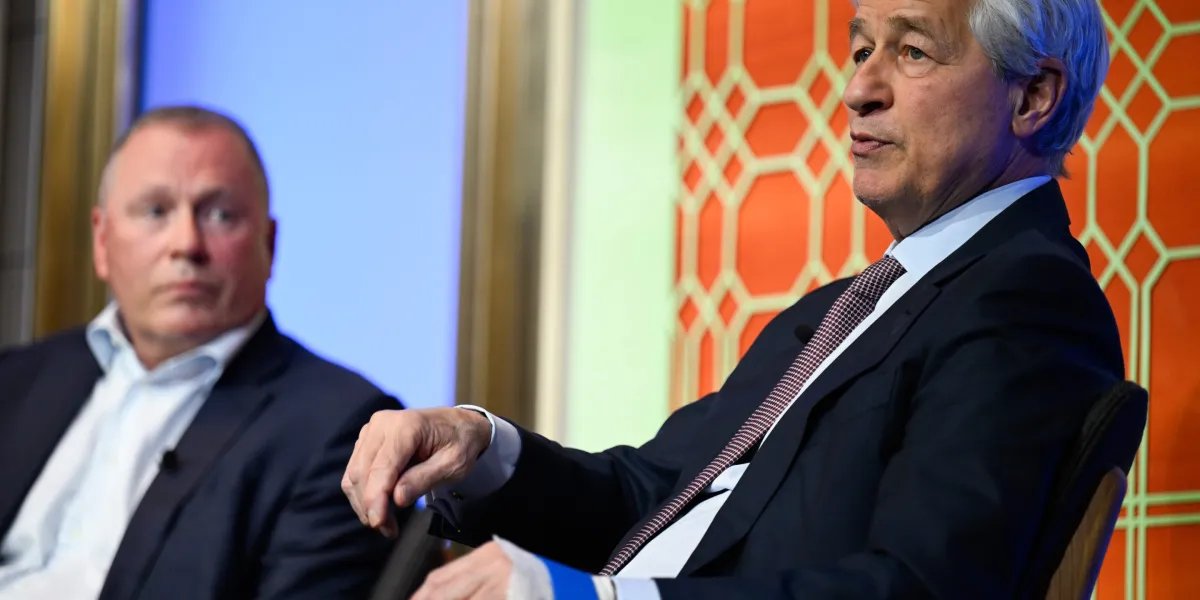
Jamie Dimon, CEO of J.P. Morgan Chase, has echoed this warning in the past. It’s better to get ahead of a crisis than wait until it falls into one’s lap, he believes. But speaking on a live podcast with Nicolai Tangen, the CEO of Norges Bank Investment Management (NBIM), Dimon outlined how he sees any reaction to deficit concerns ultimately coming about.
“I’m not that worried” about debt levels, Dimon said, “We’ll be able to deal with it. I just think maturity should say you should deal with it as opposed to let it happen. The way it’s going now, there will be some kind of bond crisis and then we’ll have to deal with it. It will be okay. It’s just not the way to do it.”
Concerns over the near-$39 trillion national debt burden the U.S. Treasury has accumulated over time are rising up the political agenda. The debt, accrued under both Republican and Democratic administrations, is now costing more than $1 trillion annually in interest payments alone. Both the president and his Treasury Secretary, Scott Bessent, have indicated they’re mindful of the debt issue, suggesting tariffs and visas as revenue-generation schemes to help balance deficits.
Debt hawks aren’t convinced by their plans: Many are backing a policy target to reduce deficits to 3% of GDP, around half of where they are now.
One influence many look to is Phill Swagel, the director of the Congressional Budget Office (CBO), whose projections are relied upon to see how the debt question may play out. Swagel is heartily optimistic on the matter, saying he believes a debt crisis will be avoided entirely because he has faith Congress and policymakers will act before a reckoning comes to pass.
Dimon seems less convinced. He told Tangen at the NBIM’s Investment Conference in Oslo yesterday: “The level of things that are adding to the risk column are high like geopolitics, oil, government deficits. And they may go away, but they may not, and we don’t know what confluence of events causes the problem.
“So if you look at all economic history, it’s a different confluence of events, different tectonic plates hitting each other. And they may affect 2026, they may not, but they need to be resolved. And if they’re not resolved properly, they will cause real additional problems down the road.”
A question of inflation
Depending on who you ask, there’s a range of outcomes for how the debt issue will shake out. Some, like Dimon, expect a market reckoning when bond investors begin to raise their rates, as they view the U.S. Treasury as a riskier borrower as the debt pile grows bigger. Others, like Bridgewater founder Ray Dalio, see the issue first cropping up in public spending, with programs being squeezed out by the interest payments the government is handcuffed into paying.
Another is the notion of “financial repression,” whereby the government allows (or is forced to allow) inflation to take hold in the economy in order to reduce the real value of the debt. Financial repression also comes with the idea that the government could encourage banks into holding its debt at lower interest than the rates set by the market—a further inflationary pressure.
Dimon said his inflation expectations are broader than most of the markets (this will be of no surprise to those familiar with Dimon’s ethos—he’s known to run wide-ranging risk simulations to ensure America’s largest bank would survive).
He explained: “My view is that there are a lot of inflationary things out there, including the Iran war, the remilitarization of the world, the infrastructure needs of the world and our deficits. I ask all my economists … I don’t know how the world running deficits like this isn’t inflationary. And you just may not have seen that yet. That die may have been cast, it just hasn’t happened yet.
“So when I look at scenarios I’m looking for early indicators, but it is possible that inflation ticks up and that will catch a lot of people off guard.”