
Jamie Dimon’s ethos on running a company is pretty simple: Be relentless, and don’t overlook the details. When organizations get too comfortable and begin ignoring the fine print, he said, is when complacency sets in, and a business begins to decay.
With more than 300,000 employees worldwide, the CEO of America’s largest bank can’t be across every issue in the company—which is why he believes this diligence needs to be instilled at every level.
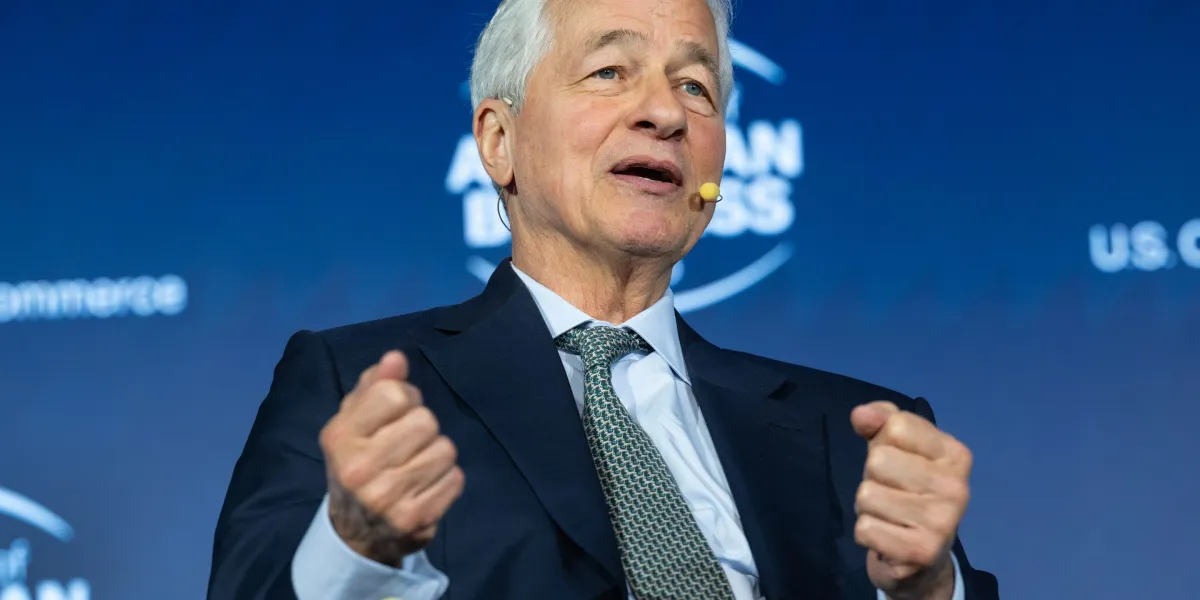
Speaking at the U.S. Chamber of Commerce yesterday, Dimon was asked how he had made JP better than “every other bank in the world,” a take which its CEO immediately disagreed with: “a lot of people do things better,” he began.
That reflection is “one of the reasons we sometimes do better a little bit,” Dimon added, explaining: “I’m relentless: Details, facts, analysis, no bulllshitting, no meetings after meetings, share all the information—put it on the table, put the dead cats on the table—go through system by system by system, get out on the road, visit other companies, they all do things better than you.”
The overall message is to “learn, learn, learn”, a mantra the Wall Street veteran has advised for everyone from Gen Z’s entering the job market to those in leadership.
“Big companies slow down, they become complacent, they become bureaucratic … arrogant,” Dimon added, all of which eventually leads to “stasis and death.” “Huge, wonderful companies” have failed because of this pitfall, Dimon said, and as such “nothing is too small to care about.”
Watchers of the 69-year-old’s career will not be surprised by his energetic leadership advice. Last April, Dimon wrote in his letter to shareholders that he runs the bank with a military tactic in mind named the ‘OODA loop,’ which stands for observe, orient, decide, act.
JP without Jamie
Under Dimon’s stewardship, JP has scored many wins: Its share price is up 21% over the past year, it is continually leading in AI adoption according to Evident AI’s barometer, and its CEO has the ear of everyone from lawmakers to President Trump.
However, Dimon shocked investors last year when he changed his oft-repeated response to the question of when he may be leaving the top job at JPMorgan Chase. For many years, Dimon would joke that his retirement was five years away. In May last year, that changed. “It’s not five years anymore,” he said.
Speculation has since been rife about which of JPM’s executive team would step in to fill the significant shoes of Dimon. But this week the executive’s tone changed again.
When a “five more years” anecdote was repeated back to Dimon this week, the CEO responded “at least,” suggesting his departure is anything but imminent. “I love what I do, it’s up to the board how long I do it,” he added.
Dimon’s success at JPM, which has included handling politicians and policymakers, led many to question whether one day he might make a move to Capitol Hill. The bank executive completely shut down the notion of a presidential run, as well as the role of Fed chairman (which will be vacated by Jerome Powell this spring).
“Fed chairman, I’d put in the absolutely, positively, no way, no chance, no way, no how for any reason,” Dimon doubled down this week. Since Trump’s return to the White House, the role of Fed chairman has become significantly less attractive, acting as a target for the Oval Office to level criticism and lobbying for the base rate to move one way or another.
But Treasury Secretary Dimon would “consider,” he added: “If a president calls you up asks you to do something, you should consider it. So I would take the call, consider it, and think about why and what they want, but what they want and how they want to operate would be important to me.
“I like my job, I’ve been my own boss for pretty much 25 years, and I like it that way.”