At a glance:
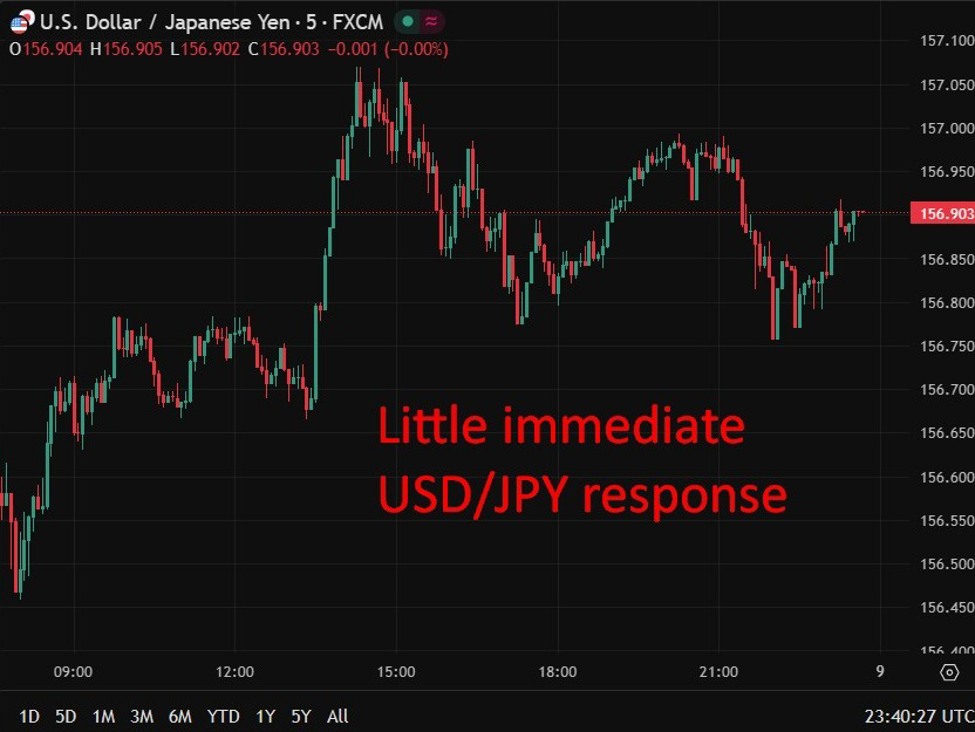
Japanese household spending unexpectedly rebounded in November, offering a tentative sign of resilience in domestic demand even as real income pressures persist and the central bank tightens policy.
Data from Japan’s Ministry of Internal Affairs and Communications showed household spending rose 2.9% year-on-year, sharply beating market expectations for a 0.9% decline and reversing October’s steep contraction. On a seasonally adjusted month-on-month basis, spending surged 6.2%, more than double the consensus forecast of a 2.7% increase, pointing to a strong sequential recovery.
The upside surprise comes shortly after the Bank of Japan raised its policy rate last month to 0.75% from 0.5%, the highest level in three decades. The move reflected confidence that wage growth would remain sufficiently firm to support consumption and sustain progress toward stable inflation. BOJ Governor Kazuo Ueda has reiterated that the central bank is prepared to continue lifting borrowing costs if economic activity and price developments evolve broadly in line with its projections, underscoring the bank’s gradual shift away from ultra-easy monetary policy.
However, beneath the headline strength in spending, real income dynamics remain a constraint. Separate data released by the labour ministry showed inflation-adjusted real wages fell 2.8% year-on-year in November, extending a run of declines and highlighting the continued erosion of household purchasing power.
The divergence between nominal spending gains and falling real wages suggests households may be drawing on savings or adjusting consumption timing, rather than benefiting from a sustained improvement in income growth. As a result, economists remain cautious about extrapolating November’s rebound into a durable consumption trend.
For policymakers, the data complicates the outlook. Stronger spending supports the case that the economy can withstand higher interest rates, but persistent real wage weakness underscores the risk that consumption momentum could fade if inflation continues to outpace pay growth in early 2026.