The Bank of Japan joined other major global central banks in raising interest rates to head off an expected spike in inflation fueled by higher energy costs from the war in the Middle East.
The bank said on Tuesday that it would raise its benchmark interest rate a quarter of a percentage point to 1 percent — the highest level in 31 years. Citing inflationary pressures from rising crude oil prices, the central bank said it would continue raising interest rates while monitoring prices and the broader economy.
Japan, along with much of the rest of the world, is bracing for a surge in prices for oil, gas, and other commodities driven by the closure of the Strait of Hormuz. An agreement between the United States and Iran to reopen the strait will likely provide relief. Still, economists expect war-related pressures to show up in Japan’s pricing data already this month, and lingering supply-chain strains and higher inflation to persist through the end of the year.
The Bank of Japan’s deputy governor, Shinichi Uchida, said at a news conference that the deal to reopen the Strait of Hormuz has reduced risks to the Japanese economy, but the situation remains uncertain, including how quickly the supply chain may return to normal.
“We don’t know what will happen next,” said Mr. Uchida.
The strategy is to get ahead of the coming price surge, drawing lessons from 2022, when Russia’s invasion of Ukraine caused the last major disruption to global energy flows. At the time, the European Central Bank initially described inflation as “transitory” and delayed raising rates, only to see eurozone inflation shoot past 10 percent.
This time, the E.C.B. quickly signaled its intention to tighten and followed through with a rate increase on Thursday. Meanwhile, ahead of the U.S. Federal Reserve’s first policy meeting this week under its new chairman, Kevin Warsh, data showed U.S. inflation climbing at its fastest pace in three years.
Central bankers “learned from the experience of 2022,” said Naohiko Baba, chief Japan economist at Barclays. With data signaling price increases already this month, “they want to move before that happens,” Mr. Baba said.
By clearly warning of a looming inflation spike, Bank of Japan officials had “set all the preparations in place to raise rates,” he said. “If it hadn’t happened, everyone would have literally fallen out of their chairs.”
After the Bank of Japan’s decision, the benchmark Nikkei 225 surged above 70,000 for the first time before pulling back and closing slightly higher.
Japan has found itself in an awkward position over the past year. Since early 2024, the Bank of Japan has been gradually raising interest rates as a burst of inflation — driven by lingering pandemic-era supply-chain snags and geopolitical shocks — allowed it to pivot away from decades of ultralow and even negative rates.
Then, last October, Sanae Takaichi won election as Japan’s prime minister. Like Donald Trump in the United States, Ms. Takaichi has been a vocal proponent of a weaker domestic currency and low interest rates.
A weak yen has traditionally given Japanese exporters an advantage by making their goods artificially cheap in global markets. Ms. Takaichi’s agenda, centered on stimulus, tax cuts and higher defense spending, requires significant government outlays, which become more difficult to sustain when borrowing costs rise.
The Bank of Japan last raised interest rates in December and had held steady since then.
But in recent months, the world outside Japan has changed dramatically. In February, the closure of the Strait of Hormuz cut Japan off from the Middle East, the source of about 90 percent of its crude oil imports. Businesses across the country had expected to raise prices in the coming months because of shortages of naphtha, an oil byproduct used in everything from industrial inks to plastic packaging.
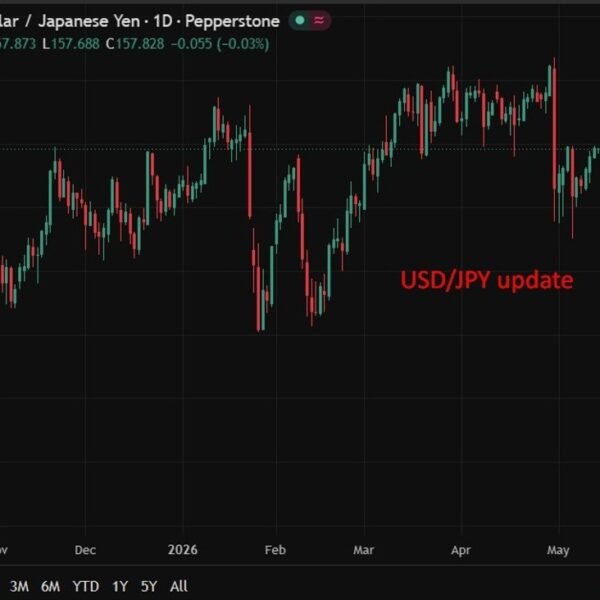
At the same time, the yen, along with many other Asian currencies, has tumbled against a strengthening dollar. In recent months, it slid past 160 yen per dollar for the first time in nearly two years. A weaker currency makes imports, from fuel to food, more expensive.
Japan’s finance ministry has spent tens of billions of dollars buying yen in an attempt to prop up the currency, with limited success. That has reinforced the view among many economists that higher Japanese interest rates — and a narrower gap with U.S. rates — are the only way to correct the yen’s weakness.
This view was echoed by U.S. Treasury Secretary Scott Bessent during a visit to Tokyo in May. In meetings with Japanese officials, Mr. Bessent conveyed frustration about the yen’s weakness. He also argued that the Bank of Japan should be free from political pressure to not raise rates.
According to Mr. Baba from Barclays, Japan’s prime minister still has an “unshakable belief deep within her” about the benefits of a weak yen and low interest rates. But with pressure mounting from the United States and the yen’s sharp depreciation, “no matter how much she herself opposes a rate hike, she has no choice but to passively accept it.”