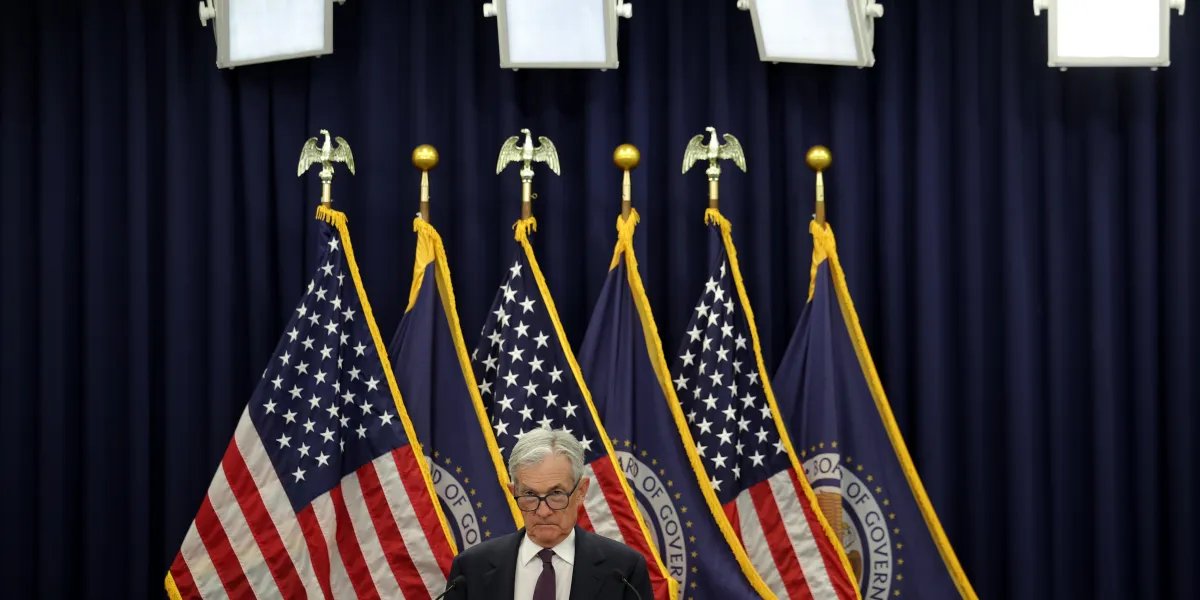
Kevin Warsh had a very thin tightrope to walk yesterday: get too dovish, and risk his credibility with the bond market; but get too hawkish, and stocks would get sad. At first, it seemed like he tipped too far into the hawkish side as the S&P fell to the lowest close since July. By Thursday morning, traders had decided they were over it.
The Nasdaq rallied over 400 points, or 1.6%, the S&P rallied more than 1%. The Dow added 224 points, or 0.4%, which is not nothing after it fell more than 630 points the day before. The whole thing lasted about as long as a hangover.
The only person who didn’t cheer was the president. Trump told reporters late Wednesday that he’d spoken to Warsh before the vote; a communication Warsh himself refused to talk about during the conference.
“I talked to Kevin, and I said, you might as well vote with the Board because it’s not gonna matter,” he said, describing the committee as “very hostile” and “very political.” Then he went to Truth Social to demand rates of “1%, or less, because we are the Best Credit in the World—BY FAR,” adding a call to “LOWER THE INTEREST RATES FOR THE UNITED STATES OF AMERICA, AND FAST!”
This is the outcome that Trump has spent years trying to avoid. He attacked Jerome Powell relentlessly during his final stretch of Fed chair for not cutting fast enough, floated firing him, suing him, and picked Warsh in part because he’d been a vocal critic of Powell’s Fed. (Of course, Trump chose not to renew Obama’s pick, Janet Yellen, for a second term as Fed chair, and picked Powell because he was “out of central casting,” a phrase he repeated when he chose Warsh to replace Powell 12 years later). Last fall, Trump accused the Fed of being on the verge of its “sixth or seventh big mistake” by keeping rates too high. Four months into the job, Warsh has raised them again, after Powell spent the last three years not doing so.
That puts Warsh and Trump at odds over how they describe the vote. Warsh said that, “very plainly, inflation is too high,” and put a full-throated defense of the hike; but by Trump’s account, Warsh was forced to hike against his wishes to just go along with the board. When a reporter asked about the president at his press conference, Warsh said only that “independence is a two-way street.”
The bond market helped Warsh along. The 10-year Treasury yield, which had climbed back over 5% during Warsh’s press conference, fell more than 5 basis points Thursday to 4.949%. That’s the outcome the Fed was hoping for: that a hike convinces investors the central bank is serious about inflation, which lowers the premium they demand to hold long-term debt, even as short-term rates go up.
Oil helped too, to be sure. U.S. crude fell about 1% to around $100 a barrel after Saudi Arabia reportedly started moving extra cargoes to Asian refiners via Oman, which eased worries about its damaged East-West pipeline. Cheaper oil means less inflation means fewer hikes means happier stocks.
“Now we are past this rate hike, stocks can move on,” wrote Bob Edwards, chief investment officer at Edwards Asset Management, who called Wednesday’s selloff “an overreaction, and a buyable dip.”
Mark Haefele at UBS Global Wealth Management said his team was “positioned for further equity gains while preparing for near-term volatility.” Michael Pearce at Oxford Economics had already argued Wednesday that “markets have too much tightening priced in,” and Thursday looked like some of that coming out.
Data cooperated on Thursday morning too. Jobless claims from Labor Day week came in at 196,000, below the 207,000 expected, which supports Warsh’s whole premise: the labor market is strong enough to take a hike without suffering too much.
Warsh also has company. The European Central Bank hiked last week for the second time this year, the Bank of Japan is expected to hike Friday, and the Bank of England held Thursday but warned a hike was “increasingly likely.”