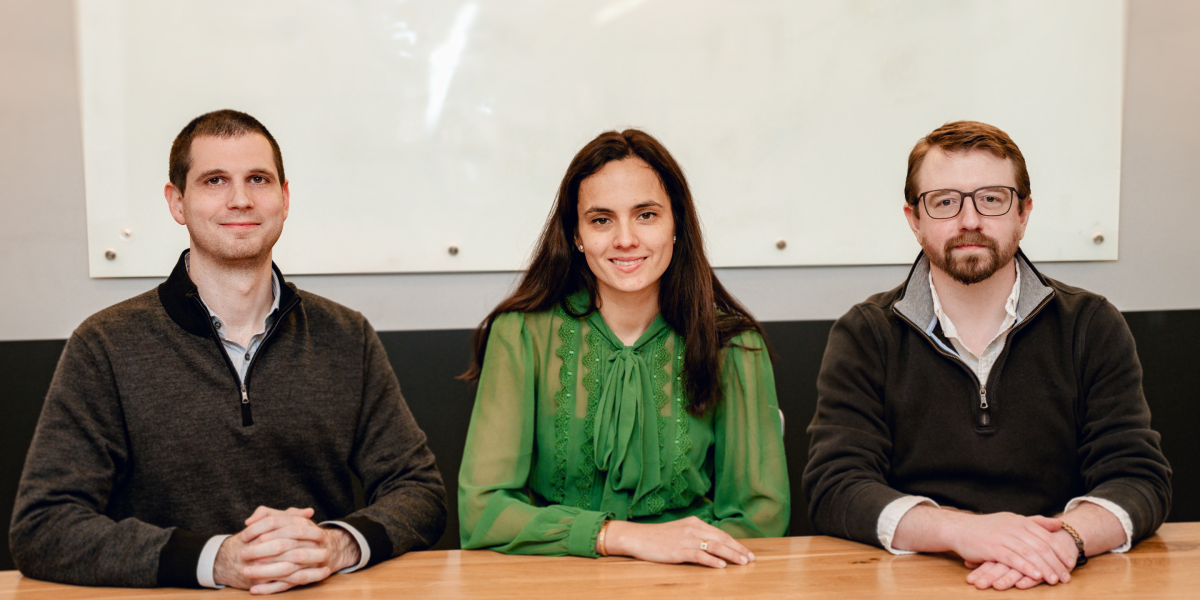
Alfia Ilicheva came from the world of public markets, including four years at one of the world’s largest hedge funds, Bridgewater. But when she transitioned over to the private side, including serving as the CEO of an Apollo-backed investment platform, she realized the difficulty of fund administration for operations like private equity and venture capital. Instead of having access to real-time and accurate data like at Bridgewater, which can rely on publicly available information, this new world was filled with manually compiled and fragmented data subject to human error and inconsistent metrics. “How could it be that hedge funds are so into the future and private capital markets are so backward,” she remembers thinking.
As private markets explode and AI makes automation increasingly possible, Ilicheva saw an opportunity to build the next generation of fund administration software for everyone from venture capital outfits to PE giants like Apollo. After initially planning to bootstrap the project, which she named Formulary, Ilicheva was introduced to Hari Arul, a partner at Khosla Ventures, who immediately saw the appeal of the idea. Khosla is leading Formulary’s $4.6 million seed round, which Ilicheva says is three times oversubscribed, with participation from Human Ventures, Serena Williams’s venture firm, and others.
In the red-hot field of private investments, buoyed by the rise of private credit and massively valued companies like SpaceX and OpenAI, fund administration may not be the most alluring area for innovation. But the ability to track investments, returns, and performance—and accurately convey the information to investors, or limited partners—is a necessary foundation.
The existing options fall into two camps: the service side, or high-touch accounting companies, like SS&C and Citco, or the software side, like Carta. As Ilicheva interviewed general partners and former clients in her user research, she realized that nearly everyone was dissatisfied with the existing options to the point that most turned to shadow fund administration, where they would hire outside firms but keep their own books at the same time. “When you raise a fund, your dream is to generate alpha by investing capital, not redoing someone’s work,” Ilicheva said.
Ilicheva planned to find a happy medium between the two models by leveraging AI to massively scale up the service approach, creating software for their own in-house accountants, which Ilicheva playfully calls bionic accountants. “They’re really focused on having a grip on the numbers and delivering service, but they’re not manually entering things in an Excel spreadsheet, which has been the industry’s burden for the past decades,” she said.
The challenge in creating a tech-enabled services company, of course, is scale, with a pure SaaS model able to grow at a much faster clip. When I asked Khosla’s Arul how he thought about the approach, he said the key is to deliver the vast majority of the product through technology: “It’s important for any entrepreneur or any investor to look at an AI-enabled services business and say, the margin of how this business runs looks more like a technology company than a services company.”
Arul said that while Khosla is not yet using Formulary, which is just now coming out of stealth, he’s optimistic for a future where tedious processes like ensuring data accuracy for LPs can be fully, reliably automated. Ilicheva mentioned one possible future use case for Formulary as drafting LP letters, which Arul wholeheartedly endorsed, along with a portal where investors could communicate directly with the system to understand the value of positions, fund deployment, and future capital calls. “[That] sounds pie in the sky relative to what the reality is today,” Arul said, “But it doesn’t feel out of reach.”
Leo Schwartz
X: @leomschwartz
Email: [email protected]
Submit a deal for the Term Sheet newsletter here.
Joey Abrams curated the deals section of today’s newsletter. Subscribe here.
VENTURE DEALS
– ClickHouse, a San Francisco-based analytics, data warehousing, and observability platform, raised $400 million in Series D funding. Dragoneer Investment Group led the round and was joined by Bessemer Venture Partners, GIC, Index Ventures, Khosla Ventures, and others.
– Alpaca, a San Mateo, Calif.-based brokerage tech firm, raised $150 million in Series D funding. Drive Capital led the round and was joined by others.
– Ivo, a San Francisco-based AI-powered contract review and intelligence platform, raised $55 million in Series B funding. Blackbird led the round and was joined by Costanoa Ventures, Uncork Capital, Fika Ventures, GD1, and Icehouse Ventures.
– Karman Industries, a Los Angeles, Calif.-based thermal technology company, raised $20 million in Series A funding. Riot Ventures led the round and was joined by Sunflower Capital, Space VC, Wonder Ventures, and others.
– XBuild, a San Francisco-based developer of AI-powered roofing proposal software, raised $19 million in Series A funding. N47 led the round and was joined by Rackhouse Ventures and Andreessen Horowitz.
– one.five, a Hamburg, Germany-based developer of an AI-powered packaging workflow platform, raised €14 million ($16.3 million) in Series A funding. Dr. Hans Riegel Holding led the round and was joined by 212 NexT, Symbia VC, and others.
– Noise, a New York City-based platform where users can trade on the relevance of internet trends, raised $7.1 million in funding. Paradigm led the round.
PRIVATE EQUITY
– Net Health, backed by The Carlyle Group, Level Equity, and Silversmith Capital Partners, acquired Keet Health, a Phoenix, Ariz.-based digital health platform. Financial terms were not disclosed.
IPOs
– AgomAb Therapeutics, an Antwerp, Belgium-based developer of therapies for immunology and inflammatory diseases, filed to go public on the Nasdaq. EQT Life Sciences, Fidelity Management & Research Company, Pontifax, Sanofi, Redmile Biopharma Investments, Cormorant Asset Management, Pfizer, and Canaan back the company.
– SOLV Energy, a San Diego, Calif.-based infrastructure services company for the power industry, filed to go public on the Nasdaq. The company posted $2.1 billion in revenue for the year ended Sept. 30.
– SpyGlass Pharma, an Aliso Viejo, Calif.-based developer of treatments for chronic eye conditions, filed to go public on the Nasdaq. Glide Healthcare, Samsara BioCapital, Vensana Capital, New Enterprise Associates, RA Capital Management, and Sands Capital Alternatives back the company.
PEOPLE
– Arctos, a Dallas, Texas-based private equity firm, hired Santiago López-Vilas as an operating partner. López-Vilas previously served as CEO of Real Madrid Estadio and deputy general manager of Real Madrid CF.
– FirstMark, a New York City-based venture capital firm, promoted David Waltcher to partner and Aman Kabeer to principal.