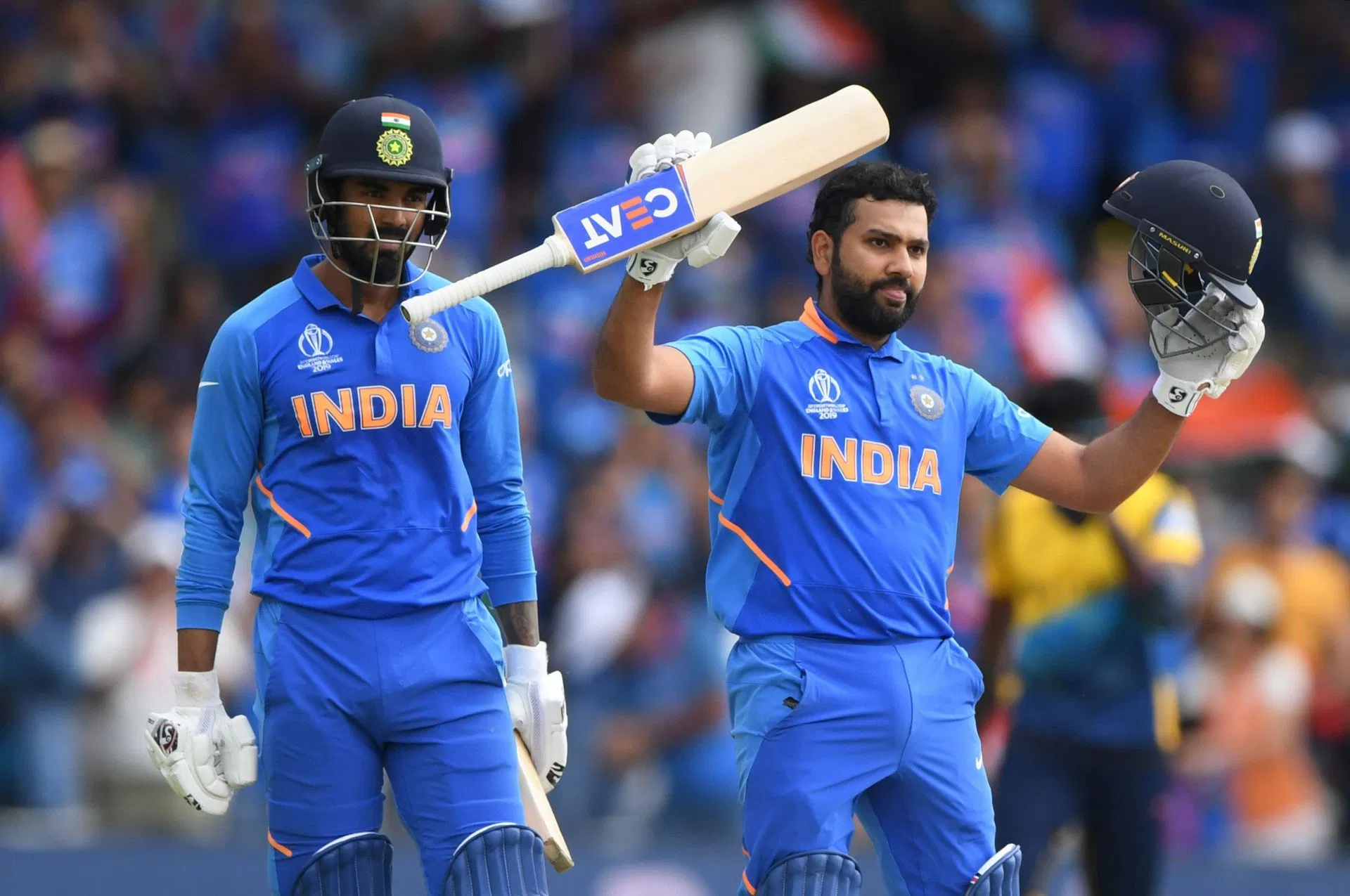

KL Rahul and Rohit Sharma played crucial roles in Team India’s 2-1 ODI series triumph over South Africa recently. In a tightly-contested series, the Men in Blue won the first ODI by 17 runs, while the visitors fought back to win the second game by four wickets. India then proved too good in the deciding one-dayer of the series and hammered the Proteas by nine wickets.
Rahul, who led the Indian team in Shubman Gill’s absence, contributed 126 runs in two innings at a strike rate of 127.27. He scored 60 off 56 in Ranchi and followed it up with 66* off 43 in Raipur. As for Rohit, he scored 146 runs in three innings at a strike rate of 110.61. The Hitman smashed 57 off 51 in the first one-dayer and 75 off 73 deliveries in the decider in Visakhapatnam.
Rahul has played 91 ODI matches so far. In this feature, we compare his batting stats with those of Rohit after former India captain had also played 91 ODIs.
KL Rahul vs Rohit Sharma – Who has more runs and a better average after 91 ODIs?
In 91 ODIs, Rahul has totaled 3,218 runs, averaging 49.50 at a strike rate of 89.48. Of his runs, 782 runs have come in 20 matches against Australia at an average of 55.85. The 33-year-old has also scored 313 runs in 11 ODIs against South Africa (average 39.12), 301 runs in 13 ODIs against England (average 27.36) and 328 runs in eight ODIs against the Kiwis (average 65.60).
After 91 ODIs, Rohit had 2,200 runs to his name at an average of 31.42 and a strike rate of 78.31. Of his runs, 629 came in 15 ODIs against West Indies at an average of 62.90. He also had scored 535 runs in 29 ODIs against Sri Lanka (average 24.31), 255 runs in nine ODIs against Pakistan (31.87) and 193 runs in 10 ODIs against Australia (average 21.44).
KL Rahul vs Rohit Sharma – Who has more hundreds after 91 ODIs?
In 91 ODIs, Rahul has slammed seven hundreds and 20 fifties. His best of 112 came off 113 balls against New Zealand in Mount Maunganui in February 2020. He also scored 111* off 106 deliveries against Pakistan in Colombo (September 2023) and 111 off 118 against Sri Lanka in Leeds (July 2019). Rahul remained unbeaten on 97 against Australia in the 2023 World Cup clash in Chennai.
(KL Rahul vs Rohit Sharma – Batting stats comparison after 91 ODIs)
After 91 ODIs, Rohit had two hundreds and 15 half-centuries to his name. His best at that stage was 114, which came off 119 balls against Zimbabwe in Bulawayo in May 2010. The Hitman had also scored 101* off 100 balls against Sri Lanka in Bulawayo during the same tri-series.
KL Rahul vs Rohit Sharma – Who has a better record in wins after 91 ODIs?
Rahul has been part of 61 ODIs that India have won. In winning causes, he has totaled 2,150 runs at an average of 58.10 and a strike rate of 90.56. The Karnataka batter has five hundreds and 12 fifties in wins. In 28 ODIs that India have lost, he has scored 977 runs at an average of 37.57. Two of his hundreds and seven of his fifties have come in losses.
(KL Rahul vs Rohit Sharma – Batting stats comparison in wins after 91 ODIs)
After 91 ODIs, Rohit had been part of 52 matches that India won. In winning causes, he had 1,321 runs at an average of 37.74 and a strike rate of 78.95, with one ton and nine fifties. In 34 matches that India lost, he had 835 runs at an average of 26.09 and a strike rate of 78.55, with one ton and six fifties.
KL Rahul vs Rohit Sharma – Who has a better record in chases after 91 ODIs?
In 48 matches in chases, Rahul has scored 1,278 runs, averaging 45.64 at a strike rate of 80.27. He has two tons and eight half-centuries while batting second. Batting first, the star batter has 1,940 runs in 43 ODIs at an average of 52.43 and a strike rate of 96.80, with five centuries and 12 fifties.
(KL Rahul vs Rohit Sharma – Batting stats comparison in chases after 91 ODIs)
In 55 ODIs in chases, Rohit had 1,399 runs at an average of 34.97 and a strike rate of 79.17, with one hundred and 10 half-centuries. Batting first, he had 801 runs in 36 ODIs, averaging 26.70 at a strike rate of 76.87, with the aid of one hundred and five half-centuries.
Edited by Renin Wilben Albert