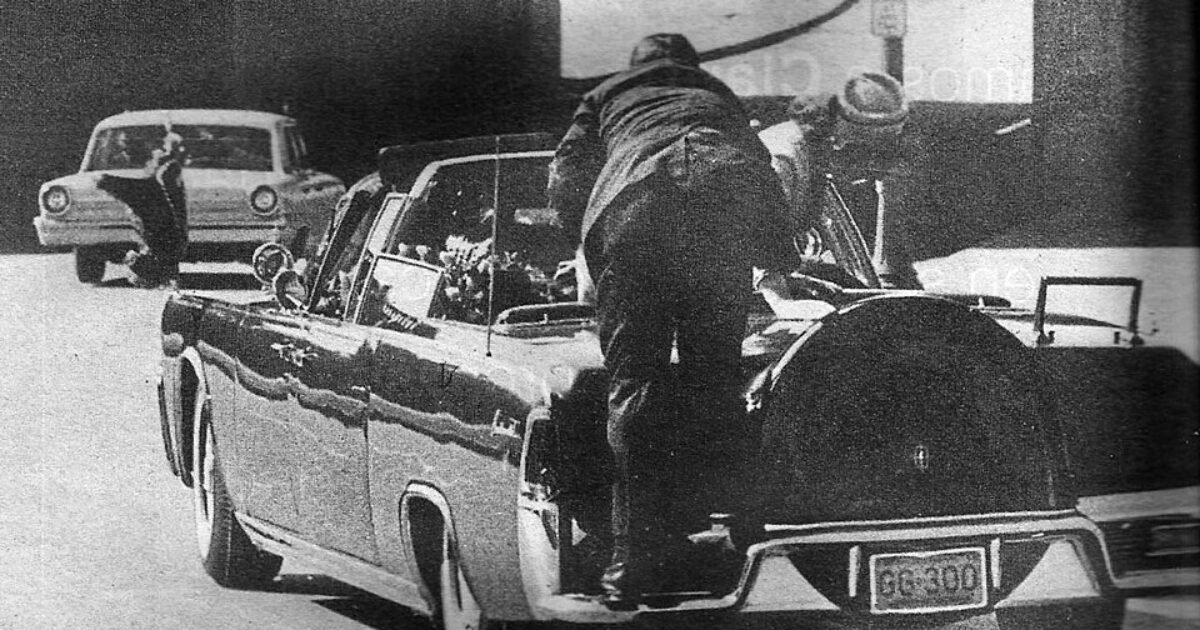
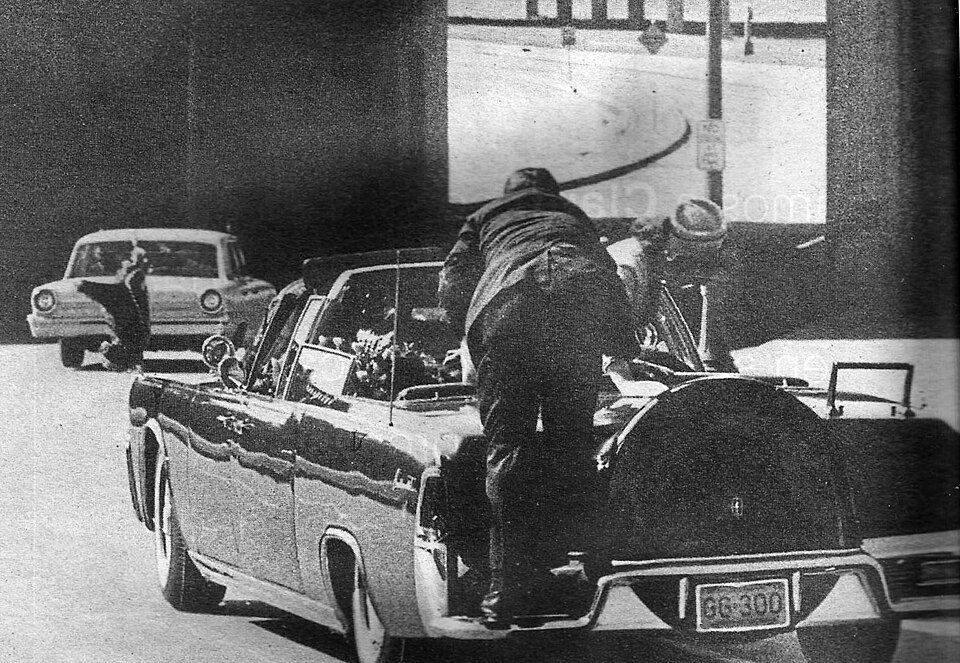
On October 1, 2026, the Archivist of the United States quietly signed an agreement with a private Dallas Museum that keeps the clearest, highest-resolution versions of the Zapruder film locked away from the American people.
The Zapruder film is the single most important piece of photographic evidence in the assassination of President John F. Kennedy. The taxpayers bought it. The government made high-quality copies of it specifically so the public could study it. And the government is still keeping those copies out of reach.
The timing of this agreement is no accident.
Just eight weeks earlier, on August 5, 2026, a federal judge in Dallas handed attorney Mark Javitch a major victory, ruling that a court can order the National Archives to put the Zapruder film online for the public and that the copyright itself was subject to challenge and a determination of fair use.
The government lost in court. So it went around the court.
Mark Javitch: The Lawyer Who Took On the Archives and the Museum
Mark L. Javitch is a federal litigator based in San Mateo, California. He represents the Forum on Open Access to Government Records, a publisher fighting to pry the Zapruder film loose from government and private control.
Javitch has spent years battling the Sixth Floor Museum in Dallas and the National Archives in Freedom of Information Act and JFK Records Act cases, including an appeal now pending before the Ninth Circuit. He is the author of SCAM: The Zapruder Copyright — How the Sixth Floor Museum Continues the Coverup (2025). The Forum maintains ZapruderFilm.com, the largest free public collection of National Archives documents on the history of the Zapruder film.
“The one attempt to enforce the Zapruder copyright lost in court in 1967. Inexplicably, 60 years later, the government lets the Museum decide who gets access based on the copyright that could never be enforced.” Javitch said. Javitch suspects the Zapruder film held by the Archives may have been altered — a theory his book lays out in detail, and one the Museum denies. Javitch believes that the Museum rejected the Forum’s request for permission to use the copyright because the Forum’s publications raise the question whether the film was altered, a theory the Museum considers off limits.
Javitch hopes that full public access to the best copies will shed light on the question once and for all. If the film is authentic, the highest-resolution versions will show it. If it is not, the American people deserve to know. Either way, the answer lies in the very versions the government is now locking away. The government promised to make high-quality versions available to the public. It performed the high-resolution scans in 2002, but never made them widely available.
The fight started with a simple request.
In the summer of 2024, the Forum filed FOIA requests asking the National Archives for copies of frames from the film. The Archives said no — because the Sixth Floor Museum at Dealey Plaza, which claims to own the copyright, would not give its permission.
In April 2025, the Forum went to the Museum directly and asked for permission. The Museum never answered.
Think about that. A federal agency refused to hand the public copies of a federal record because a private museum in Dallas would not sign off.
So Javitch sued them both.
The Court Rules: The Archives Can Be Forced to Post the Film
The National Archives told the court it had no power to make the agency publish anything. U.S. District Judge Jane J. Boyle of the Northern District of Texas rejected that argument.
Since the FOIA Improvement Act of 2016, federal agencies have been required to post frequently requested records online in their electronic reading rooms. The Zapruder film is among the most requested records in the entire National Archives. Judge Boyle held that courts can enforce that duty — siding with the Second and Ninth Circuits over the D.C. Circuit.
The Archives also claimed the reading-room requirement only applies to records created after November 1, 1996. The judge rejected that too.
The government’s motion to dismiss was denied outright.
Trending: (VIDEO) Trump Responds to Ilhan Omar Saying “Not to My Knowledge” When Asked if She Married Her Brother
The Museum did not fare much better. Javitch’s core challenges to the Museum’s copyright survived:
Abandonment. Not a single lawsuit has been filed to enforce the Zapruder copyright since 1969 — not when the film was sold on VHS, not when it was screened on college campuses, and not when Geraldo Rivera aired it on national television in 1975. The court held that the Forum can try to prove the copyright was abandoned, and that the Museum’s current licensing program “would not resurrect the copyright if it was already abandoned.”
Waiver. The court allowed the Forum’s claim that frames 207 through 212 were released into the public domain decades ago.
Fair use. Judge Boyle described a book that reproduces the frames to criticize the film as “the paradigmatic example of fair use.”
Not every claim made it through. The judge dismissed several of the Forum’s other theories, some with permission to refile. But the heart of the case is alive, and it is moving forward against both the Archives and the Museum.
Then the Government Cut a Deal
Instead of complying, the National Archives signed a new agreement with the Museum.
The agreement is sweeping. It declares that it supersedes all previous agreements. It asserts that the Museum’s copyright covers “any and all” versions of the Zapruder film held by the National Archives — potentially dozens or hundreds of items.
The agreement grants the Archives “permission” to post the film online. That is being sold as a concession. It is not. Posting the film online is something the Archives has been legally required to do since 2016. It never needed the Museum’s permission.
And permission is not performance. As of this writing, the National Archives still has not posted the film. In its court filings, it continues to insist it is not required to.
What They’re Locking Away
The agreement’s real work is hidden in the fine print.
In 2002, under a National Archives contract, Monaco Laboratories in San Francisco produced the highest-quality versions of the Zapruder film ever made: 35mm blow-up preservation elements and release prints duplicated from the camera original and from the two Secret Service first-generation copies.
Those are the versions researchers want. Those are the versions the public was supposed to get.
Under the new agreement, the Archives’ license covers only “a digital non-commercial grade copy.” The “commercial-grade” versions — the highest-resolution copies — stay off-limits without the Museum’s permission.
Why fight so hard to control the sharpest images of a 63-year-old film? Whatever detail is visible in those high-resolution versions is precisely the detail researchers are looking for — and precisely what the public is entitled to see.
Censorship Written Into a Government Contract
The agreement goes further, imposing conditions that have no basis in FOIA or copyright law.
Research purposes only. Access is limited to “research purposes only,” and the Archives must warn viewers that they are responsible for obtaining the Museum’s permission for any use, duplication, or publication of the film.
Editorial control. For the first time, the federal government has promised not to use the film, or encourage others to use it, “in a manner which is sensational,” and not to “punctuate or emphasize the episodes of violence” — including the fatal head shot — except for “historic or scientific inquiry, illustration, or study.” No earlier written agreement ever bound the government to editorial limits on how it presents this record.
A private copyright notice on government websites. The Archives must display the Museum’s copyright notice next to the film wherever it appears in full — including in NARA’s Electronic FOIA Reading Room.
Let that sink in. The Archivist of the United States has signed a contract letting a private museum dictate how the federal government presents the evidence of a presidential assassination.
The Public Was Promised This Film
This was never supposed to happen.
In 1992, Congress passed the President John F. Kennedy Assassination Records Collection Act to get the records of the assassination into the hands of the American people.
On April 24, 1997, the Assassination Records Review Board — the body Congress created to carry out that law — resolved that it would “do all in its power to ensure that the best available copy of the Zapruder film shall become available to the public at the lowest reasonable price.” Board Chairman Judge John R. Tunheim, now a Senior U.S. District Judge in Minnesota, said the public should have “free and unfettered access to this film at a reasonable cost.”
That promise was broken.
In 1999, arbitrators ordered the United States to pay the Zapruder heirs $16 million for the original film. Incredibly, the $16 million did not include the copyright. The family kept it and gave it to the Sixth Floor Museum, which now uses it to restrict access to the very film the taxpayers paid for.
The high-resolution copies the government made in 2002 were never released as the “best available copy” at the “lowest reasonable price.” A researcher who bought one from the Archives in 2008 had to get the Museum’s permission and pay several hundred dollars to do so.
The courts settled this question long ago. In 1968, a federal court called the Zapruder film “an historic document and undoubtedly the most important photographic evidence concerning the fatal shots.” Time Inc. v. Bernard Geis Assocs., 293 F. Supp. 130, 131 (S.D.N.Y. 1968). The court held that a researcher’s publication of the frames was fair use, explaining: “There is a public interest in having the fullest information available on the murder of President Kennedy.” Id. at 146.
Fifty-eight years later, the government is acting as if that decision was never written.
The Fight Is Bigger Than One Film
As an attorney who has fought the government over hidden January 6 evidence, I recognize this playbook. When the public demands the evidence, the government stalls. When a court orders transparency, the government finds another way to keep the truth locked up.
President Trump ordered the release of the JFK files because the American people deserve the truth about what happened in Dealey Plaza. That promise means little if the clearest visual evidence of the assassination remains under lock and key — controlled by a private museum, with the blessing of the National Archives.
Mark Javitch is doing what Congress, the Review Board, and the National Archives would not. He is forcing the question into a courtroom, and so far, he is winning.
The American people paid $16 million for this film. Sixty-three years after President Kennedy was murdered, they should finally be allowed to see all of it.
Ad block users: Some site features may not work correctly while an ad blocker is enabled, because they break scripts and content this website depends on. If you can’t see comments below, for example, please disable your ad blocker.