LinkedIn has published a new guide to effective B2B branding, which includes notes on the importance of maintaining a presence in the right spaces, and ensuring that your business is easily accessible, and available, when searchers need it.
The 55-page guide, created in partnership with the Ehrenberg-Bass Institute, includes a range of notes on the importance of brand presence, and maintaining positioning to capitalize on opportunities,
As per LinkedIn:
“Just like shelf space is key to being purchased in B2C, B2B growth depends on maintaining a consistent, credible, and contextual presence across both digital and human touchpoints. Drawing on the Ehrenberg-Bass Institute’s research and LinkedIn’s experience with thousands of global B2B advertisers, the [report details] why physical availability shouldn’t be treated as a nice-to-have, tacked on at the end of planning, but instead as a critical component of growth. And, we’re not just making the case, we’re pointing marketers to where they should focus.”
You can download the full report here, but in this post, we’ll take a look at some of the key notes.
The guide focuses on three key areas of B2B branding:
- Presence – Maintaining a presence where your potential customers are looking
- Prominence – Ensuring that your brand is easy to find
- Portfolio – Providing products that address key areas of need
In terms of presence, the report data suggests that brands need to be aware of where their customers are looking for information, and capitalize on those opportunities.
“Covering revenue means establishing presence in line with the channel’s value contribution to category transactions. Compare the revenue of the total category business that comes through each sales channel to the share of your brand’s business that comes through that channel. For example, if 30% of category revenue comes via brand websites, then your brand should have 30% of its revenue via its website.”
Based on calculations like this, brands can establish where their focus should be, to ensure that they’re reaching the right audience.
There’s also data on trade shows and other opportunities for exposure, with the bottom line being that B2B brands need to research their category to understand where their customers are looking, then focus on those areas.
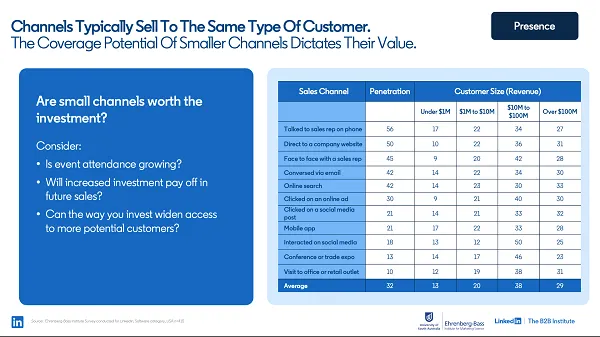
Which makes sense, but the idea, conceptually, is that you need to conduct more in-depth research to attribute real performance to each element, then enhance your focus on the key areas of opportunity.
In terms of prominence, the report looks at how brands can move away from “rented” space, and establish more secure, long-term branding opportunities through other means.
“Just as renting property offers immediate access to a prime location but with little long-term security, many B2B brands rely heavily on rented brand prominence (e.g., sponsored search ads) to stand out in a crowded and complex marketplace. Rented prominence is a quick fix, or a short-term lease, on brand visibility. But, without a plan to transition toward owned prominence (e.g., thought leadership, community engagement, strong brand associations), brands risk being evicted from prime real estate the moment budgets tighten, or competitors outbid them.”
In order to strengthen your brand prominence, LinkedIn suggests an expanded branding approach, to enhance your presence, including visual identity, thought leadership content and community partnerships.
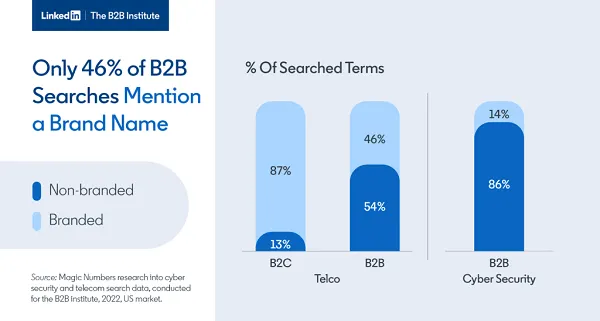
The report also includes data on key trends in B2B discovery to help guide your thinking on this element:
The final element, “Portfolio,” looks at the importance of your core business offerings, and how to maximize your promotions by showcasing value.
“Good portfolio management is knowing, protecting, and investing in the core product/service, the one that contributes the most to the brand/company’s top and bottom line. Protecting the core is about protecting current and future revenue. It is important to ensure any marketing decision ‘does no harm’ to what is currently the most important company revenue source.”
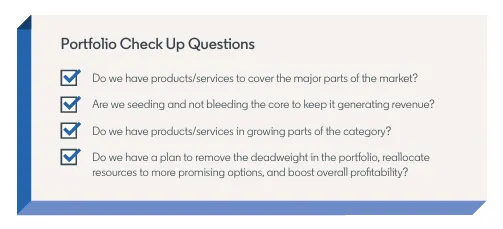
Overall, the report provides some valuable notes on how to build a more effective B2B promotion system, highlighting the key strengths and impacts of your offerings across all the key areas of discovery.
If you’re looking to switch up your marketing process for 2026, it’s worth reading through the full document, and taking in the key notes as they relate to your own business.
You can download LinkedIn’s “Easy to Find: Where B2B Buying Happens” report here.