Mayor Zohran Mamdani said on Wednesday that New York City would move forward with a project to improve bus speeds on a busy thoroughfare in the Bronx, reviving an initiative that was put on hold after objections to similar plans from the Trump administration.
The project will bring a dedicated “busway” — which is reserved for buses, emergency vehicles and trucks during peak travel times — to a stretch of Tremont Avenue, a change that city officials said would shorten commutes for 39,000 bus riders each day.
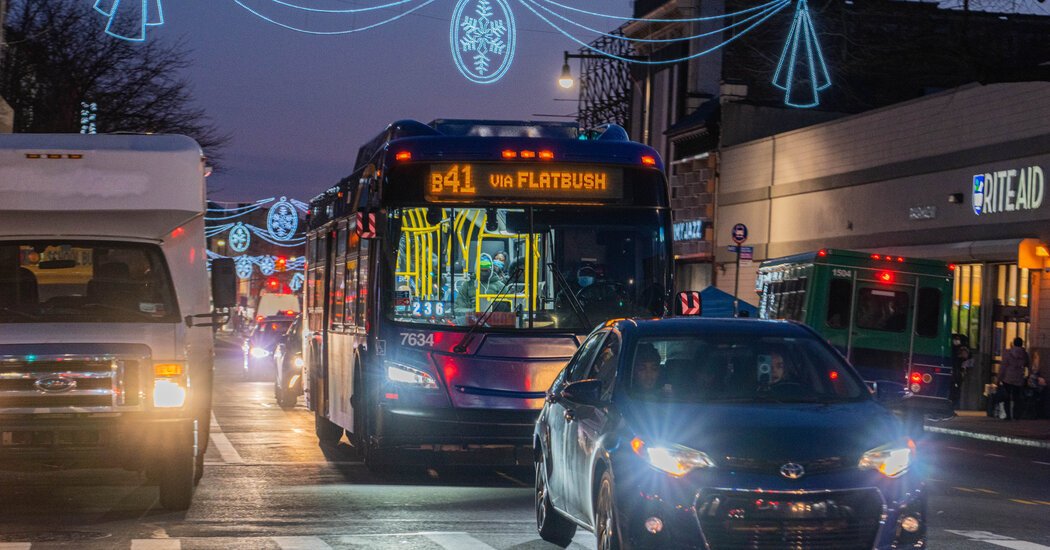
The mayor’s office also said that it would gather input in Brooklyn for plans to improve bus service there, on 13 routes that carry roughly 150,000 daily riders on Flatbush, Utica and Church Avenues.
“We want New Yorkers to have faith in our outreach, and that starts with actually delivering on projects promised years ago, like on Tremont Avenue, where riders deal with unreliable, overpacked buses every day,” Mike Flynn, the city’s transportation commissioner, said in a statement.
The announcements are the latest step in the mayor’s push to fulfill a campaign promise to improve bus service. New York has one of the slowest bus fleets in the nation, with an average speed of eight miles per hour. The announcement comes one week after Mr. Mamdani and Gov. Kathy Hochul announced a plan to make buses up to six minutes faster on routes across the city through street redesigns, expanded traffic enforcement and other changes.
In a statement, Mr. Mamdani said his administration was “building streets that move people instead of sticking them in gridlock.”
“These projects will make commutes faster, make our streets safer and return precious time to nearly 200,000 New Yorkers every single day,” he said. “That’s exactly what public transit should do.”
Ms. Hochul, who joined Mr. Mamdani at the unveiling of a citywide bus plan last week, said in a statement that she supports the new proposals.
“Today, we are moving full speed ahead, decisively advancing projects that will help hundreds of thousands of riders move faster and laying the groundwork for even more service improvements across the five boroughs to come,” she said.
Last month, Mr. Mamdani announced a similar busway project on 34th Street in Manhattan. That project had been suspended last year by his predecessor, Eric Adams, after the Trump administration objected to it, citing concerns about how it might affect road access for trucks and emergency vehicles. The administration had threatened to withhold funding and approvals for other unspecified transit plans if the project did not address its concerns.
Some transit advocates worried that the federal government’s involvement on 34th Street could also delay the Bronx busway project, the borough’s first, because portions of the proposed redesign are part of the National Highway System.
A spokeswoman for the U.S. Department of Transportation did not immediately respond to a request for comment.
Danny Pearlstein, the policy and communications director at Riders Alliance, a transportation policy nonprofit, called the busway “a crucial upgrade” in the Bronx, which is the city’s poorest borough and a part of the city that relies heavily on buses.
“Bus riders have been waiting plenty long enough, and this administration is picking up on the fact that riders can’t afford to waste any more time,” he said.