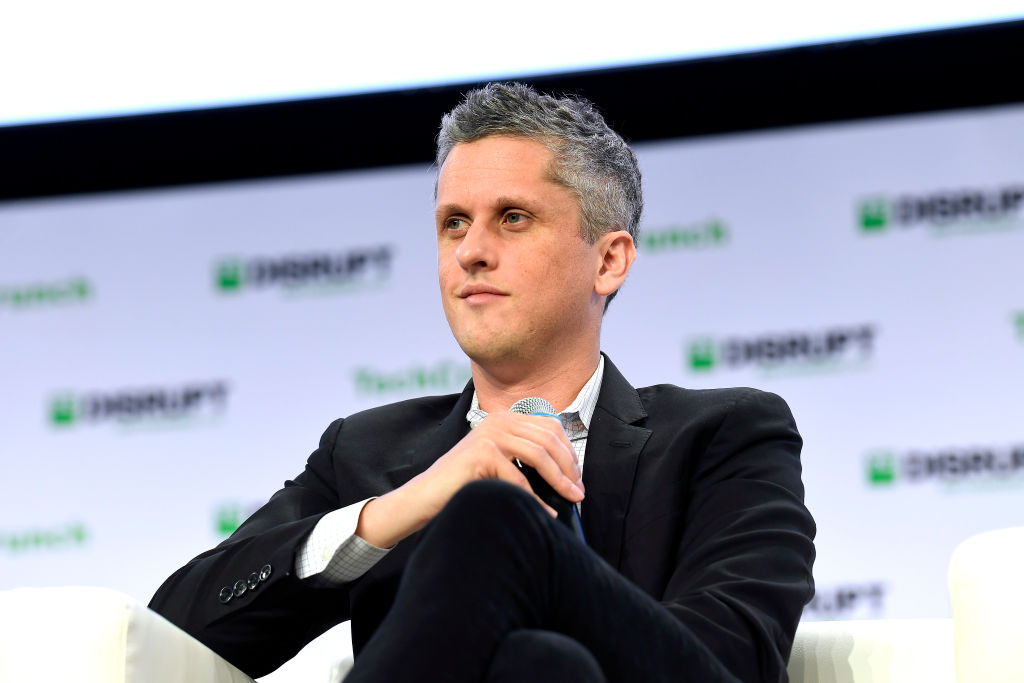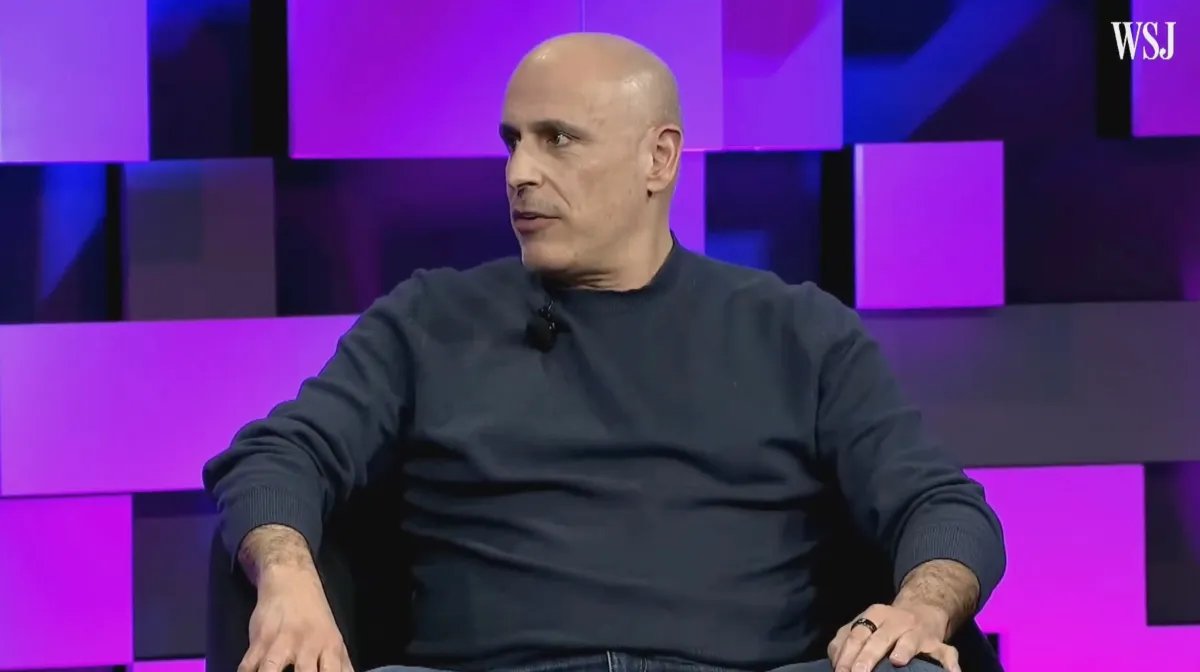
Marc Lore, the veteran e-commerce entrepreneur who sold his previous startups to Amazon and Walmart, has big plans to infuse AI into his current venture, Wonder.
The centerpiece of those plans is Wonder Create, an initiative that would let anyone — from food entrepreneurs to social media influencers — use AI to design and launch their own restaurant brand in under a minute. The virtual restaurant would then go live across Wonder’s growing network of tech-enabled kitchen locations, currently numbering 120 and expected to reach 400 next year.
Lore’s startup, a vertically integrated dining and delivery platform, has evolved from food trucks to fast casual restaurants with 10 to 20 seats. These are not normal restaurants, though; they are “programmable cooking platforms” capable of operating as 25 different types of restaurants based on cuisine, within their all-electric kitchens that are increasingly becoming robotic.
Speaking at The Wall Street Journal’s “Future of Everything” conference this week, Lore said these kitchens have a 700-ingredient library. The “restaurants” they house actually consist of many different brands that operate from within these locations.
In addition to a staff of up to 12 people in these kitchens, cooking tech, like conveyors and robotic arms, are involved in the cooking process. The company also just bought Spice Robotics, a maker of an automatic bowl-making machine previously used by Sweetgreen. Next year, it plans to offer an “infinite sauce machine” that can make bout 80% of all the sauces found in recipes on the internet today.
Wonder Create was announced earlier this year as a way for anyone to use Wonder’s software to launch their own restaurant brand and recipes.
Lore offered more details as how this would work by leveraging AI technology, describing the plan as something like a “Shopify front-end with an AI prompt.”
Techcrunch event
San Francisco, CA
|
October 13-15, 2026
“You type in what kind of restaurant you want to build. It builds the restaurant — AI does — in under a minute. It does the name, branding, description, pictures, pricing, health information, and all the recipes for your restaurant,” Lore explained during an interview at the WSJ event. The would-be restaurateur could then refine the prompt if changes were needed. When ready to go live, the restaurant would launch across all of Wonder’s locations.
The company currently has 120 of these “programmable cooking platforms” in operation, a number that’s expected to grow to 400 next year. As it adds robotics to the equation, the company won’t necessarily reduce headcount, Lore noted. Instead, it will increase the number of meals a kitchen can produce in a given period.
“We have about 7 million throughput capacity with 12 people,” he said. “We see a path to getting to 20 million throughput out of 2,500 square feet with just 12 people. The goal also is…I guess by 2035, to have 1,000 unique restaurants operating out of the 2,500 square feet,” Lore added.
The goal with these AI-created “restaurants” is to allow people to experiment with food in new ways. A restaurateur could test recipes to gauge customer reaction before adding dishes to his own brick-and-mortar locations, for example.
Lore sees other use cases for the platform, too, like letting influencers connect with their audience through their own “restaurant” brands without having to actually launch their own chains.
“It could be a mega-influencer, a micro-influencer — anyone that wants to monetize their following,” Lore said. “Or it could be a private trainer that wants to make specific bowls. It could be a not-for-profit. It could be Disney for [marketing] their new movie. Anybody can make a restaurant.”
Whether that many people actually want to is an open question. Ghost kitchens — a similar concept that promised to let brands sell food without owning a restaurant — had a rocky run in the early 2020s, with several high-profile operators scaling back or shutting down after struggling to build customer loyalty. Wonder’s added layer of automation and AI may address some of those pitfalls, but the model is still unproven at scale.
MrBeast Burger, a famous ghost kitchen experiments, vividly illustrated the challenge. The brand faced widespread complaints over inconsistent food quality — a consequence of relying on dozens of different contracted kitchens and staff. Wonder’s programmable, increasingly automated kitchens are designed to solve exactly that problem.
There are still limits to this idea, Lore admitted. Wonder’s team (including its robots) can’t do things like toss and stretch pizza dough or slice and roll sushi. Instead, Wonder’s focus is on simpler basics like burgers, chicken wings, fried chicken, and bowls.
The whole plan comes together with Lore’s other acquisitions — Grubhub for its 250 million-deliveries-per-year business and Blue Apron for its meal kit business. Now, Wonder is focused on buying restaurant brands, like New York City-based Blue Ribbon Fried Chicken, which it snapped up for $6.5 million in February.
“When you buy a brand — and you can buy a brand that has 10 locations, or even 50 locations — and then overnight put it in 1,000, there’s just an incredible arbitrage there,” Lore noted.
When you purchase through links in our articles, we may earn a small commission. This doesn’t affect our editorial independence.