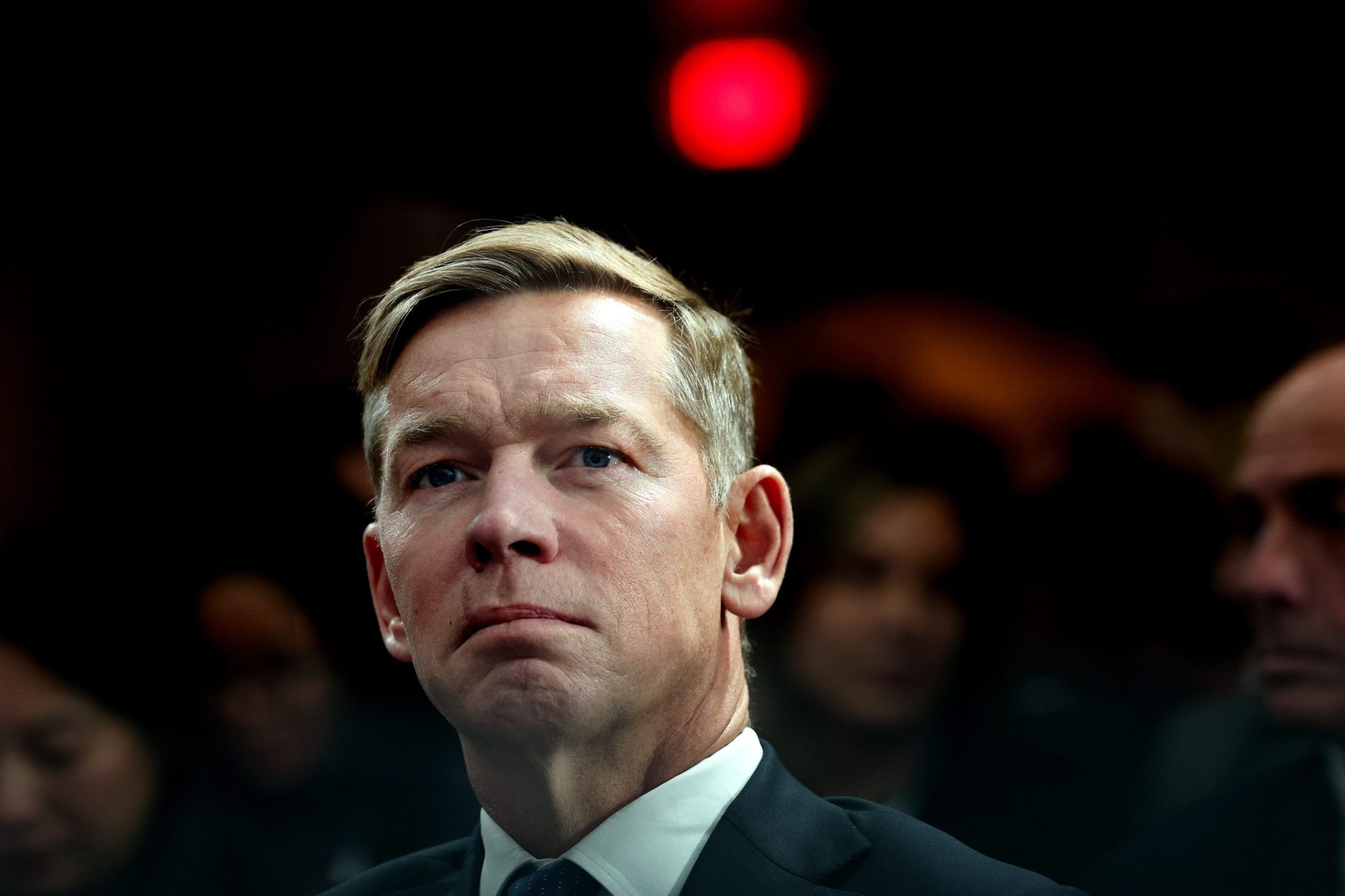
Instead, the 57-year-old executive is offering some blunt advice for aspiring young professionals: whether the market is hot or cold, no one is going to give you a handout. Your career is yours to build, and the onus is on you to make it happen.
“Remember, nobody cares about your career as much as you do,” Kempczinski said in a recent Instagram video. “You’ve got to own it, you’ve got to make things happen for yourself.”
At a time when many young workers are grasping at their networks for a leg up, the risks of falling behind are real: millions of young people are now classified as NEET—not in employment, education, or training. Against that backdrop, Kempczinski warned there’s no guarantee anyone will always have your back—or ensure you reach your career goals.
Kempczinski knows firsthand that careers rarely unfold as planned. He once dreamed of becoming a professional soccer player, not a CEO. When it became clear early on that his athletic capability wasn’t up to star-level, he took his future into his own hands: turning lessons learned from washing dishes at 16 at First Watch into a three-decade-long career across companies like Procter & Gamble and PepsiCo before he was tapped to lead McDonald’s in 2019.
Keeping an open mind could be a career changer
Instead of expecting stability, one of the biggest paths to long-term success is embracing the chaos with curiosity—and a willingness to say yes when opportunities arise, according to Kempczinski.
“ To be a yes person is way better than to be a no person,” he told LinkedIn CEO Ryan Roslansky. “So as those career twists and turns happen, the more that you’re seen as someone who’s willing to say yes and to go do something, it just means you’re gonna get that next call.”
For Loreal’s Chief Human Resource Officer Stephanie Kramer, saying yes to things—even if they were unglamorous and “junior” looking, like grabbing coffee—was pivotal to her success.
“At the beginning of my career, I often credit it with the ability to say yes to the very, very little things,” Kramer recently told Fortune. “Who’s going to make the copies and going to get the coffee? Me. Who is going to be there early to set up the meeting? Me. Who is going to go watch which door consumers go in to determine what the best bay or window is for Saks Fifth Avenue that we want to have? Me.”
And the benefits of keeping an open mind early on may be more relevant now than ever, as opportunities have become slimmer for recent graduates.
In the U.K., more than 1.2 million applications were submitted for just under 17,000 open graduate roles in 2023 and 2024, according to the Institute of Student Employers. And back stateside, lawmakers have warned that joblessness among recent graduates could hit 25% in the next two to three years as AI reshapes entry-level work.
Fortune reached out to Kempczinski for further comment.
The endless pursuit of knowledge—no matter what life throws at you
The emphasis on staying curious—even when plans change—is a theme echoed by other top executives.
Bank of America CEO Brian Moynihan has long credited asking questions and continuously learning as central to both the bank’s success and his own decade-plus tenure at the helm of a Fortune 500 company.
“You lose your curiosity, and you are on your way out of this company,” Moynihan told Fortune in 2017.
He echoed that message just last week, saying his top leadership advice remains simple: “You have to keep learning, you have to be curious, you have to read a lot,” he told The Master Investor podcast.
That mindset has also shaped the unconventional career path of Life360 CEO Lauren Antonoff.
She once planned to become a civil rights lawyer, but an unexpected curiosity sparked by her first MacBook in college pulled her toward technology. She ultimately climbed the corporate ladder in tech—even without finishing her degree.
“I’m a big believer in finding your way in the world,” Antonoff recently told Fortune. “That’s not just about getting a job; if you don’t have a job, start something. If you don’t have a job, go volunteer someplace. In my experience, being active and working on problems that you’re interested in—one thing leads to another.”
This idea that careers aren’t built by waiting for someone to tell you what to do is exactly the message Kempczinski wanted to send to Gen Z. Staying curious and being willing to step through doors before you know exactly where they lead is often the key to long-term success.