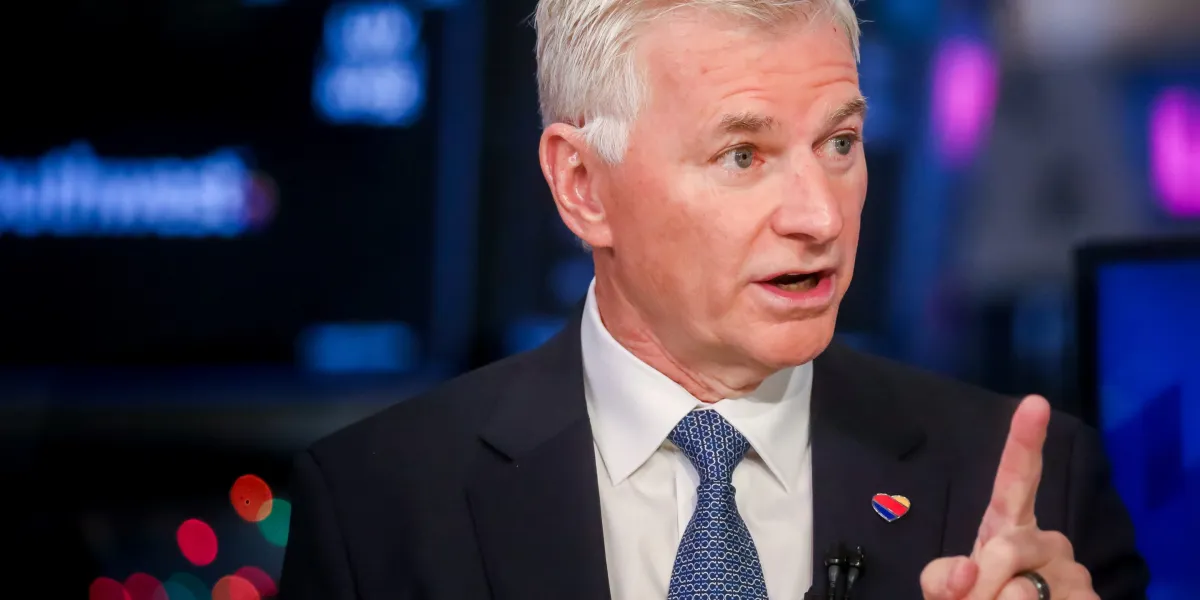
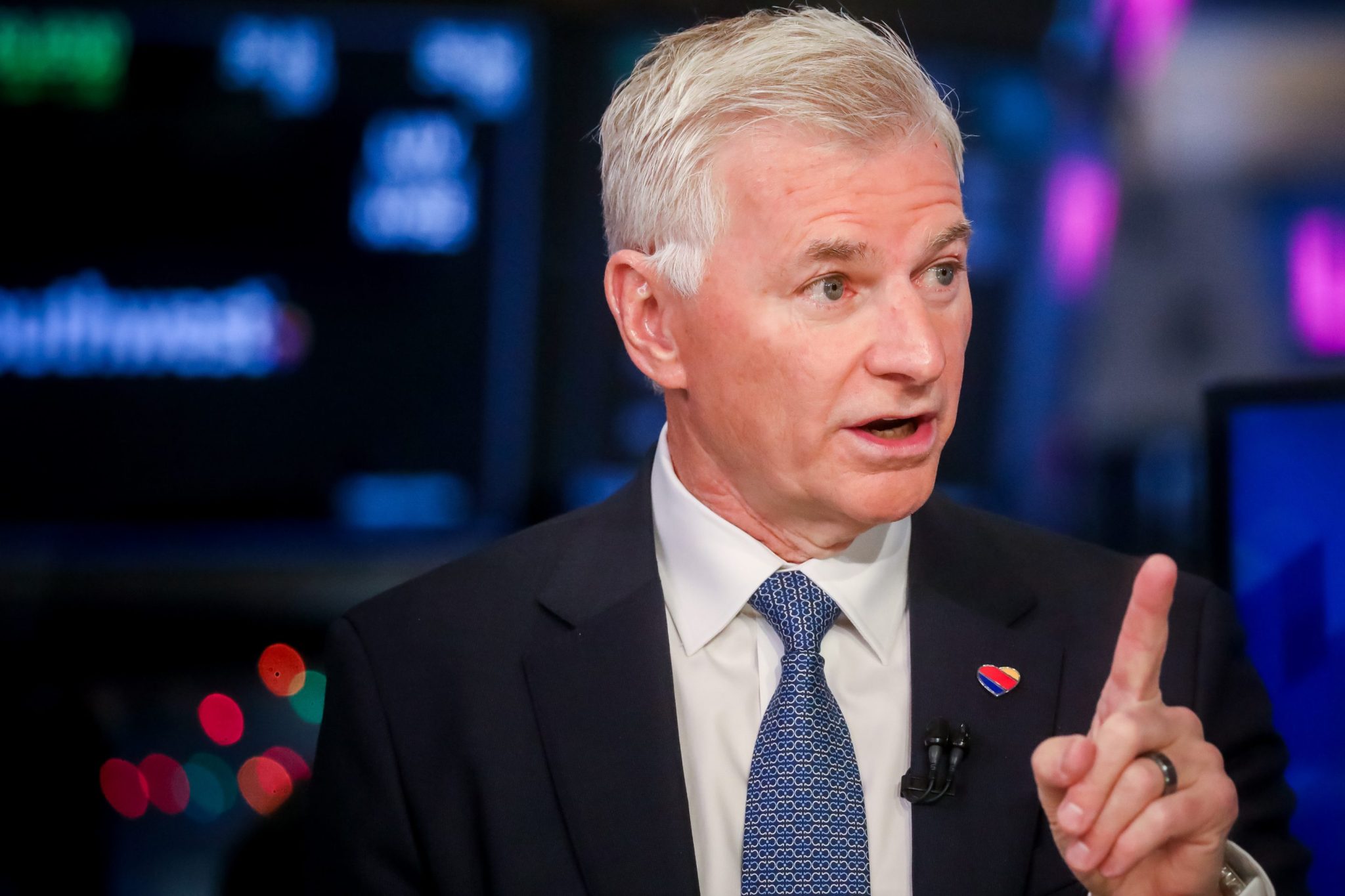
Business leaders are raising the alarm: meetings have taken over, and real work is being left behind. And Southwest Airlines CEO Bob Jordan is the latest to speak out on the phenomenon—arguing that many leaders mistake constant meetings for leadership.
“When you first start, it’s easy to confuse busyness and going to meetings with leadership,” Jordan said last week on a panel of CEOs at The New York Times DealBook Summit. “…Because what we all find, I’m sure, is there’s no time to ‘work’ and you confuse going to meetings with the work.”
Over the years, Jordan’s solution has been increasingly straightforward: protect his time. For 2026, his goal is to keep his calendar completely clear every Wednesday, Thursday, and Friday afternoon—blocking anyone from booking meetings during those hours.
While he acknowledges that approach might sound “crazy” to some executives, he said CEOs are hired to do work only they can do—and that rarely happens when they are trapped in back-to-back meetings.
“It’s so that you can work on things you need to work on. You can think about what’s important right now. You can call people you need to talk to,” Jordan added.
The approach may be paying off. Despite a rocky year for the airline industry, Southwest posted a surprise profit in its most recent quarterly earnings report. Year-to-date, its stock price is up about 23%.
Fortune reached out to Southwest Airlines for further comment.
Meetings have become the bane of existence for employees and employers alike
Jordan isn’t alone in his frustration. Meetings have become a shared pain point for both workers and executives.
During the pandemic, meetings took on an almost emotional-support role—an attempted substitute for in-person interaction amid lockdowns. With no need to wait for a free conference room, calendars quickly filled up.
But now, nearly 80% of people say they’re drowning in so many meetings and calls that they barely have time to get any real work done, according to a 2024 Atlassian study which surveyed 5,000 workers across four continents. About 72% of the time, meetings are deemed ineffective.
That backlash has prompted a growing number of executives to aggressively prune—or outright eliminate—meetings from corporate schedules, sometimes carving out entirely meeting-free days. Still, some experts warn that getting rid of meetings altogether is a strategy that could risk removing any sense of belonging with the organization and backfire in the long term.
“Meetings don’t need to be banished completely; it’s just the ineffective, time-wasting ones that do,” Ben Thompson, CEO and cofounder of Employment Hero, previously told Fortune.
How Nvidia and JPMorgan Chase tackle meeting overload
Other CEOs have adopted their own unconventional approaches.
Nvidia’s CEO Jensen Huang, for instance, does not have one-on-one meetings with his more than 50 direct reports. Doing so, he has said, would not only overwhelm his schedule but also slow the broader team’s capacity to address challenges, work effectively, and maintain transparency.
“Our company was designed for agility—for information to flow as quickly as possible. For people to be empowered by what they are able to do, not what they know,” Huang said at Stanford University last year.
At JPMorgan Chase, CEO Jamie Dimon has taken a more blunt approach. In his annual letter to shareholders released last spring, he urged employees to rethink whether meetings are worth having at all.
“Here’s another example of what slows us down: meetings. Kill meetings,” he wrote. “But when they do happen, they have to start on time and end on time – and someone’s got to lead them. There should also be a purpose to every meeting and always a follow-up list.”
Efficiency has become an even higher priority as JPMorgan has pushed employees back into the office five days a week. Meetings, Dimon has emphasized, should command full attention.
“None of this nodding off, none of this reading my mail,” Dimon echoed at Fortune’s Most Powerful Women Summit in October. “If you have an iPad in front of me and it looks like you’re reading your email or getting notifications, I tell you to close the damn thing. It’s disrespectful.”