The scale of the disconnect between Samsung’s earnings beat and its share price reaction points to a market already positioned for strong results, leaving little room for further upside on the headline number alone. The simultaneous declines in SK Hynix and Micron suggest investors are reassessing the memory chip cycle broadly rather than Samsung specifically, with the sector-wide move a more significant signal than any single company’s results. Questions over Samsung’s position in high-bandwidth memory relative to SK Hynix, along with a one-off bonus accrual flattering the headline figure, add further nuance to how sustainable the current profit level is. These explanations remain analyst interpretation rather than confirmed fact, and the narrative around the memory cycle’s trajectory could shift quickly as more data emerges.
—
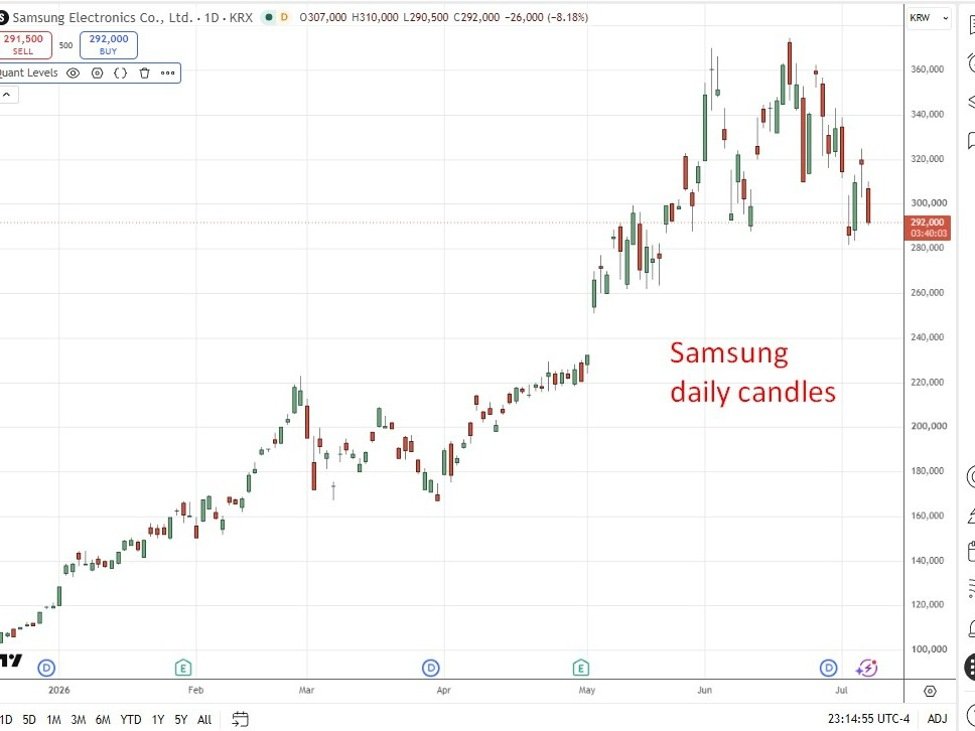
Samsung Electronics posted a record quarterly profit that topped estimates, but its shares fell around 8% and dragged the KOSPI down about 6%, as SK Hynix also slid on analyst concerns the memory chip supercycle may have peaked.
Earlier:
Summary:
- Samsung Electronics reported preliminary second-quarter operating profit up more than 1,800% year on year, topping analyst estimates
- The result exceeded the company’s combined profit over the prior three years, according to the figures reported
- Samsung shares fell as much as 8% in early trading despite the beat, with SK Hynix also sliding sharply
- The KOSPI benchmark index dropped around 6% as the declines in Samsung and SK Hynix weighed on the broader market
- Analysts suggested the profit surge was largely driven by industry-wide memory chip price gains rather than company-specific strength, and cautioned the results included a one-off employee bonus accrual
- Some analysts pointed to renewed concerns over the sustainability of AI-driven data-center spending as a factor behind the muted market reaction, though such explanations should be treated cautiously given how quickly narratives around the AI and memory cycle have shifted in recent months
Samsung Electronics reported a record second-quarter operating profit that comfortably beat market estimates, yet its shares plunged as much as 8% in early trading, dragging South Korea’s KOSPI benchmark down around 6% as sister chipmaker SK Hynix also slid sharply. The scale of the earnings beat was striking on its face, with preliminary profit up more than 1,800% from a year earlier and exceeding the company’s combined profit over the previous three years, driven largely by record prices for storage chips.
Despite that headline strength, the market reaction was decisively negative, and analysts offered several explanations for the disconnect, though these should be treated as interpretation rather than settled fact given how quickly sentiment around the memory chip and AI infrastructure cycle has shifted in recent months. One line of reasoning holds that the results were largely priced in after a run of elevated expectations, with some estimates suggesting underlying profit could have topped 90 trillion won before accounting for a one-off employee bonus provision. Under this view, investors are less focused on the earnings beat itself and more on whether artificial intelligence-driven data center spending in the United States can keep growing at its recent pace.
A second explanation points to the nature of the profit surge itself, attributing it primarily to an industry-wide rally in DRAM and NAND memory prices rather than company-specific execution, noting that SK Hynix and Micron shares also fell, which would suggest markets are repricing the broader memory cycle rather than reassessing Samsung in isolation. This account also flags that Samsung’s revenue slightly missed expectations and that the company trails SK Hynix in high-bandwidth memory products used in AI servers, a segment seen as carrying the highest margins, while the one-off bonus accrual included in the results is said to lower the overall quality of the headline earnings figure.
Whichever explanation proves closer to the mark, the sharp reaction across Samsung, SK Hynix and the wider KOSPI signals investors are grappling with deeper questions about where the memory chip cycle stands, and how much further AI-related demand can support current pricing, questions likely to remain unsettled until further data points emerge.