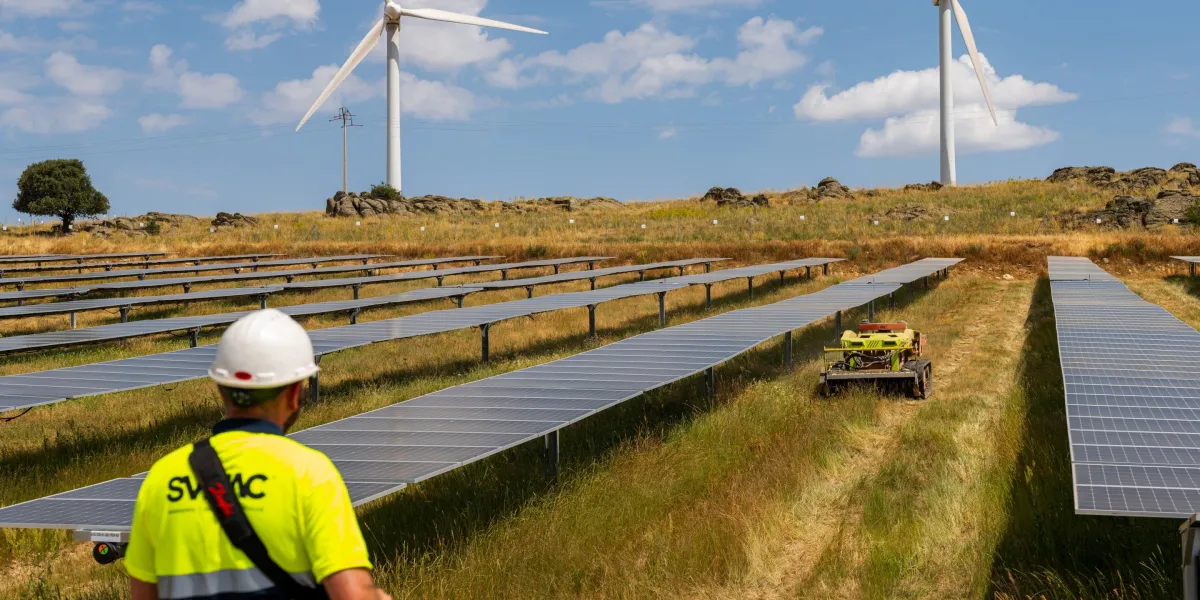
Electricity supply is increasingly outpacing demand in Europe as renewable energy capacity grows, making negative prices a more frequent occurrence.
In early 2020, Spain’s installed solar power capacity totaled nearly 9 gigawatts, according to data from Red Eléctrica. In early 2025, it had soared to 32 GW, helped by subsidies.
With solar panels and wind turbines installed in more places—while energy storage capacity is still lagging—an especially sunny and windy day can generate more electricity than is needed, sending prices below zero.
By September, the number of hours in Spain with negative electricity prices had already topped 500 for the year to date, more than double the full-year total for 2024. Similarly, France’s hours had topped 400 by then, also exceeding its 2024 tally, and Germany was on a trajectory to do so as well.
Those rates are for the wholesale electricity market, meaning traders must pay someone to take the surplus energy instead of the other way around.
That doesn’t mean households are also paid to consume electricity, because those rates are often set in advance. But negative prices can eventually be felt in markets with more dynamic pricing regimes.
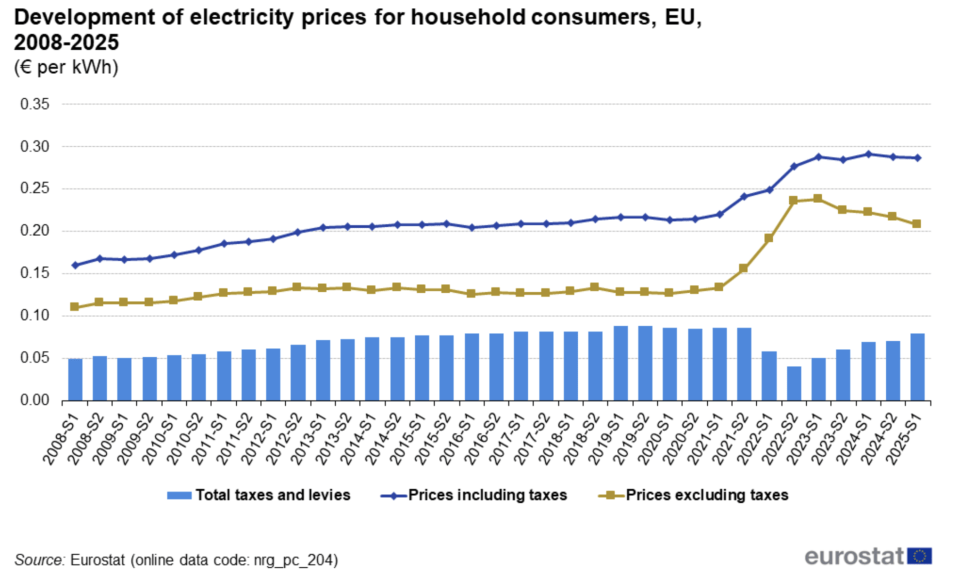
In fact, electricity prices for households in the European Union during the first half of the year were down 1.5% from the first half of 2024, according to data published in October. Excluding taxes Europeans paid, electricity prices fell more sharply and have been sliding since 2023, after spiking in 2021 and 2022.
By contrast, rising electricity prices in the U.S. have become a growing source of voter discontent as utilities race to build more capacity to feed skyrocketing demand from AI data centers.
The higher bills have fueled an overall affordability crisis that started with the post-pandemic inflation spike and was worsened by President Donald Trump’s tariffs.
While the annual inflation rate has cooled sharply since peaking in 2022, consumers are still reeling from the aggregate price hikes over the last five years and are demanding lower prices, not just slower increases.
The latest consumer price index data released earlier this month showed that electricity prices in November were up 6.9% year over year on an unadjusted basis.
To be sure, negative electricity prices also happen occasionally in the U.S., including in Texas, which has a more deregulated grid and significant wind power capacity.
But the Trump administration is cracking down on renewable energy, gutting subsidies for solar power and killing wind energy projects.
And negative prices in Europe aren’t helping the energy industry there as they weigh on producers’ profits and valuations for solar plants.
Countries are scrambling to boost battery storage. But in the short term, the challenging price environment has cooled development of new solar capacity, even where land, permits, and grid access have been secured.
“The market is flooded with ready-to-build projects that developers want to sell since they’re no longer good enough in the current market,” a senior executive at an owner of Spanish solar plants told the Financial Times.