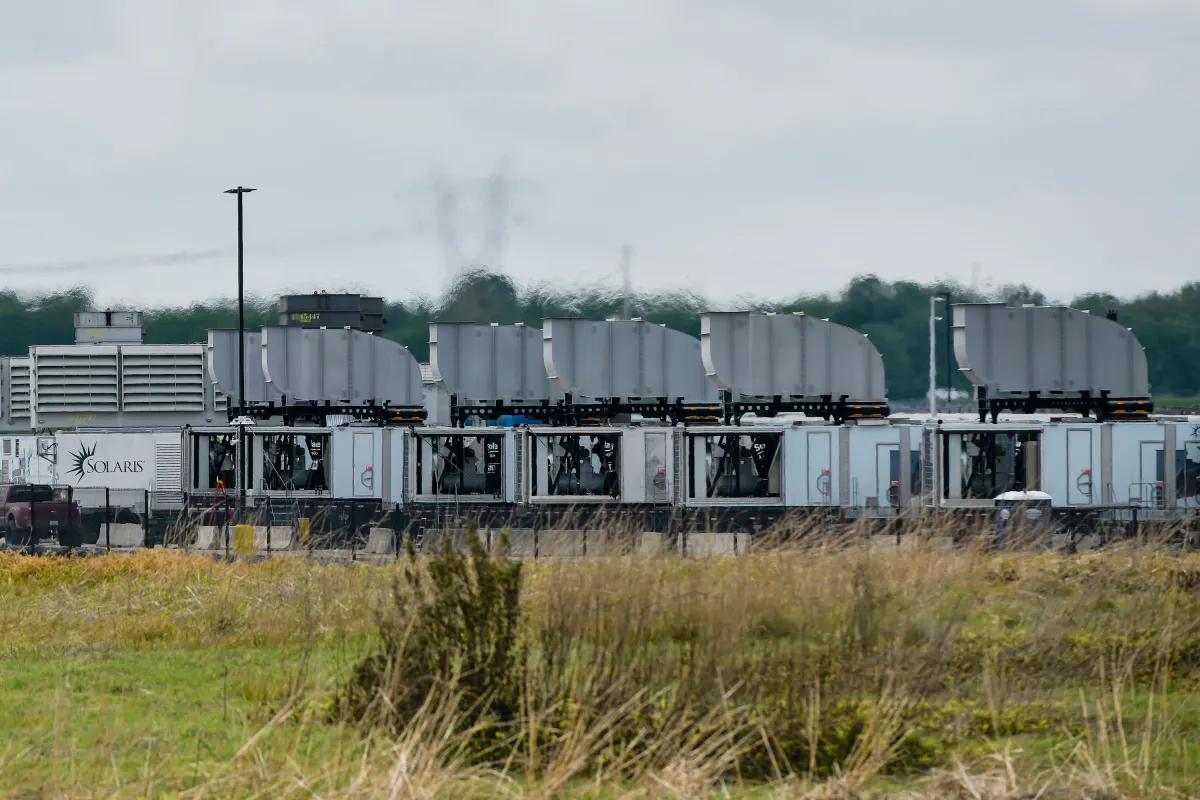
New Yorker state lawmakers have introduced a bill that would impose a moratorium of at least three years on permits tied to the construction and operation of new data centers. While the bill’s prospects are uncertain, Wired reports that New York is at least the sixth state to consider pausing construction of new data centers.
As tech companies plan to spend ever-increasing amounts of money to build AI infrastructure, both Democrats and Republicans have expressed concerns about the impact those data centers might have on surrounding communities. Studies have also linked data centers to increased home electricity bills.
Critics include progressive Senator Bernie Sanders, who has called for a national moratorium, as well as conservative Florida Governor Ron De Santis, who said data centers will lead to “higher energy bills just so some chatbot can corrupt some 13 year old kid online.”
More than 230 environmental groups including Food & Water Watch, Friends of the Earth, and Greenpeace recently signed an open letter to Congress calling for a national moratorium on the construction of new data centers.
Eric Weltman of Food & Water Watch told Wired that the New York bill — sponsored by state senator Liz Krueger and assemblymember Anna Kelles, both Democrats — was “our idea.” Data center pauses have also been proposed by Democrats in Georgia, Vermont, and Virginia, while Republicans sponsored similar bills in Maryland and Oklahoma.
According to Politico, Krueger described her state as “completely unprepared” for the “massive data centers” that are “gunning for New York.”
“It’s time to hit the pause button, give ourselves some breathing room to adopt strong policies on data centers, and avoid getting caught in a bubble that will burst and leave New York utility customers footing a huge bill,” she said.
Techcrunch event
Boston, MA
|
June 23, 2026
Last month, New York Governor Kathy Hochul announced a new initiative called Energize NY Development, which her office said would both modernize the way large energy users (i.e., data centers) would connect to the grid while also requiring them to “pay their fair share.”