
Just three years since ChatGPT launched to the world, it has upended industries, accelerated scientific discovery, and sparked visions where diseases are cured and work weeks shrink. Yet the same technology fueling those promises is also creating a host of new anxieties—and no one feels that more acutely than the man who helped unleash it.
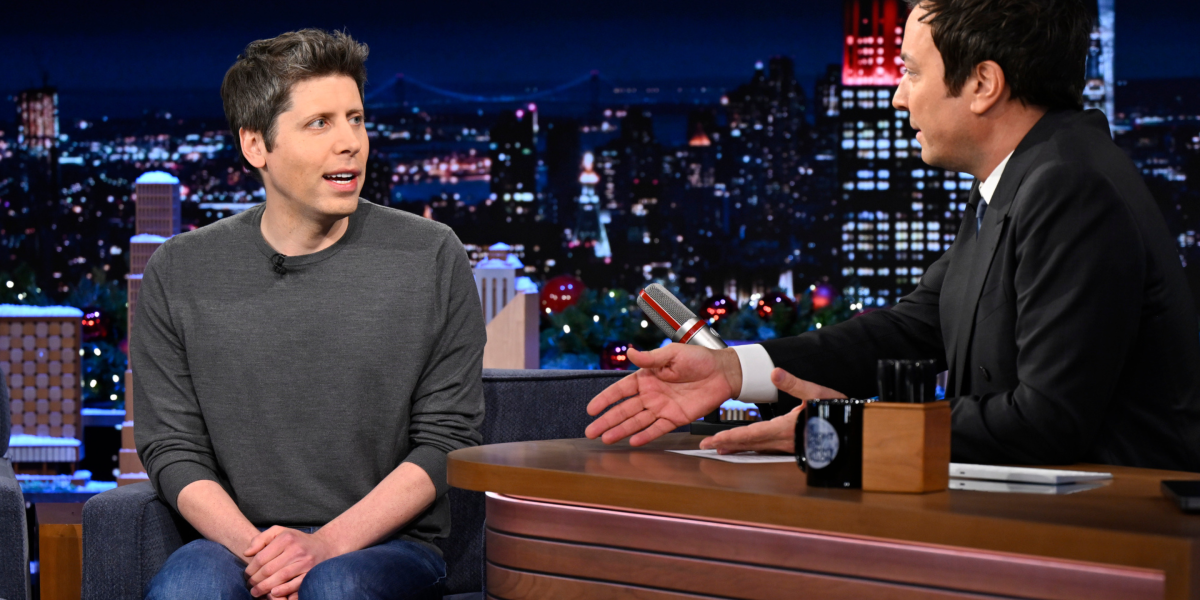
OpenAI CEO Sam Altman has just revealed that there is a “long list of things” that haven’t been so great about ChatGPT’s rapid rise, starting with the speed at which it has reshaped the world. The very system that could eradicate illnesses, he said on The Tonight Show, can also be misused in ways society isn’t remotely prepared for.
“One of the things that I’m worried about is just the rate of change that’s happening in the world right now,” Altman told Jimmy Fallon. “This is a three-year-old technology. No other technology has ever been adopted by the world this fast.”
“Making sure that we introduce this to the world in a responsible way, where people have time to adapt, to give input, to figure out how to do this—you could imagine us getting that wrong,” he added.
But with more than 800 million people now using ChatGPT each week, the stakes couldn’t be higher. The technology is now woven into everyday life—from classrooms to boardrooms—often faster than guardrails can keep up.
Fortune reached out to OpenAI for further comment.
Jobs may start changing ‘pretty fast’—but we’ll all figure out new jobs to do, Altman says
Altman’s comments come as he also has worries about the rate of change of his competitors. The 40-year-old reportedly declared “code red” last week to push more resources toward improving ChatGPT as pressure from Google and other AI rivals, including Meta and Anthropic, intensifies.
Together, the companies’ AI endeavours have driven historic productivity gains and new methods of gathering and analyzing information—but also deepened uncertainty about the future of work. Anthropic’s CEO Dario Amodei has been especially blunt, warning that AI could eliminate half of all entry-level, white-collar jobs.
Altman, however, has remained largely optimistic. Even if the job disruption is swift, he argued it will be offset by entirely new types of work.
“The rate at which jobs will change over may be pretty fast. I have no doubt that we’ll figure out all new jobs to do and I hope, much better jobs,” he added on The Tonight Show.
Some of those future roles, he has suggested, could be literally out of this world.
“In 2035, that graduating college student, if they still go to college at all, could very well be leaving on a mission to explore the solar system on a spaceship in some completely new, exciting, super well-paid, super interesting job,” Altman said to video journalist Cleo Abram earlier this year.
Space-related job growth is also an area Google CEO Sundar Pichai is bullish about—with expansion possible in as little as 10 years’ time.
“One of our moonshots is to, how do we one day have data centers in space so that we can better harness the energy from the sun that is 100 trillion times more energy than what we produce on all of Earth today?” Pichai said on Fox News late last month.
In five years, AI will be curing diseases, Altman predicts
For all the uncertainty swirling around AI’s impact on jobs, education, and society, there’s one area where tech leaders remain almost universally optimistic: medicine.
Amodei has said the technology could lead to the elimination of most cancers, whereas Microsoft cofounder Bill Gates predicted “breakthrough treatments.” Already, AI is making progress in speeding up drug discovery and helping scientists analyze biological data at scales once thought impossible.
AI models could usher in an era of disease-curing innovation as soon as 2030, Altman added.
“Five years is a long time,” Altman said. “Next year, I hope we’ll start to see these models really make small-but-important new scientific discoveries. And in five years, I hope they’re curing diseases.”