It’s a tough time for Germany.
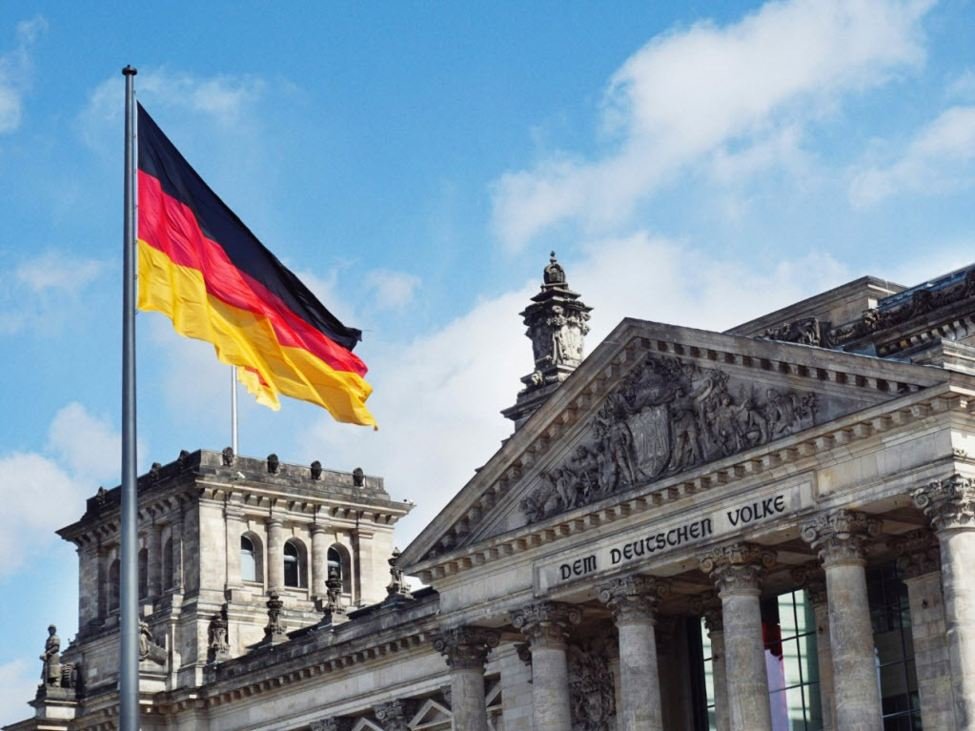
A year into Chancellor Friedrich Merz’s tenure, his approval ratings are low and the coalition government he leads is roundly disliked. Capitalizing on widespread discontent, the far-right Alternative for Germany is rising in the polls, inching closer to power. To make matters worse, America, in a Trumpian tantrum, has announced a withdrawal of troops from the country, endangering its bedrock geopolitical relationship. All the features that defined Germany’s recent past — political stability, social cohesion and Atlanticist foreign policy — are under threat.
Yet underlying all these problems is a more profound one. The German economy, once known for its efficiency, orderliness and stability, is in a terrible mess. It’s not just that the numbers are dire, though the country has basically been in a recession for three years. Or that every week or so, another famous old company announces thousands of layoffs (the latest was Commerzbank, founded in 1870). Or that last month, the venerable weekly Die Zeit ran a series called “Where Germany still works” — which means the situation must be pretty bad indeed.
No, the worst of it is that our dynamic economy gave postwar Germany a sense of identity. For all our flaws, we had a country that functioned better than others. Now it doesn’t anymore, and we’re mystified. Yet a better economy is possible. It might not alter the country’s political trajectory, and it certainly won’t placate an aggrieved President Trump. But it can turn the tide on stagnation and restore the fabled resilience of German businesses.
Commentators tend to focus on today’s troubles. The economy’s rise and fall is a much older story, though. At its most prosperous, Germany was a high-tax, high-wage, big-bureaucracy country — something to remember for those whose recipe for renewal is simply to cut the cost of doing business. In the postwar decades of vigorous growth, the economy itself resembled the kind of product that it so excellently manufactured, an expensive and highly complicated machine whose cogs meshed.
Those cogs included an education system geared toward supplying businesses with technically proficient workers; managers trained as engineers or scientists rather than as generalists; banks and insurers with major stakes in the largest companies and focused on long-term goals over short-term profits; and stable labor relations that offered workers secure and well-paid jobs as well as a vote in key decisions. Together, these elements contributed to the technological superiority long associated with the Made-in-Germany brand.
Yet when the American economy pulled ahead in the 1990s, fueled by the financial muscle of Wall Street and the fierce entrepreneurialism of Silicon Valley, we ran out of ideas. Eager for something new, the economy opened up to foreign capital: Banks and insurers sold their stakes in German companies and corporate executives targeted international investors. In an attempt to regain competitiveness, the government of Gerhard Schröder reformed the country’s rigid labor market and did away with some of the protections that workers had enjoyed.
On the face of it, Germany thrived in the first two decades of the new century, weathering the financial crisis better than others and hanging on to its industrial core. But in hindsight, the country was on borrowed time. Automakers, for instance, sold millions of cars in East Asia but failed to invest in a much-needed transformation to electric vehicles. The same mix of risk aversion and short-termism characterized other German companies, too. What kept the profits coming was a combination of cheap Russian gas, a booming Chinese market and the multilateral free-trade order led by the United States.
That order is now gone, sundered by American protectionism, Chinese competition and the disruption from artificial intelligence. But the setback needn’t be fatal. The country can overhaul its business model, re-equipping the successful elements of the old system for a newly hostile environment. There are three key areas to focus on.
First, the financing. Many German corporations are now majority-owned by non-German investors, and some of the country’s vital Mittelstand firms — family-owned medium-size enterprises — have been taken over by private equity or other outside money. The influence of detached investors focused primarily on financial results can be beneficial, of course. But it’s gone too far. Established companies need the kind of solid backing that would allow them to plan for the long term, and young companies need patient nurturing.
The government seems to agree. Recognizing that too many of the country’s enormous financial resources are languishing in real estate holdings or fixed-income assets or personal savings accounts, it has established an investment initiative named “Deutschlandfonds.” Designed to support private investors who want to put money into growth industries and other strategically important fields, the fund is a step in the right direction. More can surely be done.
Then there’s education. The country’s famous dual-vocational system, which allows students to complete their schooling in the workplace, long ensured that industry got the kind of skilled labor it needed. But the system now lacks applicants, partly because of demographic decline and partly because too many young people choose to pursue other careers. Germany’s high school students, what’s more, are struggling in the very subjects that the country used to excel in: math and natural sciences.
Overall, Germany is not investing enough in education — and not enough of the money that’s invested goes toward promoting the scientific and technological excellence that the economy so badly needs. Technical universities that have produced legions of Nobel laureates are consistently placed behind better-funded rivals elsewhere. A return to the audacious research projects of the past, typically a collaboration between government, academia and private enterprise, would be a start.
Finally, the labor market. The country’s welfare state has become too expensive, and Germans will need to work longer hours and more years to sustain it. Yet changes should be pursued in the spirit of “Sozialpartnerschaft,” the consensus-based labor relations that played an important role in the postwar economy. Mutual trust has been eroded in recent decades, for which both parties share responsibility. Business leaders squandered good will by awarding themselves lavish salaries while the unions too often refused even minor compromises and readily reverted to class-war language.
The advent of artificial intelligence, intriguingly, might help. Given the scale of the United States’ technological lead, it may sound naïve to suggest that Germany could claim a share of the pie. But artificial intelligence is well suited to complement the country’s traditional strengths in high-quality engineering. And an approach that takes labor interests into account could secure a desirable result: technology that improves the work of humans rather than replaces them en masse.
There is no returning to the past, of course. Yet something precious has been lost: an innate confidence in the country’s strengths. Today, the mood in Germany seems way too bleak. What’s missing is a cleareyed sense of where we should be heading. To adapt, the economy — still the world’s third-largest — needs smart investment, public support and a healthy dose of self-belief. That won’t end the country’s problems, but it could put us back on the path to prosperity.
Konstantin Richter is a journalist and author, most recently, of “Dreihundert Männer,” an account of the rise and fall of corporate Germany.
The Times is committed to publishing a diversity of letters to the editor. We’d like to hear what you think about this or any of our articles. Here are some tips. And here’s our email: letters@nytimes.com.
Follow the New York Times Opinion section on Facebook, Instagram, TikTok, Bluesky, WhatsApp and Threads.