My hands shook as I crossed the stage to receive my master’s diploma from Cornell University last year. Wearing a graduation stole on which I had sewn an Afghan flag, I was filled with a jumble of pride and disbelief at how far I had come.
Four years before, I was among thousands of people evacuated from Afghanistan as its government collapsed and the Taliban seized Kabul, and I had since made the dizzying transition to a new life in America.
But as I teetered across the stage in high heels, the sad, hopeless faces of my girlfriends who never made it out of Afghanistan flashed through my mind. This is the whiplash I live with now — highs of freedom and newfound opportunity, punctured by lows of intense guilt.
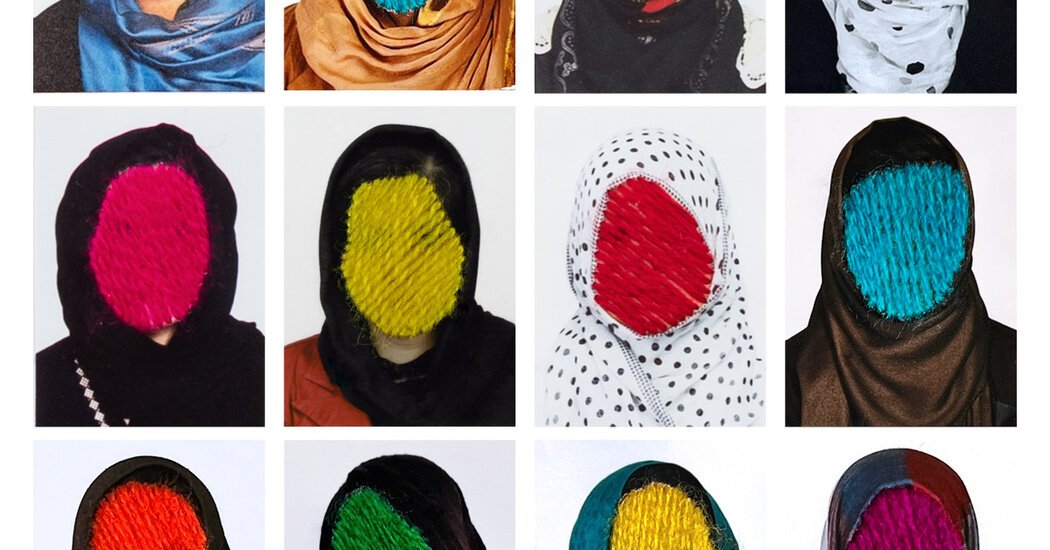
The fall of Kabul, five years ago this week, marked the bitter end to the long, painful 20-year U.S. involvement in Afghanistan. But for Afghan women, the pain was only beginning. The Taliban have turned my home into what a senior U.N. official has called the most repressive country in the world for women, who are barred from school and most types of work and face restrictions on simply appearing in public.
I escaped all that. In America I’ve been able to further my education and get a job. I’ve discovered the joys of cycling, jogging, ice skating, kayaking, weight lifting and many other pursuits unavailable to women back home. I even learned to swim. I have the freedom to go out each day, unafraid of being punished for what I’m wearing, for whom I am.
But every freedom I enjoy reminds me of women in Afghanistan who lost theirs.
In July, I bought myself an inflatable paddle board for my 30th birthday. Propelling myself down the Potomac River, I reveled in a sense of power and independence. But my chest suddenly tightened as the face of a young girl came back to me.
She’s a family friend in Afghanistan, a bright, curious and promising girl who devoured books that my mom gave her. But I had just learned from friends in Kabul that, just 16, she is to be married off to a much older man. No school, or even leaving home without a close male relative at her side.
Afghan women were perhaps the biggest beneficiaries of the U.S. intervention in Afghanistan. The Americans arrived in 2001, driving the previous Taliban regime from power. Soon after, I was able to start primary school, something that had been unimaginable under the Taliban. The expansion of opportunities for women allowed me to graduate from law school in Afghanistan in 2020. I planned to start a career advocating for women who still faced challenges such as domestic violence but had few female lawyers to represent them.
The U.S. withdrawal ended those dreams.
I got out of Afghanistan only because my brother, Najim Rahim, had worked as a reporter for The New York Times. Anyone who was employed by Western news organizations or the U.S. military was at risk of Taliban reprisals, so The Times evacuated those who had worked for its Kabul bureau — journalists, drivers, gardeners and translators, along with their direct family members.
My family was having lunch at home on the day Kabul fell, contemplating what would happen to us under the Taliban, when my brother called: We were leaving Afghanistan. We had 30 minutes to pack one small bag per person before rushing to the airport. I stared into my closet, suddenly forced to decide how to fit my life into a backpack. I grabbed some clothes, my school diploma and a few head scarves.
We waited for hours with other evacuees under a baking sun as thousands thronged the airport. We watched, horrified, as desperate people clung to the exteriors of planes, falling as the aircraft took flight. That night, Taliban militants attacked our group with clubs and we had to run from the chaotic airport for our lives.
Two tense days later, we made it on board a military transport. As we finally lifted off, I sat on the plane’s cold metal floor, staring numbly at its windowless walls and the blank, fearful faces of people who were leaving behind everything they knew. Eventually, we landed in Houston and began the process of applying for asylum.
As new possibilities opened up for us in America, Taliban decrees barred women and girls from receiving education after the sixth grade, required women to cover themselves head to toe in public and even forbade them from speaking loudly enough that non-family members can hear them. In January, the Taliban approved a new criminal decree that the U.N. High Commissioner for Human Rights says legitimizes violence against women and children at home.
Despite the ever-tightening restrictions, I keep in touch with friends back home through calls and video chats. One friend in Kabul told me how she and other women were working out in a secret gym last year when Taliban morality enforcers arrived. The women managed to escape out the back before the Talibs burst in, sniffing at what they said was the telltale scent of perfume in the air.
Most of the 35 young women who were in my all-female law school class are still in Afghanistan. During calls, they pour out their frustrations about their new lives as wives and mothers, spent almost entirely at home, their dreams of becoming lawyers now out of reach.
That’s where my guilt comes in. Afghan women in America often return to the same haunting question: “What if that was me?” I was no smarter or more ambitious than many of my classmates, yet I got out, purely through luck. I am determined to make the most of my freedom here and to make it my life’s work to help the women left behind.
Since leaving Afghanistan, the United States has closed its embassy, withdrawn its diplomats, sharply reduced assistance and made it harder for Afghans to find refuge in America. It has increasingly disengaged from the country and its people.
I am grateful for the new life I have in the United States, and the kindness of the American people. I realize that Afghanistan no longer commands America’s attention as it once did, and I won’t pretend that there are easy solutions for helping Afghan women.
But America has a moral responsibility to not simply look away and accept that the systematic erasure of Afghan women is no longer its concern.
Mursal Rahim is one of four women featured in the forthcoming book, “The Last Free Women: A Daring Escape from Afghanistan and Coming of Age in America,” by Rebecca Blumenstein and Diana Kapp.
The Times is committed to publishing a diversity of letters to the editor. We’d like to hear what you think about this or any of our articles. Here are some tips. And here’s our email: letters@nytimes.com.
Follow The New York Times Opinion section on Facebook, Instagram, TikTok, Bluesky, WhatsApp and Threads.