I didn’t know Hayden Panettiere very well at all. Our paths crossed only briefly on a TV show and even more briefly at Los Angeles International Airport in 2005 or so, just before we worked together. I remember nodding at her and saying hi at a magazine shop. I was traveling with my friend and fellow former child actor Anna Paquin. Anna asked later if I knew her. I didn’t, but I recognized her, or thought I did.
Whether from work or life, I couldn’t exactly say. She was traveling with what appeared to be a guardian. At around 15 years old, she was neither a kid nor a grown-up. I recognized her in the poise, in that do-I-know-you-from-somewhere vagueness, in the ways that made us special and also not. She nodded and smiled back at me, but I didn’t know if she was just being polite or if she saw us the way we saw her, as fellow child actors.
We might have worked on different sets, for different directors, in different eras, but we all bear the same recognizable wounds. No matter how good the union safeguards get, no matter the policing of grooming behavior, none of it will change the fact that acting while so young strips us of our childhoods and leaves us to suffer the consequences — alone. The specifics may change, but the unethical cycle we’re stuck in will not. At least not until the industry, the audience and the culture recognize that we all partake in something extractive, exploitative and nonconsensual and do something about it.
Nearly 100 years ago, the United States largely banned child labor. No longer would we abide small children working in factories for long hours; we agreed children should be in school. What I experienced as a kid showed me that the laws that were supposed to protect me were less important than the need to finish a shoot day. At 11, I began acting in TV movies in Toronto. Many of the experiences were magical, like singing with Naomi Judd or sitting in Sissy Spacek’s trailer while she played guitar.
But the small budgets meant time was short. Typically, shoots would last only four to six weeks, and every second counted. I was surrounded by adults, and the expectations remained those of a set, where the show must go on — child actor or not.
On one job when I was 12 years old, I worked 12-hour days and learned what “working under the table” meant. On days I was so sick that I could barely stand, I had a cot set up off camera where I could collapse between takes. Saying “no” could mean being labeled difficult to work with and potentially not being hired again.
The qualities that make most child performers successful are the same ones that leave us vulnerable to exploitation: a desire to please, a desire for positive attention and, crucially, a desire to be thought of as mature beyond one’s years. We’re too young to understand that the adults around us were kind to us in part to just finish a job, to get the scene, to sell a movie — that one of the most formative moments of our young lives was just a six-week blip in their lifelong careers. Our yearning for a maturity we do not yet have often means that too many decisions are left to us.
In my case, the first decision was insisting that I wanted to act. I loved pretending to be another person and to be put in fraught situations as someone else. There was a wonderful sense on a set that someone would tell you where to stand and what to say, and everyone would be deeply impressed by something that felt quite easy to me.
I told myself then that I was grown-up enough to face the pressure. I believed I could handle the constant rejection, the objectification, the ego-battering fact that I was constantly cast as the unattractive supporting characters (one named Chuckette, as in “upchuck”) as an adolescent. My family supported me: My mom traveled as my guardian, and my dad and my sister cheered me on. I had the protection of a union. Thirty years later, I am still wrestling with the ethics of being treated as if I had been old enough to consent to all that for myself.
But I wasn’t making all the decisions. At a time when kids are supposed to be forging our own identities, child actors have ours chosen for us by agents, casting directors and the public. We are stuck as the hot one, the nerd, the bad seed, the cute ingénue. It is difficult, if not impossible, to develop an independent sense of self when what feels like the entire world pillories you for deviating from your type and heaps praise on you when you conform to it. For professional people pleasers, why wouldn’t we give the people what they want?
I often think about the parts of my childhood I lost, the hours spent driving to auditions and learning lines after school, the times I ditched friends, vacations and class at the drop of a hat for the sake of a job. I was a misfit at school because I missed so much of it, and when on set, I played misfits, too. I had trouble imagining a place for myself in the world where I wasn’t a misfit or an outcast as a result.
I also think about how my body was treated as a commodity. I couldn’t cut or dye my hair without permission. I couldn’t gain weight or have pimples without it being noted by not only those around me but also those in studio office buildings far away. In many ways, I’m happy I avoided the sexualizing that so many of my peers experienced, but I couldn’t escape crew members — grown men — asking me whether I had a boyfriend.
Mostly, I linger on something harder to understand: How did spending so much of my childhood living in a pretend world, where pretend bad things happen, with adults who were also pretending, shape my psyche?
I don’t fully know the answer to that. But I do know what happens when kids don’t get childhoods: We typically struggle when we make it to adulthood. With substance abuse, with eating disorders, with mental illness. With messed-up families, with a stunted sense of self, with self-harm in various forms. As adults, we often can’t drive a car or pay a bill, but we also can’t abide the thought that our acting careers and personal worth might have peaked when we were tweens.
I think we all know by now, after the myriad memoirs and documentaries and public rethinking of the treatment of so many young stars in the 2000s, that each of us is in some way culpable when a former child star self-immolates or disappears. But we haven’t banned child actors or enacted strict-enough labor protections. We still buy tabloids and click headlines about the rehab stints and the D.W.I.s, the overdoses and the far-too-early deaths.
We accept it all, in the name of commerce and art. The commercial reasons are indefensible. There should be no debate that an industry that thrives on child labor ought to be reined in, whether by the law or by our industry’s robust labor unions.
There are some obvious places to start making change. Doctors must fully evaluate child actors during insurance physicals. Directors and crew members must always report if a child seems unsafe with a parent or caregiver and be protected from retaliation when they do. The industry should be comfortable with scrapping entire shooting days or weeks if a child ends up unwilling to do a stunt or a scene or just needs more sleep and a day off. Entire productions should shut down if it seems the safety (mental or otherwise) of a child is at risk.
Even with safeguards like this in place, no one I know with childhood experience in the industry would let his or her kids act professionally until they’re grown, which says a good deal about the dangers of early fame. I know that any kind of warning won’t prevent parents from forcing their kids into the industry or audiences from forming a weird sense of ownership over their lives. So how can we protect children who aren’t protected?
We need more than an industry change or a stronger union. We need a culture shift. All audience members who have grieved over the way life has unfolded for a onetime teen idol or favorite Disney star should ask themselves: Is a piece of art — even the greatest art — really worth a child’s future? My answer, at the end of it all, is that it is probably not.
The greatest storytellers should find a way to capture the world we live in without child actors, for all our sakes. I recently watched both modern versions of “Little Women” with my kid, who’s now nearly the age I was when I started working professionally. In the one I grew up watching and rewatching, a 12-year-old Kirsten Dunst plays Amy as a young girl, and Samantha Mathis takes over as an adult.
But in Greta Gerwig’s film, Florence Pugh plays Amy from childhood to young adulthood. It was jarring at first to believe this woman was a child, but the film believed an audience would be able to set aside an actress’s literal age to believe in the story being told. It was an elegant solution to capturing a beloved coming-of-age novel that didn’t need someone who was just coming of age herself.
If it were only film, I believe change would be possible, but I don’t know how relevant safeguarding young actors in our industry will be in 10 years or even five. Younger audiences get much of their entertainment hours from YouTube, where young streamers’ and creators’ livelihoods are dependent on the very parasocial relationships I find so damaging. These kids are performing as elevated selves, relating to others through comment sections and livestreams. They have no union protection at all and a different kind of pressure to perform kidness than I will ever know.
Now I work with child actors, playing the mom. I tell their parents that I found my career as a child difficult to navigate, that they should probably get their kids out of the industry and work on finding a good school drama department instead. To the kids, I keep myself friendly but distant, so I’ll be thought of fondly but hopefully not missed once the job is done. I do what I can, and it’s still not really enough.
Alison Pill, who starred in “Scott Pilgrim vs. the World” and “The Newsroom,” began acting professionally at the age of 11.
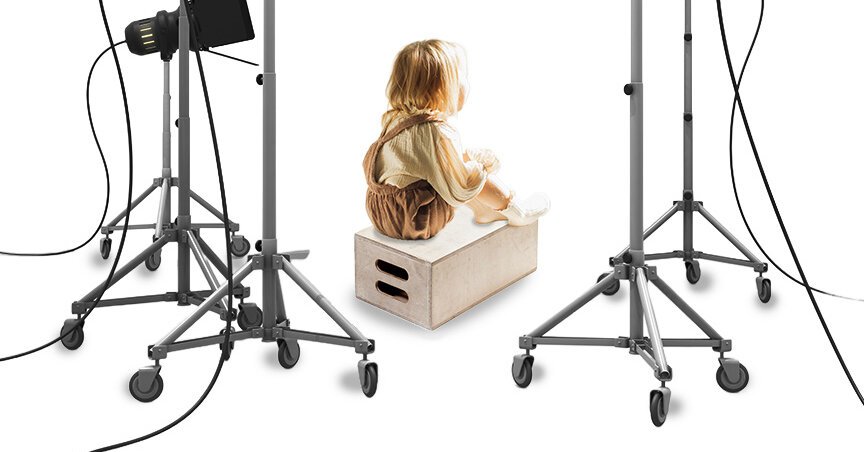
Source imagery by Iiievgeniy, Lll0228, Zargon Design, and Anastasiia Krivenok/Getty Images.
The Times is committed to publishing a diversity of letters to the editor. We’d like to hear what you think about this or any of our articles. Here are some tips. And here’s our email: letters@nytimes.com.
Follow the New York Times Opinion section on Facebook, Instagram, TikTok, Bluesky, WhatsApp and Threads.